The Long Council
Who was selected, and why
Should the USA reduce its role as the world's security guarantor?
The central tension
Should America pull back from guaranteeing global security, or does pulling back make the world, and America, less safe?
Where they stand
Retrench
The US security guarantee is overextended
costly
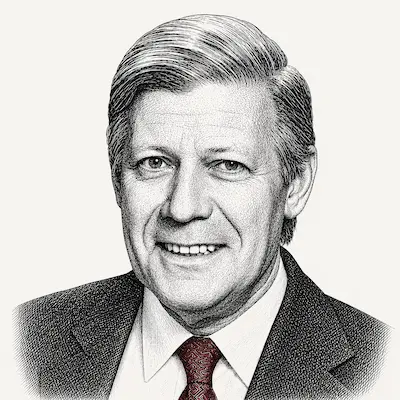 Helmut Schmidt
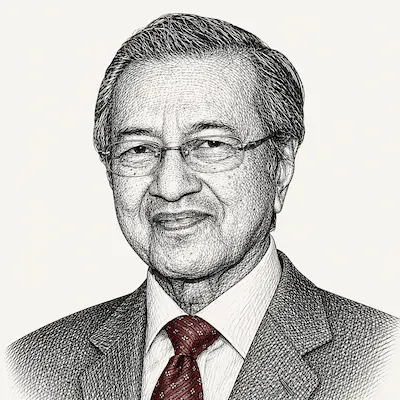 Mahathir Mohamad
Sustain
The US security order
for all its costs
prevents worse alternatives; withdrawal creates power vacuums that hostile actors fill
raising the risk of catastrophic conflict. → Ben
Structural reform
Neither full retrenchment nor status quo is viable; the system needs redesign
Selected members
Helmut Schmidt
Will argue: The US security guarantee is not free and not reliable; Europe proved in 1978 and 2025 alike that it must build autonomous capacity, but managed rebalancing differs from abandonment, which destroys the alliance architecture that took decades to construct.
The only council member who designed a NATO alliance strategy and built European institutions specifically to reduce dependence on US unilateral decision-making.
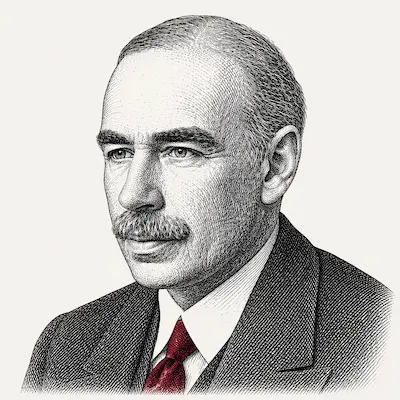
John Maynard Keynes
Will argue: When the anchor power of an international order withdraws, the system does not redistribute smoothly, it destabilises discontinuously; the right question is not whether the US should retrench but how to redesign the institutions so the order survives a less engaged America.
Designed the post-war international order and produced the sharpest documented analysis of what happens when the dominant power withdraws from its institutional obligations, the Bancor warning is directly applicable to security as well as monetary architecture.
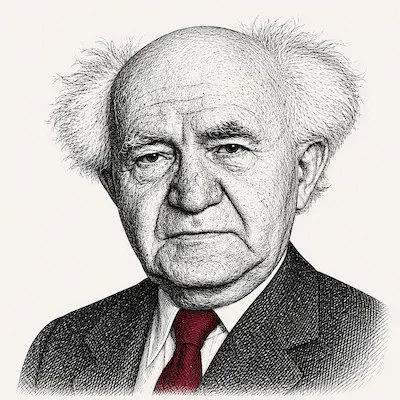
David Ben-Gurion
Will argue: US retrenchment does not eliminate security threats, it forces small states to either develop their own deterrence or accept domination by regional powers; the current anchors (Anchor 1: Ukraine; Anchor 3: Taiwan) show that withdrawal creates vacuums hostile actors fill immediately.
The council's definitive small-state practitioner under existential threat, he built a state that depended on great-power patronage while learning, at Suez, that no single guarantor is unconditional.
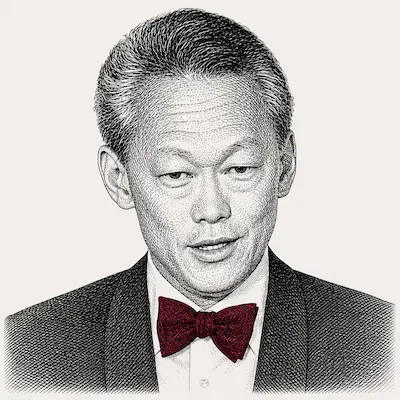
Lee Kuan Yew
Will argue: US retrenchment from the Indo-Pacific (Anchor 3) is categorically different from European burden-sharing adjustment, there is no allied substitute force, no regional institution capable of deterring China, and no timeline on which one could be built; withdrawal is not rebalancing, it is abandonment.
The council's most articulate documented analyst of how small and mid-size states calculate survival under great-power competition, and of exactly what US Indo-Pacific withdrawal means for states that have no substitute guarantor.
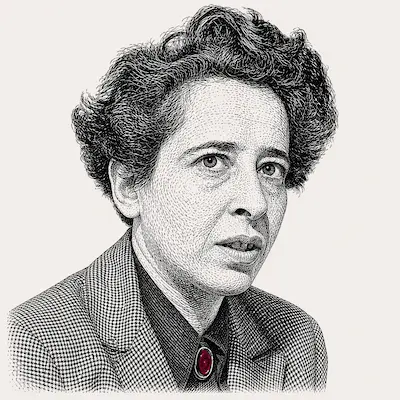
Hannah Arendt
Will argue: The question is not whether the US security guarantee is costly or imperfect, but what political form replaces it, historically, the withdrawal of ordering power produces not a more equal distribution of power but the rise of domination by whoever is least constrained; the international order is not self-sustaining.
The council's theorist of what happens to political order when the power that sustains it withdraws, her analysis of how authoritarian power fills the vacuum left by the collapse of political community is directly applicable to the structural question of post-American order.
Mahathir Mohamad
Will argue: US global security dominance is not neutral, it locks client states into strategic dependence and subordinates their foreign policy autonomy; retrenchment, if managed as genuine multipolarity rather than vacuum-creation, gives mid-size states room to build regional security frameworks they currently have no incentive to develop.
The council's most documented critic of Western institutional hegemony from a sovereignty perspective, he argued for decades that developing and mid-size states should reduce dependence on any single great power, and his capital controls decision shows he was willing to act on that principle at real cost.
Considered but not selected
Nehru: His non-alignment framework is relevant, but his 1962 China war experience, where non-alignment produced neither security nor deterrence, makes him a weak defender of retrenchment and a weak advocate for the US-led order. His documented strategic failure is more cautionary than analytical for this specific question. Schmidt covers the European practitioner case more sharply.
Ibn Khaldun: His asabiyya framework offers a structural analysis of why dominant orders decay from within (relevant to US overextension) but his corpus predates international institutions, alliances, and nuclear deterrence entirely; the extrapolation required is too substantial to add analytical value over the six members selected.
Eleanor Roosevelt: Her framework for international institutions and the human cost of security vacuums (statelessness, refugee flows) is relevant but her documented positions are on the normative architecture of rights, not on the strategic calculus of military guarantees. Arendt covers the institutional-collapse dimension with more structural precision.