Will the current dominant global order persist over the next 50 years, and if not, what conditions would enable a different power to become globally dominant?
Built from documented writings, speeches, decisions and historical records. Council members argue from documented positions, applied to today's question.
American dominance will not survive fifty years unchanged, but whether this means inevitable decline or strategic renewal depends on choices not yet made.
Deng shows how patient powers displace complacent hegemons through gradual capability building. Thatcher counters that institutional architecture and alliance cohesion can preserve Western advantages despite power shifts. Schmidt warns that resource dependencies and technological supply chains now favor China over America. Ibn Khaldun identifies classic symptoms of dynastic decline in American prosperity and political division.
Sun Tzu argues strategic adaptation can overcome structural disadvantages if America refocuses on Asia and rebuilds alliances around interests rather than ideology.
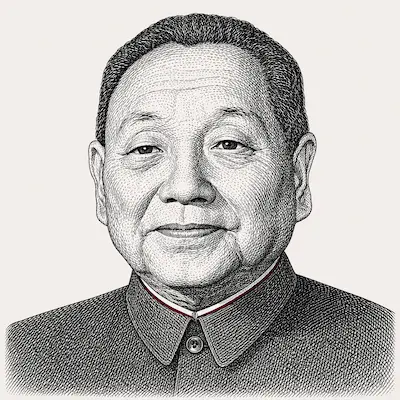
Patient power accumulation while avoiding confrontation enables displacement of established hegemons.
In 1978 I launched China's reform era with a deliberate strategy: hide your strength, bide your time. This was not weakness but calculation. America then controlled global finance, technology, and military projection. Direct challenge would have triggered containment and destroyed China's development window. Instead we opened selectively — importing capital and technology while maintaining political control.
The current order will not persist because dominance erodes the discipline that created it. America's prosperity breeds complacency. Its allies become dependents rather than partners. Meanwhile ascending powers — hungrier and more focused — accumulate capabilities without triggering premature confrontation. The transition happens gradually, then suddenly.
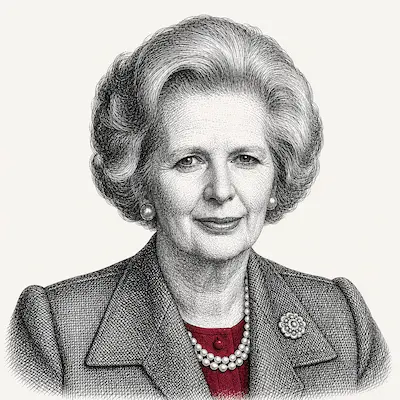
Institutional architecture and alliance cohesion can preserve Western dominance despite relative power shifts.
Deng underestimates the durability of what we built. In 1979 I inherited a Britain in decline — the sick man of Europe. Through market reform, privatisation, and renewed alliance partnership with Reagan, we restored British influence. The Falklands proved that institutional democracies retain the capacity for decisive action when challenged.
The US-led order persists because it offers what alternatives cannot: rule of law, property rights, democratic legitimacy, and genuine alliance partnership rather than tributary relationships. NATO survived the Soviet collapse and expanded eastward. The dollar remains the global reserve currency despite repeated predictions of its demise. China's growth depends on Western markets and technology — interdependence constrains even rising powers.
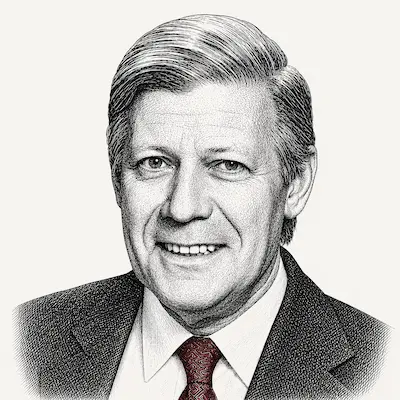
Dominance in the 21st century depends on control of critical resources and technological superiority.
Thatcher overestimates institutional durability when resource dependencies shift. In 1973 the oil embargo taught me that energy dependence is not an energy question — it is a sovereignty question. Today's equivalent is semiconductors, rare earths, and advanced manufacturing. China controls the supply chains that power American technology.
I created the G7 and European Monetary System because American monetary policy imposed costs on allies without consultation. That pattern continues — sanctions, dollar weaponisation, trade wars that damage European interests. Meanwhile China builds alternative payment systems and resource partnerships across Asia and Africa. The institutional architecture we built assumes American hegemony. When that assumption fails, the institutions become constraints on American power rather than instruments of it.
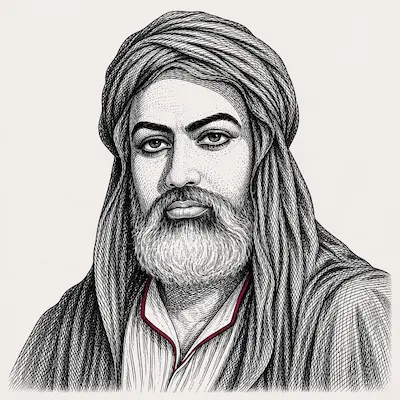
American dominance faces the luxury trap — prosperity erodes the martial virtues and group cohesion that created power.
Schmidt identifies the mechanism but not the deeper pattern. I observed this cycle across multiple dynasties in North Africa and Andalusia. The established power grows wealthy and comfortable. Its ruling class loses the hunger and discipline that built the empire. Military service becomes mercenary rather than citizen-based. Taxation rises to fund luxury while the productive base erodes.
America today exhibits classic symptoms of dynastic decline. Its infrastructure crumbles while resources flow to financial speculation. Its military depends on expensive technology rather than popular mobilisation. Its political class is divided and focused on internal competition rather than external threats. China, by contrast, maintains the focused asabiyya of an ascending power — unified leadership, long-term planning, willingness to sacrifice current consumption for future position.
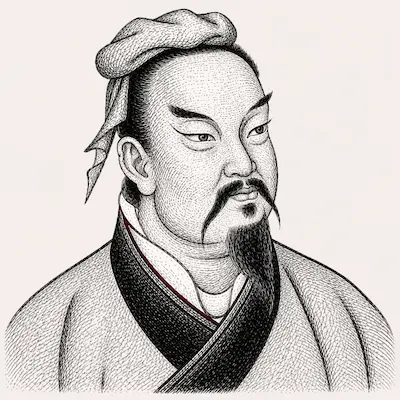
Victory depends on strategic positioning and intelligence superiority, not material strength alone.
Ibn Khaldun describes patterns but underestimates the role of strategic adaptation. The superior strategist creates conditions for victory before the battle begins. America's challenge is not inevitable decline but strategic rigidity — fighting the last war while the adversary redefines the battlefield.
China's rise requires exploiting American strategic errors rather than matching American capabilities directly. America disperses its attention across multiple theaters while China concentrates on its core objective — regional dominance in East Asia. America fights for abstract principles while China fights for concrete interests. But this advantage is temporary. If America adapts its strategy — prioritising Asia, rebuilding alliances based on mutual interest rather than ideology, investing in the technologies that matter — it can maintain dominance through positioning rather than raw power.
The highest skill is to defeat the adversary without fighting. Neither power has achieved this. The struggle continues because both retain the capacity for strategic surprise.
The convergence note
Where the council converges All members agree that American hegemony faces genuine structural challenges and that the current global order will not persist unchanged over fifty years.
Where it divides Whether these challenges represent inevitable cyclical decline (Ibn Khaldun), manageable strategic problems requiring adaptation (Sun Tzu), or institutional advantages that can preserve dominance despite relative power shifts (Thatcher). The disagreement centers on whether hegemonic transitions follow predictable patterns or depend on specific strategic choices and institutional responses.