Should the US government's fast-track loan to Vulcan Elements, a firm with ties to a ruling official's family, be considered corruption or legitimate governance?
Built from documented writings, speeches, decisions and historical records. Council members argue from those positions, applied to today's question.
This is corruption disguised as strategic policy.
Kautilya establishes the absolute principle: officials cannot profit from their decisions, regardless of amount. Roosevelt confirms that strategic investment dies when citizens suspect self-dealing, even when the underlying policy serves national interests. Lee Kuan Yew adds that appearance of impropriety destroys governance credibility faster than any policy can rebuild it.
Maathai identifies the systemic problem: fast-track processes create elite capture unless accompanied by transparent oversight.
- 1Require immediate divestment of all Energy Secretary holdings in lithium-related companies before any Defense Production Act decisions.
- 2Establish mandatory recusal protocols for all Cabinet members with financial interests in sectors they govern.
- 3Create transparent oversight mechanisms for all fast-track investment decisions under the Defense Production Act.

Officials who profit from their own decisions destroy the treasury they serve.
A minister who holds financial interest in state investment decisions violates the fundamental principle of governance. In designing the Mauryan administrative system, I established that officials serve the treasury, not themselves. The Energy Secretary's $50,000 stock holding creates the appearance that public resources flow to private benefit. When I audited provincial governors, any personal gain from their official acts meant immediate dismissal. The amount is irrelevant. The principle is absolute.
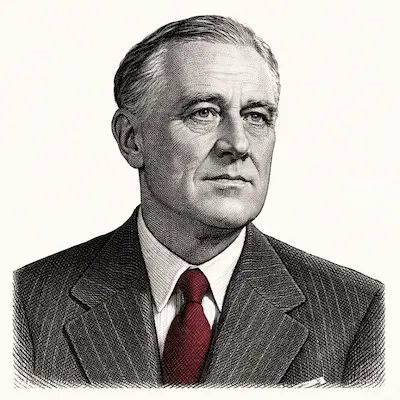
Strategic government investment requires transparent conflict procedures to maintain public confidence.
The lithium designation under the Defense Production Act serves legitimate national security. In 1933 I created the Reconstruction Finance Corporation to direct billions toward strategic industries during the Depression. But I also established strict firewalls between personal investments and public decisions. Cabinet members divested holdings in sectors they governed. The Vulcan loan may serve the national interest, but the Energy Secretary's stock position undermines public confidence in that judgment. Strategic investment dies when citizens suspect self-dealing.

The appearance of impropriety is as damaging as actual corruption.
Roosevelt understands the strategic necessity but underestimates the reputational cost. In 1965 I separated Singapore from Malaysia partly because UMNO's corruption made clean governance impossible. I paid ministers well and demanded complete recusal from any personal financial interest in policy outcomes. Fifty thousand dollars is not the issue. The issue is that citizens must trust their government's motives completely. When officials profit from their decisions, even legally, governance credibility erodes faster than any policy can rebuild it.

Fast-track processes create conditions for elite capture unless accompanied by transparent public oversight.
Lee Kuan Yew is right about credibility, but this pattern extends beyond individual conflicts of interest. In Kenya I watched development resources flow to politically connected firms while communities that needed them were excluded. The Defense Production Act designation bypasses normal oversight precisely when oversight matters most. Two billion dollars in public money requires public accountability. The Energy Secretary's stock holding is a symptom of a larger problem: when government accelerates investment decisions, it often accelerates the capture of those decisions by elites.
The convergence note
Where the council converges: Officials with financial interests in their policy decisions violate governance principles. Strategic investment requires transparent procedures to maintain legitimacy.
Where it divides: Whether the focus should be individual recusal or systemic oversight. Whether the amount of financial interest matters or the principle is absolute.
For a policymaker to decide on: Whether to require divestment, recusal, or enhanced oversight. Whether fast-track authority needs built-in conflict-of-interest safeguards.