Built from documented writings, speeches, decisions and historical records. Council members argue from documented positions, applied to today's question.
Trump succeeds by the measures that matter to him but destroys the trust that makes democratic leadership possible.
Confucius sees Trump's lies and norm-breaking as corruption of the moral foundation governance requires. Machiavelli notes Trump wins elections and maintains party loyalty despite breaking conventional rules. Arendt argues Trump's methods poison the institutional conditions democratic power needs to exist.
The split cannot be resolved through argument — it depends on whether you judge leaders by their strategic success or by what their methods do to the system itself.
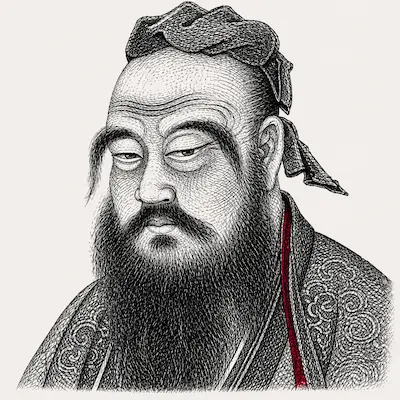
Trump's leadership violates the rectification of names — calling things what they are is the foundation of legitimate governance.
In 497 BC I resigned as Minister of Justice in Lu when Duke Ding accepted dancing girls from a neighboring state and neglected governance for three days. A ruler who cannot distinguish between entertainment and duty has forfeited the mandate of heaven. Trump's documented pattern — claiming victory in defeat, calling investigations "witch hunts," describing opponents as "enemies of the people" — represents the systematic corruption of language that makes honest governance impossible. When names are not rectified, speech does not accord with truth. When speech does not accord with truth, affairs cannot be completed.
The ruler's personal conduct is the most powerful governance instrument because others model themselves on his example. A leader who lies, attacks judges, and demands personal loyalty over institutional duty teaches the entire system that these behaviors are acceptable. This destroys the moral foundation on which legitimate authority rests. No institutional check can substitute for a ruler's own commitment to virtue.
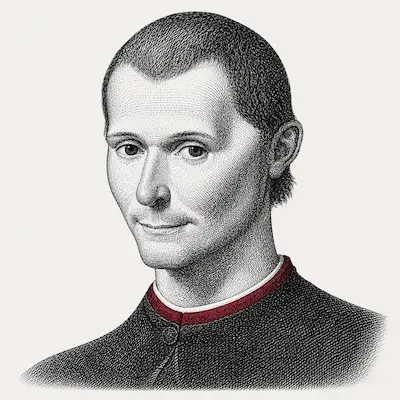
Confucius mistakes the means for the end — Trump's methods should be judged by whether they achieve his political objectives, not by their virtue.
Confucius applies the standards of a stable, hierarchical society to the conditions of democratic competition, where different rules apply. In 1502 I observed Cesare Borgia eliminate his rivals through deception and force — methods that were morally questionable but politically effective. Trump's documented behavior follows a similar logic: he uses inflammatory rhetoric to energize his base, attacks institutions to delegitimize opposition, and creates loyalty through fear and reward. These are the methods of a new prince securing power in unstable conditions.
The question is not whether Trump's conduct meets Confucian standards of virtue, but whether it serves his strategic objectives. His 2016 victory despite universal elite opposition, his maintenance of Republican party loyalty despite multiple scandals, and his continued influence after leaving office suggest his methods work within the American political system. A leader who wins through unconventional means has demonstrated that conventional wisdom about leadership requirements was incomplete.
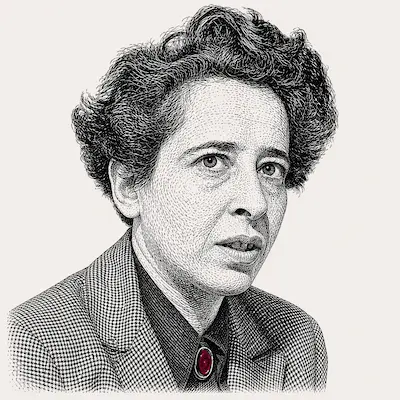
Machiavelli ignores what Trump's methods destroy — the conditions under which democratic power can exist at all.
Machiavelli's analysis treats politics as strategic competition between individuals seeking personal objectives. This misses what is distinctively dangerous about Trump: he systematically undermines the public realm where citizens can act together. In my 1963 analysis of totalitarianism, I documented how ordinary people become complicit in systematic harm when political institutions lose their capacity to distinguish truth from falsehood. Trump's "alternative facts," his attacks on the press as "enemy of the people," and his demand that officials demonstrate personal loyalty rather than institutional competence create precisely these conditions.
Democratic power arises when people act together in concert; it disappears when they are isolated and manipulated. Trump's documented pattern — encouraging violence at rallies, refusing to accept electoral defeat, demanding that state officials "find" votes — represents the substitution of violence for power. This is not effective leadership but the destruction of the political realm itself. When citizens can no longer trust that institutions will function according to rules rather than personal will, they withdraw from political engagement or resort to force themselves.
The ultimate test of leadership is not whether it achieves short-term objectives but whether it preserves the conditions under which legitimate authority can continue to exist. Trump's methods poison the well from which all future democratic leadership must drink.
The convergence note
Where the council converges: All three members agree that leadership requires some relationship between the leader's character and the health of the political system.
Where it divides: Confucius judges Trump by moral standards that make governance possible. Machiavelli judges him by strategic effectiveness in achieving personal objectives. Arendt judges him by whether his methods preserve or destroy the institutional conditions for democratic politics.
For a policymaker to decide on: Whether Trump represents successful adaptation to democratic competition's realities, or systematic destruction of democracy's prerequisites — and which standard of judgment should guide institutional responses.