Should companies have obligations beyond maximizing shareholder value?
Built from documented writings, speeches, decisions and historical records. Council members argue from documented positions, applied to today's question.
Yes, but the council splits on whether obligations within the current ownership structure can ever be enough.
Friedman and Hayek hold that executives spending shareholders' money on social goals are acting without a mandate. If society wants obligations, legislate them. Rawls and Sen counter that shareholder primacy systematically fails workers: it externalises costs onto those with the least power to absorb them. Roosevelt's record in 1933 shows that legislated constraints can stabilise a system markets were destroying on their own.
The split that argument cannot close is structural. Luxemburg argues that every reform leaving ownership intact teaches capital to absorb the reform and continue. Rawls and Sen stop short of that conclusion, accepting constrained capitalism as improvable. Neither side can be ruled wrong on the evidence alone.
- 1Legislate corporate obligations directly; do not rely on voluntary stakeholder mandates or executive discretion over shareholders' capital.
- 2Extend worker participation in enterprise governance, addressing Luxemburg's and Sen's shared point that ownership structure determines who bears costs.
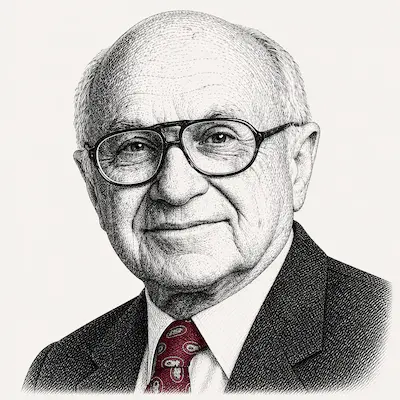
Corporate executives spending shareholders' money on social goals are unelected tax collectors.
In September 1970 I wrote plainly in the New York Times: when a corporate executive diverts profits to social causes, he spends money belonging to shareholders, raises prices for customers, or cuts wages for workers. He has not been authorised to do any of this. If shareholders want to fund social goals, they can do so with their own dividends. If society wants corporations to meet social obligations, pass a law. But do not pretend that a manager imposing his own values on other people's capital is acting ethically. He is acting politically, without a mandate.
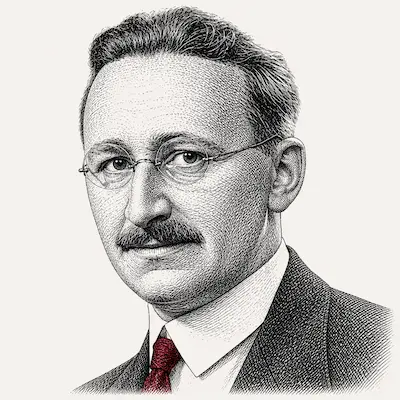
No board, regulator, or stakeholder panel can know what prices already tell us.
Friedman is right that the mandate question matters, but the deeper problem is epistemic. In 1945 I argued in the American Economic Review that the economic problem is not allocating known resources but using knowledge dispersed across millions of people that no single authority can possess. A corporate board instructed to serve workers, communities, and the environment must weigh incommensurable claims without the information to do so. Prices already aggregate those signals. Stakeholder mandates replace that mechanism with pretence, producing harm that no one intended and no one can trace back to the decision that caused it.
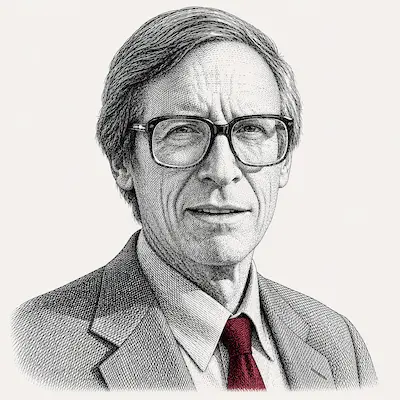
Shareholder primacy concentrates gains at the top and calls it freedom.
Hayek asks what markets know. I ask who benefits. From behind a veil of ignorance, not knowing whether I will be a shareholder or a warehouse worker, I would not design a system that makes the second answerable only to the first. In A Theory of Justice I argued that the corporation is part of the basic structure of society, the primary subject of justice. Inequalities it generates are only justified if they benefit the least advantaged. Shareholder primacy fails that test systematically: it concentrates ownership, externalises costs onto workers and communities, and calls the result efficiency.
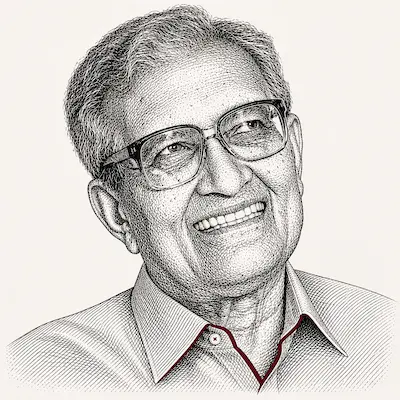
Profit measures what shareholders gain, not what workers can actually do and be.
Rawls asks who benefits from the basic structure. I ask what people are actually able to do. In Development as Freedom I argued that the test of any economic arrangement is whether it expands or destroys real human capabilities: the ability to stay healthy, to read, to participate in decisions that shape one's life. A factory that returns strong quarterly earnings while exposing workers to toxic conditions, suppressing wages below subsistence, and gutting the surrounding town has not created value. It has transferred it, from workers and communities onto a balance sheet. Shareholder returns measure that transfer, not its human cost.
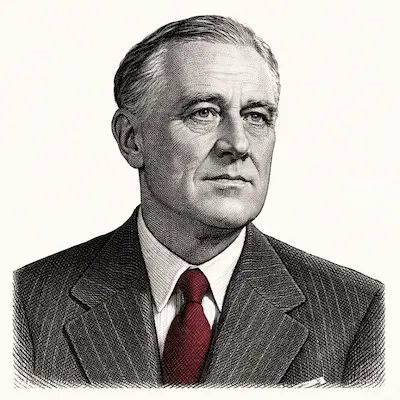
Unconstrained corporations nearly destroyed capitalism; democratic governments saved it.
Sen asks whether the New Deal changed ownership. It did not, and I never claimed it did. What it did was prevent the system from devouring itself. In 1933 I told my cabinet privately that I was fighting to save the capitalist system from its own excesses. The National Industrial Recovery Act, the Securities Exchange Act, the Social Security Act: each imposed obligations on corporations that markets would never have generated alone. Wages too low to buy what factories produced, workers with no insurance against injury or age, securities sold on pure fraud: these were not externalities. They were the system eating its own foundations.
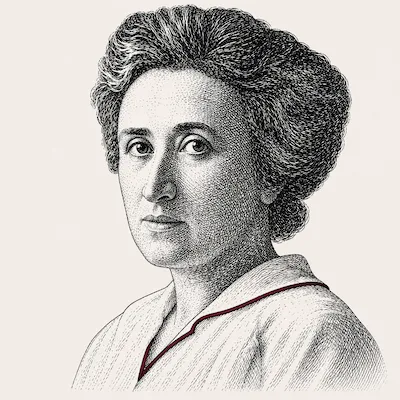
The question is not what corporations owe society, but who governs productive life.
Roosevelt saved capitalism in 1933. I do not dispute the facts. I dispute the conclusion. In The Accumulation of Capital I showed that the mechanism driving exploitation is not bad corporate behaviour but the structural relationship between those who own productive assets and those who sell their labour to survive. Stakeholder obligations and social responsibility codes are real improvements for real workers, and I do not dismiss them. But they leave that relationship intact. The shareholder remains sovereign; the worker remains a cost. Every reform that does not touch ownership teaches capital to absorb the reform and continue. The question this council should be asking is not what obligations owners accept, but why workers do not govern the enterprises that depend entirely on their labour.