How should a leader balance personal ethics with political effectiveness?
Built from documented writings, speeches, decisions and historical records. Council members argue from documented positions, applied to today's question.
Leaders face genuine tragic choices where moral ideals conflict with institutional survival.
Roosevelt and Mandela argue strategic compromise serves higher principles — imperfect justice beats perfect failure. Atatürk and Machiavelli argue survival justifies abandoning principles temporarily — dead martyrs govern nobody. Confucius warns that broken trust destroys governance faster than any bad policy.
The split is irreducible: whether compromise preserves values or corrupts them depends on judgment only the leader can make.
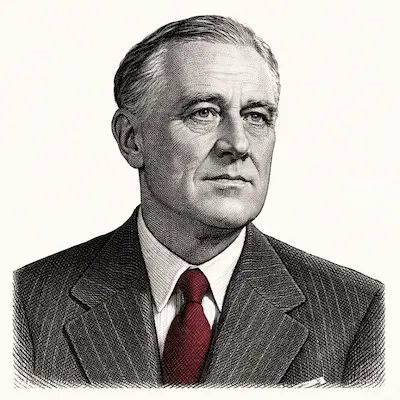
Democratic leaders must sometimes sacrifice moral purity to preserve democratic institutions.
Political survival in a democracy requires building coalitions that can win elections. In 1936 I needed Southern Democrats to pass Social Security and the Wagner Act. That meant accepting their demand to exclude agricultural and domestic workers — jobs held mostly by Black Americans. I knew this was wrong. But without Southern votes, there would be no New Deal at all. The choice was imperfect justice now or perfect justice never. I chose imperfect justice because the alternative was letting the Depression destroy American democracy entirely.
The moral cost was real. But so was the institutional result: we saved capitalism from itself and built the framework for future progress. The Civil Rights Act came thirty years later — built on institutions that survived because we compromised to create them.
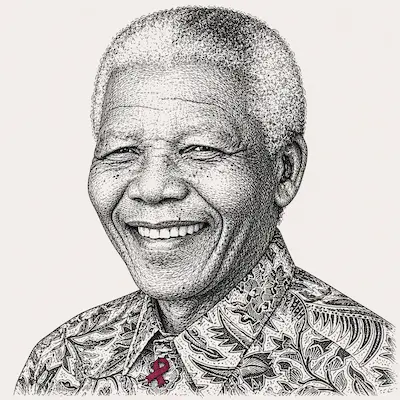
Reconciliation is not moral weakness — it is strategic necessity for durable governance.
Roosevelt is right about institutional survival, but he misses the deeper point. In 1994 I gave cabinet positions to the National Party and Inkatha — the same people who had imprisoned me for twenty-seven years. My own ANC comrades called this betrayal. But I had watched liberation movements across Africa win the war and lose the peace. Angola, Mozambique, Zimbabwe — military victory without political inclusion produced permanent instability. South Africa needed the skills, networks, and legitimacy that only inclusive governance could provide. Exclusion feels like justice. Inclusion builds states.
The test of strategic compromise is not whether it feels good. The test is whether it works. South Africa's transition succeeded because former enemies had stake in the new order's survival.
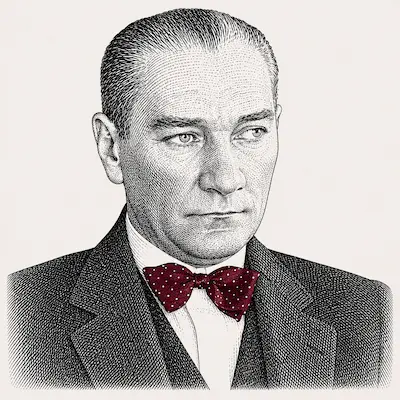
Gradual reform preserves what must be destroyed — sometimes speed is the only path to freedom.
Mandela had the luxury of negotiating with opponents who retained legitimacy. In 1923 I faced the collapse of a six-hundred-year empire, foreign occupation, and a population that could not read its own language in any script that served its interests. The Ottoman system was not reformable — it was designed to serve imperial extraction, not national development. Gradual change would have meant gradual death. I replaced Islamic law with Swiss civil codes in eighteen months. I changed the alphabet in three months. I abolished the caliphate entirely. This was not consultation — it was surgery.
The Kurdish rebellions were the price. But the alternative was remaining a European colony forever. Turkey today exists because I chose transformation over consensus.
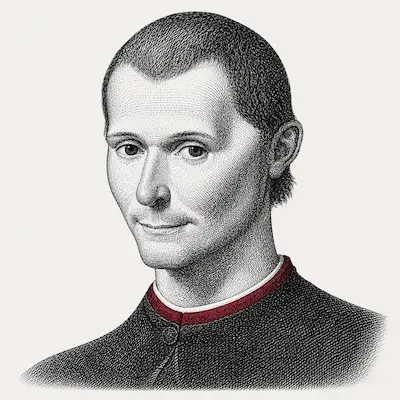
Political survival demands methods suited to the contest, not to an ideal order.
Atatürk grasps what the others miss: legitimacy is not a starting point — it is an achievement. In 1502 I watched Cesare Borgia eliminate his rivals in Senigallia through a single night of calculated treachery. His enemies came expecting negotiation. They left in chains or coffins. This secured Romagna for two years of peace and prosperity. The methods were ruthless. The results served the people better than the chaos that preceded them. A prince who fights by moral rules against opponents who do not will lose — and his people will suffer for his virtue.
The leader's first obligation is to succeed. Moral purity is a luxury that only the victorious can afford. Better to be feared than loved, but never hated.
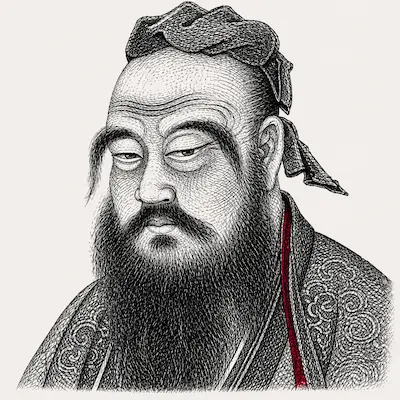
A ruler who cannot be trusted destroys governance faster than any bad policy.
Machiavelli confuses power with authority. In my years serving Duke Ding of Lu, I watched officials who ruled through fear alone. They produced compliance while present and rebellion the moment they left. Force without moral foundation creates the very instability it claims to prevent. When I resigned after the Duke neglected governance for dancing girls, I chose principle over position. Thirteen years of wandering taught me this: a leader who abandons virtue to gain power has gained nothing worth having.
Effective governance requires the people's trust. Trust requires consistency between words and actions. The ruler who lies to defeat enemies will lie to subjects. Once broken, trust cannot be rebuilt through force.
The convergence note
Where the council converges: All agree that leaders face genuine tragic choices where moral ideals conflict with institutional survival.
Where it divides: Roosevelt and Mandela argue strategic compromise serves higher principles. Atatürk and Machiavelli argue survival justifies temporary abandonment of principles. Confucius argues that abandoning principles destroys the foundation that makes governance possible.
For a policymaker to decide on: Whether the specific compromise preserves or corrupts the values it claims to serve.