When China invades Taiwan, should the US protect Taiwan's democratic regime?
Built from documented writings, speeches, decisions and historical records. Council members argue from documented positions, applied to today's question.
America faces an impossible choice between abandoning a democratic ally and risking war with a nuclear power.
Lee and Kissinger argue strategic ambiguity has preserved peace for fifty years by giving each side what it needs most. Deng insists China's territorial integrity cannot be compromised indefinitely, regardless of economic costs. Ben-Gurion demands democratic solidarity — abandoning Taiwan signals retreat from defending democratic allies globally. Sun Tzu warns that military preparations by both sides create momentum toward the confrontation everyone claims to avoid.
The split is irreducible: democratic solidarity versus territorial sovereignty, with no framework both sides accept.
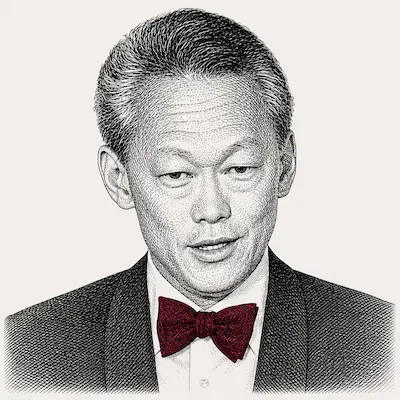
Small states survive by making themselves indispensable, not by asserting rights.
America must defend Taiwan because credibility is indivisible. When I separated Singapore from Malaysia in 1965, I understood that survival required making ourselves useful to multiple great powers simultaneously. Taiwan's semiconductor dominance and strategic position make it indispensable to America's technology supply chains and Pacific defense architecture. Abandoning Taiwan signals to every Asian ally that American security guarantees are conditional and reversible. Japan, South Korea, and the Philippines will recalculate their strategic positions accordingly.
But direct military confrontation with China over Taiwan risks catastrophic escalation that serves no one's interests. The art of small state survival is to prevent such binary choices from arising. America should maintain strategic ambiguity while strengthening Taiwan's defensive capabilities and economic integration with the mainland. Taiwan's best security lies not in independence declarations that invite Chinese attack, but in becoming so economically valuable that Beijing sees unification through force as counterproductive.
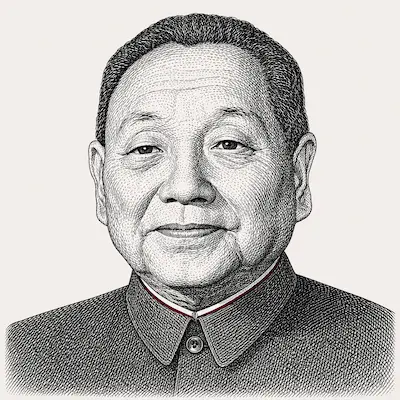
Taiwan reunification is a core interest that cannot be negotiated away.
Lee Kuan Yew understands strategic patience, but he underestimates what sovereignty means to China. Taiwan is not Singapore — it is a province whose separation resulted from foreign intervention in our civil war. In 1979 I told Carter that China would pursue peaceful reunification but could not renounce the use of force. This position remains unchanged. We proposed "One Country, Two Systems" for Hong Kong and Taiwan precisely to accommodate different social systems within unified sovereignty. Taiwan could maintain its economic system and significant autonomy, but not independence.
American military intervention would be illegitimate interference in China's internal affairs. We have been patient for seventy years, but patience has limits. If Taiwan declares independence or foreign forces attempt to permanently separate it from China, we will act decisively. The cost would be enormous, but some principles cannot be compromised. China's territorial integrity is not negotiable, regardless of economic consequences.
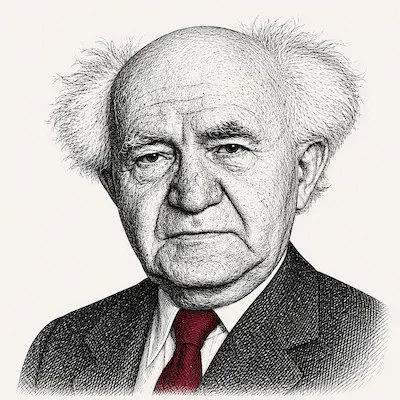
Democracies under existential threat require credible security guarantees from fellow democracies.
Deng's territorial claims cannot override Taiwan's democratic choice to remain free. When Israel declared independence in 1948, we faced immediate invasion by five Arab armies determined to destroy our democratic state. American security support — initially limited but eventually comprehensive — proved decisive. Taiwan's situation parallels Israel's: a small democracy surrounded by hostile forces, dependent on American protection for survival. Abandoning Taiwan would signal broader American retreat from defending democratic allies globally.
The precedent matters beyond Taiwan. If America accepts that authoritarian powers can absorb democratic neighbors through military threat, every small democracy becomes vulnerable. South Korea, the Baltic states, and Israel itself would face intensified pressure. The credibility of democratic solidarity requires that threats against one democracy are treated as threats against all. Taiwan has earned American protection through its democratic development and strategic partnership. Abandoning it would be both morally wrong and strategically catastrophic.

Strategic ambiguity serves all parties by preventing the clarity that invites confrontation.
Ben-Gurion's analogy fails because Taiwan is not Israel. Taiwan's legal status remains deliberately undefined since 1972, when Nixon and I established the framework that has preserved peace for fifty years. Strategic ambiguity works precisely because it gives each side what it needs: China maintains that Taiwan is part of China; Taiwan maintains its autonomy; America maintains its capacity to respond without predetermined commitment. Clarity in either direction — formal independence or reunification — destroys the equilibrium that has enabled Taiwan's prosperity and China's peaceful rise.
The greatest risk today is not Chinese aggression but Taiwanese independence declarations that would force Beijing's hand. My framework focused on deterring both Chinese attack and Taiwanese independence moves. Military aid to Taiwan should strengthen deterrence without encouraging provocation. The goal is not to resolve the Taiwan question but to manage it indefinitely. Some problems are better managed than solved. Strategic patience requires accepting that ambiguity, not clarity, preserves peace when vital interests conflict irreconcilably.
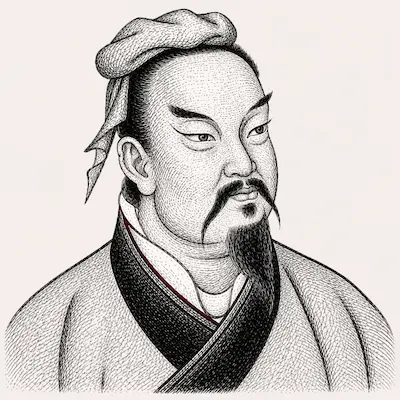
Supreme excellence is achieving objectives without fighting; forced clarity destroys strategic flexibility.
Kissinger grasps the essential principle: the strategist who wins creates conditions where victory is achieved before battle becomes necessary. Strategic ambiguity is not deception but wisdom — it preserves options for all parties while preventing the adversary from preparing perfect countermeasures. When positions become fixed, strategy becomes predictable and therefore vulnerable. Taiwan's current status exemplifies this: neither independence nor unification, but a third way that serves everyone's core interests while satisfying no one's maximum demands.
The danger lies in mistaking preparation for intention. Both sides' military buildups are rational responses to uncertainty, but they create momentum toward the confrontation both claim to avoid. The wise commander knows that excessive preparation for war makes war more likely by eliminating peaceful alternatives. America's optimal strategy is to maintain sufficient capability to deter Chinese action while avoiding commitments that eliminate diplomatic flexibility. Taiwan's security lies not in choosing sides but in remaining valuable to both.
The convergence note
Where the council converges: All members agree that Taiwan's current autonomous status has enabled prosperity and regional stability.
Where it divides: Fundamental disagreement on whether Taiwan's democratic development creates new rights (Ben-Gurion) or whether historical sovereignty claims remain paramount (Deng). Lee and Kissinger favor managing ambiguity indefinitely; Deng requires eventual resolution; Ben-Gurion demands democratic solidarity.
For a policymaker to decide on: Whether to maintain strategic ambiguity with its inherent instability, seek negotiated clarification that risks destroying the status quo, or prepare for confrontation while hoping deterrence holds.