How can the US break the cycle of mutual radicalization in politics?
Built from documented writings, speeches, decisions and historical records. Council members argue from documented positions, applied to today's question.
Procedural fixes will not stop mutual radicalization. Rebuild local civic life, narrow material inequality, and hold leaders to honest language.
Arendt points to the emptied town hall: when citizens stop acting together in shared physical spaces, outrage before a screen fills the gap. Confucius identifies what leaders model downward: politicians who call obstruction principle teach citizens to do the same. Ibn Khaldun warns that four generations of relative security dissolved the common experience that once held Americans together.
Rousseau and Rawls split on sequence. Rousseau argues that a senator and a warehouse worker cannot share a political world until their material lives converge. Rawls contends that public reason, not equality, is what citizens have lost, and that shared economic conditions alone will not restore it.
- 1Rebuild local civic institutions, specifically ward committees and town councils, as physical spaces where citizens act together, not before screens.
- 2Demand elected officials use honest language; rename obstruction, bad-faith attacks, and cruelty accurately in public record.
- 3Narrow the material gap between senators and warehouse workers through direct economic policy, not discourse reform alone.
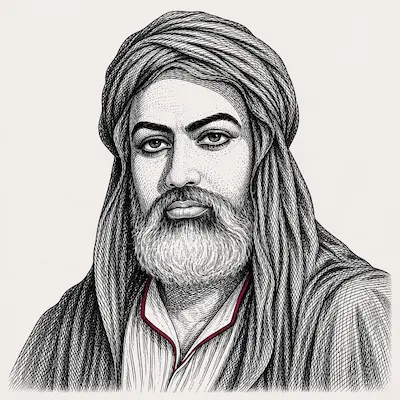
American factions have replaced the shared bond that built the republic.
Prosperity did this. I watched it happen across a dozen dynasties in the Maghreb and Andalusia: the cohesion that conquers softens into the comfort that divides. America's founding generation shared hardship, danger, and a common enemy. That asabiyya held. Four generations of relative security and rising inequality have dissolved it. Now each faction performs its grievance for its own audience. No procedural fix reverses this. You cannot write solidarity into a constitution. It has to be rebuilt from shared experience.
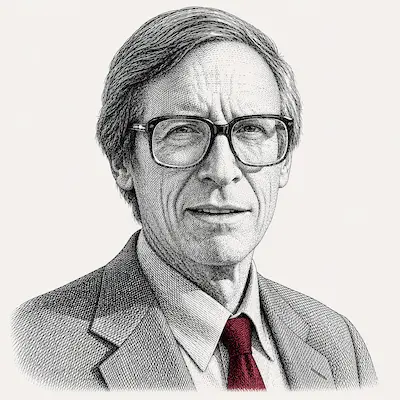
Citizens cannot share a republic they cannot justify to each other.
Ibn Khaldun is right that solidarity erodes, but he cannot tell us what kind of solidarity to rebuild. Not all cohesion is equal: the asabiyya of an in-group can bind a faction tighter while it excludes everyone else. What American politics has lost is not solidarity in general but public reason: the practice of justifying political positions in terms that fellow citizens can actually accept. In 1993 I argued in Political Liberalism that pluralist democracies require an overlapping consensus, not shared blood or shared grievance. Citizens who can only argue from their own comprehensive doctrine, to an audience that already agrees, are not doing politics. They are performing it.
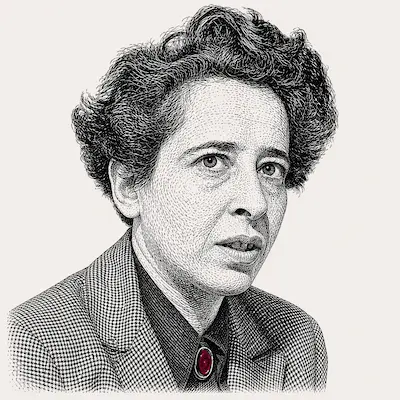
Radicalization fills the space left when citizens stop acting together.
Rawls wants citizens to reason better with each other, but they have to be somewhere together first. What I observed in the collapse of Weimar Germany was not a failure of argument: it was a failure of the public realm itself. Atomised individuals, cut off from genuine political action, become available to movements that offer them belonging through rage. America's town meetings, its ward committees, its local councils, have hollowed out. What replaced them is the performance of outrage before a screen. No new rule of discourse repairs this. You have to rebuild the physical and institutional spaces where citizens act in concert and discover, through that action, that they share a world.
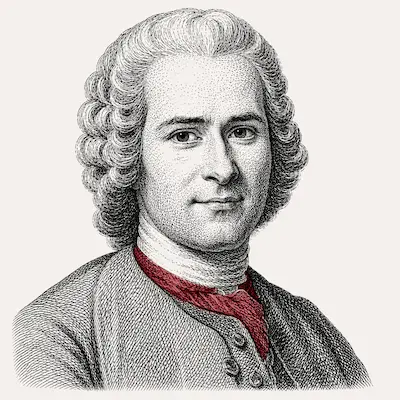
No general will survives when half the citizens inhabit a different world.
Arendt is right that shared space matters, but she stops short of the mechanism that destroys it. When I wrote the Second Discourse in 1755, my argument was precise: private property creates inequality, inequality creates domination, and domination makes a genuine common will structurally impossible. A senator and a warehouse worker do not share a social world. They share a flag, a language, and almost nothing else. Their political identities diverge because their material lives diverge. Institutional reforms and better discourse rules are cosmetic until that gap narrows. I must acknowledge the danger in my own argument: the general will has been invoked to silence minorities in the name of the common good. That is a real risk. But the answer is not to abandon the diagnosis.
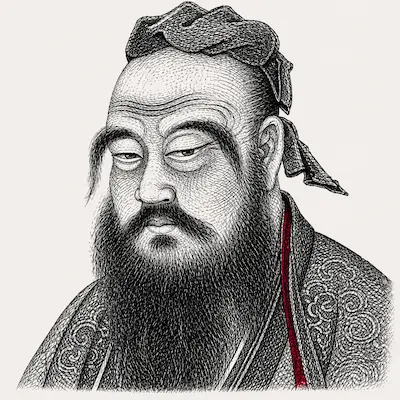
Leaders who misname things teach citizens to misname everything.
Rousseau locates the wound in property. I locate it one level up: in the rulers who name things falsely and so corrupt the whole civic language. When I resigned from the Ministry of Justice in Lu around 500 BC, it was because the Duke had stopped governing while still claiming to govern. The name carried the obligation; he had abandoned the obligation and kept the name. American politicians call bad-faith attack patriotism, call obstruction principle, call cruelty to opponents strength. Citizens follow the example downward. Reduce inequality, yes. Rebuild shared space, yes. But none of it holds if the governing class will not first submit to honest language. Moral reform of leaders is not optional. It is where the repair begins.
The convergence note
Where the council converges: Procedural fixes alone cannot break mutual radicalization. All five members agree the problem runs deeper than rules.
Where it divides: Rawls and Arendt locate the failure in collapsed civic practice and public reason. Rousseau insists material inequality is the root cause and cannot be bypassed. Ibn Khaldun sees solidarity itself as the lost resource, while Confucius places the primary responsibility on the moral conduct of leaders, not structural conditions.
For a policymaker to decide on: Which lever to pull first: reduce economic inequality, rebuild local civic institutions, reform political speech norms, or demand honest conduct from elected officials. The council offers no single sequence. A policymaker must choose where to break the chain.