The Long Council
Who was selected, and why
How can the US break the cycle of mutual radicalization in politics?
The central tension
Can American democracy fix itself through better rules and institutions, or does polarization run too deep for rules to fix without first changing the culture?
The two poles
Institutional reform first (rules, procedures, structural fixes)
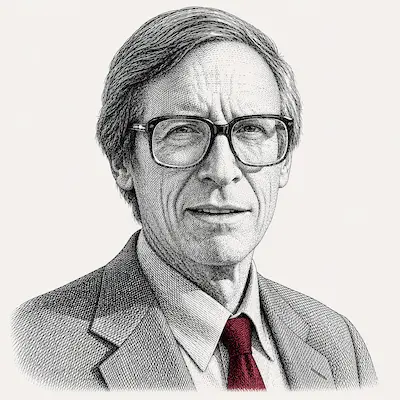 John Rawls
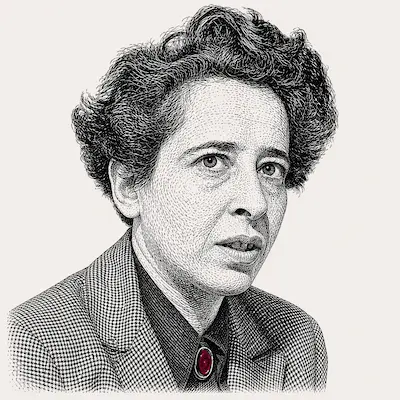 Hannah Arendt
Culture and solidarity first (shared identity, civic character, legitimacy)
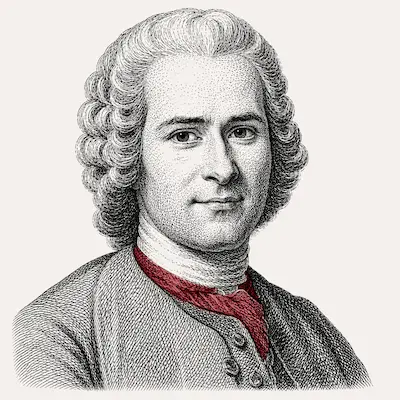 Jean-Jacques Rousseau
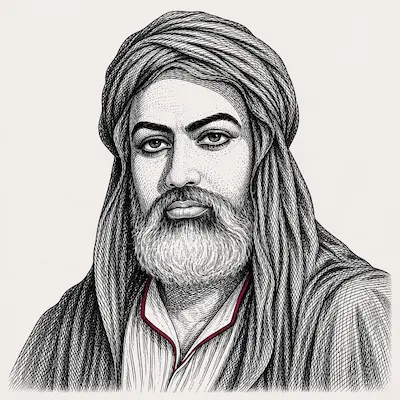 Ibn Khaldun
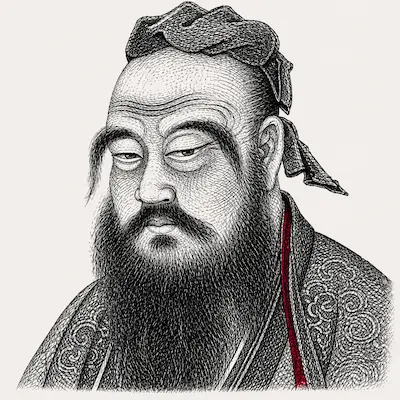 Confucius
Selected members
John Rawls
Will argue: Mutual radicalization reflects a breakdown of public reason where citizens justify coercive political positions through comprehensive moral doctrines others cannot accept, and repair requires redesigning institutions to reward reasoning across difference.
His framework of public reason directly addresses how citizens in a pluralist democracy justify political claims to one another across deep disagreement.
Hannah Arendt
Will argue: Mutual radicalization is what happens when the public realm collapses and citizens lose the experience of acting in concert, replacing genuine political power with the performance of grievance, and no rule change repairs this without rebuilding shared political space.
Her analysis of political atomization and the destruction of the public realm as preconditions for extremism directly maps onto the mechanics of radicalization.
Jean-Jacques Rousseau
Will argue: Radicalization is downstream of inequality, when material conditions diverge so sharply that citizens no longer inhabit a shared social world, the general will becomes impossible and political identity fills the vacuum, making institutional fixes cosmetic until the inequality mechanism is addressed.
His documented argument that extreme economic inequality structurally destroys the civic equality required for a general will is the sharpest available diagnosis of polarization's root.
Ibn Khaldun
Will argue: American polarization exhibits the classic pattern of a polity in the declining phase of its asabiyya cycle, prosperity has eroded the shared solidarity that built the republic, factions have replaced civic identity, and external pressure now consolidates extremes rather than moderating them; only a renewal of genuine group solidarity, not procedural fixes, can interrupt this.
His asabiyya framework provides the clearest non-Western structural account of what happens when group solidarity fractures and competing factions replace civic cohesion.
Confucius
Will argue: Mutual radicalization is a crisis of rectification, politicians call things what they are not, partisanship is called patriotism, bad-faith argumentation is called debate, and the population follows the leaders' moral example downward; institutional reform without moral reform of the governing class will produce compliance without genuine civic commitment.
His insistence that governance failure originates in moral failure among leaders, and that the rectification of names is the first step toward honest political life, cuts directly at the culture of performative outrage driving radicalization.
Considered but not selected
Franklin D. Roosevelt: FDR is the council's strongest practitioner of coalition-building across incompatible interests, which is directly relevant. He was not selected because his documented method, tolerating racial injustice to preserve coalition, illustrates the moral cost of purely tactical coalitionism, and that cost is itself a driver of the current radicalization. His framework offers tools but not a diagnosis of the structural problem this issue requires. He could be added as a sixth voice if the council wishes to ground deliberation in practitioner experience.
Amartya Sen: Sen's Identity and Violence (2006) directly addresses how political manipulation of singular identity produces violence, and his concept of plural identities is a documented counter to tribal polarization. He was not selected because the five selected members already cover the structural, institutional, cultural, and cohesion dimensions; Sen's addition would reinforce the institutional-reform pole without adding a substantially new line of analysis. He is the strongest candidate for a sixth chair if the council wishes to expand.
Elinor Ostrom: Polarization is not a commons governance problem in the technical sense her framework requires. Her design principles address resource management among defined user communities; the breakdown of civic solidarity in a continental democracy is a different problem category. Not selected per the special flag in her profile.