How can trust in political leadership be restored in western democracies. Provide concrete steps and measures.
Built from documented writings, speeches, decisions and historical records. Council members argue from documented positions, applied to today's question.
Western democracies can restore trust through competent institutions or authentic participation, but not both simultaneously.
Adenauer rebuilt trust through visible prosperity and institutional anchoring to external constraints. Roosevelt demanded moral accountability where leaders absorb personal costs for principled positions. Schmidt proved that crisis competence requires acting against supporters when survival is at stake. Rawls insisted legitimate authority must operate through principles all citizens can accept as free and equal persons.
Arendt identified the deeper problem: modern democracies replaced political action with administration, eliminating spaces where citizens govern themselves rather than choose expert managers.
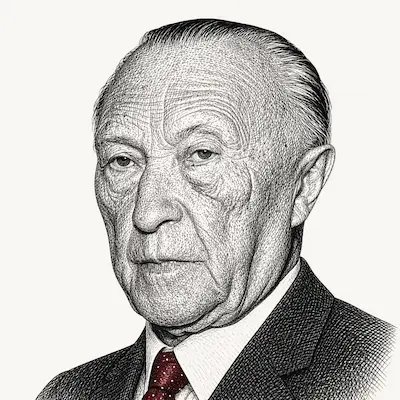
Democratic legitimacy requires demonstrable competence in delivering prosperity and security.
In 1949 I inherited a country that had lost all credibility — economically ruined, morally discredited, occupied by foreign armies. Trust was not an abstract question but an existential one. No one believed German democracy would survive. I built it back through three concrete measures: economic results that people could see in their daily lives, institutional anchoring to prevent backsliding, and personal accountability for promises made.
The social market economy delivered visible prosperity — unemployment fell from 11% to 1% during my tenure. But prosperity alone creates consumer satisfaction, not democratic loyalty. I anchored our democracy to NATO and the European Coal and Steel Community precisely because external constraints make internal democracy more credible. When institutions can be dismantled by a single election, they will be.
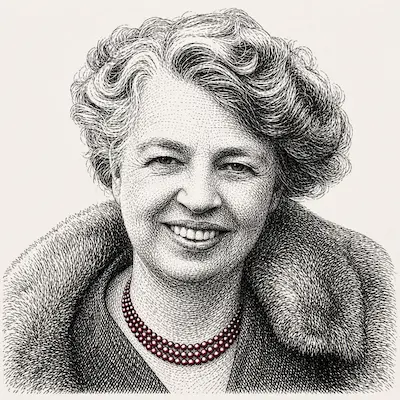
Trust requires leaders who demonstrate integrity through sustained public accountability.
Adenauer rebuilt legitimacy through institutional anchoring, but institutions without moral authority become empty shells. In 1946 I chaired the commission that drafted the Universal Declaration of Human Rights because the world had seen what happens when leaders govern without accountability to universal principles. Trust cannot rest on prosperity alone — it requires leaders willing to be held to standards beyond their own political survival.
My twenty-seven years writing "My Day" demonstrated a different approach to public accountability. I named the people I met, admitted my mistakes in print, and argued for positions that cost me politically. When I resigned from the Daughters of the American Revolution in 1939 over Marian Anderson, I lost social standing but gained moral credibility. Democratic leaders must be willing to absorb personal costs for principled positions.
The test of democratic leadership is not whether you deliver prosperity — authoritarian regimes can do that. The test is whether you remain accountable to principles that constrain your own power. Without that accountability, prosperity becomes patronage and democracy becomes performance.
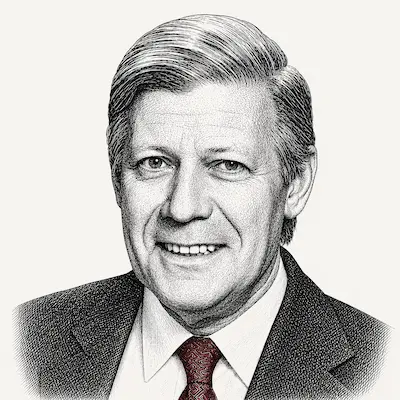
Roosevelt speaks of principled accountability, but crisis governance requires leaders who can act against their own supporters when survival is at stake.
During the German Autumn of 1977 — the Schleyer kidnapping and Lufthansa hijacking — I had to choose between my party's instincts and the state's survival. The SPD wanted negotiation; I authorised the Mogadishu raid and refused to release RAF prisoners. My private notes from those weeks show the isolation this created within my own government. But the alternative was to teach every terrorist organisation that German democracy would trade its citizens for political comfort.
Trust in crisis comes not from consultation but from competence. When OPEC imposed the oil embargo in 1973, I introduced car-free Sundays and accelerated energy diversification within weeks. The public saw that government could respond effectively to external shocks. They trusted the decision-making process because they could see it worked, not because they had been consulted about it.
Roosevelt's framework assumes leaders can maintain both principled positions and popular support. In practice, you choose. The duty of a statesman is not to be popular but to be right when it matters. Democratic trust requires leaders capable of imagining scenarios worse than the present — and acting on that imagination even when their own parties resist.
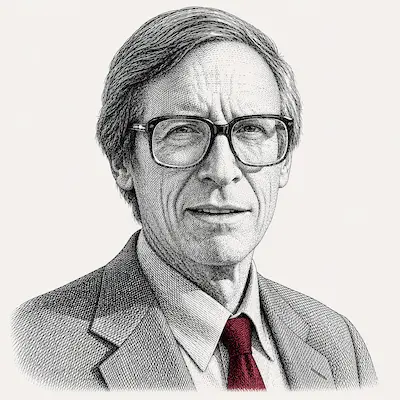
Schmidt confuses competent governance with legitimate authority — but legitimacy requires that power be exercised through principles all citizens can accept.
Schmidt's crisis management may have been effective, but effectiveness is not the same as legitimacy. Behind the veil of ignorance, rational persons would choose a system where political authority operates through public reason — where the principles governing their lives can be justified to them as free and equal citizens, regardless of their comprehensive moral views. Crisis governance that bypasses this requirement may solve immediate problems while undermining the foundations of democratic consent.
In my work on political liberalism, I argued that legitimate authority must rest on an overlapping consensus — the area where different moral and religious traditions agree on political principles. This is not mere consultation but a requirement of justice. When Schmidt acted against his party's preferences during the German Autumn, he may have made the right tactical decision, but he did so through executive authority, not through principles that German citizens across different traditions could endorse.
The difference principle provides a framework for this legitimacy test. Policies that benefit the least advantaged members of society can be publicly justified because they serve a principle — helping the worst-off — that rational persons would choose from the original position. Schmidt's energy policies served this test; his crisis management methods did not.
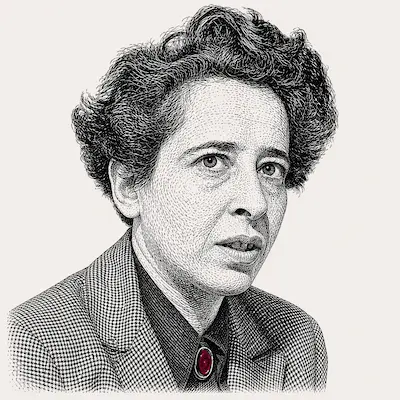
Rawls seeks legitimacy through philosophical justification, but legitimate power arises only when people act together in the public realm — and that realm has been systematically destroyed.
The crisis of trust in Western democracies reflects something deeper than institutional failure or policy disagreement. It reflects the substitution of administration for politics, of expertise for judgment, of representation for participation. When Schmidt managed the oil crisis through executive competence, when Roosevelt built international institutions through diplomatic negotiation, when Adenauer anchored democracy through institutional design — all were practicing administration, not politics. Effective administration, but not political action in the sense that generates legitimate power.
True political power emerges when people gather to act in concert on shared concerns — not to be governed more competently, but to govern themselves. The American revolutionaries understood this when they created town halls and constitutional conventions. But modern democracies have systematically eliminated spaces for such action, replacing them with elections that choose between administrative teams and bureaucracies that convert political questions into technical ones.
The banality of evil that I documented in Eichmann's case applies here: when political judgment is replaced by role performance, when citizens become clients of administrative services, when leaders become managers of complex systems — the capacity for political action atrophies. Trust cannot be restored through better administration. It requires creating spaces where citizens can act together on the problems that affect their common life, rather than simply choosing which experts will manage those problems for them.
The convergence note
Where the council converges:
All members agree that democratic legitimacy requires more than electoral victory — it demands sustained accountability to principles that constrain power and serve the common good.
Where it divides:
Whether trust restoration requires primarily institutional competence and external anchoring (Adenauer, Schmidt), moral accountability and principled leadership (Roosevelt), philosophical justification through public reason (Rawls), or the creation of spaces for authentic political participation (Arendt).
For a policymaker to decide on:
Whether to prioritise immediate institutional reforms that demonstrate competence, or to invest in longer-term changes that enable genuine citizen participation in political decision-making.