The Long Council
Who was selected, and why
How can trust in political leadership be restored in western democracies. Provide concrete steps and measures.
The central tension
Whether trust restoration requires primarily institutional reforms (transparency, accountability mechanisms) versus cultural and behavioral change in political leadership practices.
Selected members
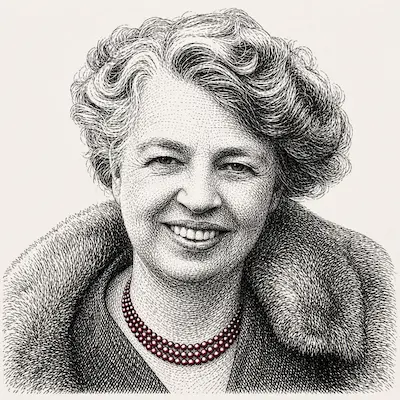
Eleanor Roosevelt
Will argue: Trust requires leaders who consistently demonstrate integrity through public accountability, direct citizen engagement, and willingness to admit mistakes while maintaining clear moral principles.
Architect of international human rights frameworks and documented advocate for public accountability through transparent civic engagement.
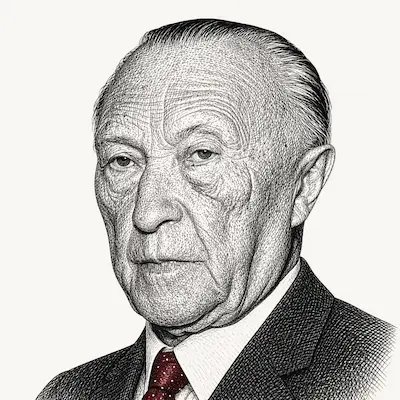
Konrad Adenauer
Will argue: Trust restoration requires demonstrable competence in governance outcomes, particularly economic performance, combined with institutional anchoring to prevent future democratic backsliding.
Successfully restored democratic legitimacy in post-war West Germany after catastrophic institutional failure and built enduring democratic trust from ground zero.
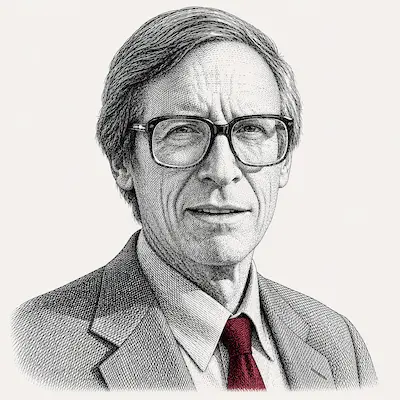
John Rawls
Will argue: Political legitimacy requires that policy positions be justifiable through public reasons that all citizens can accept, rather than through partisan, religious, or ideological arguments that exclude portions of the citizenry.
Developed the most systematic framework for political legitimacy in pluralist societies through "public reason", how political authority can be justified to all citizens regardless of their comprehensive moral views.
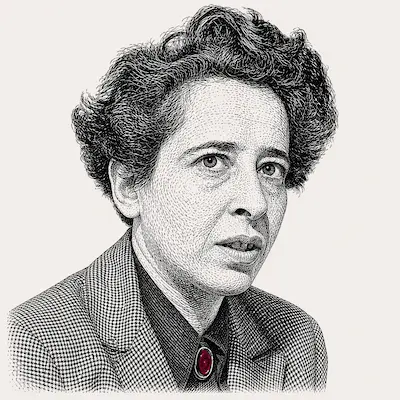
Hannah Arendt
Will argue: Trust crisis reflects the substitution of bureaucratic administration for genuine political action, restoration requires creating spaces for authentic civic participation where citizens can act together on shared concerns.
Theorist of the conditions under which political authority becomes legitimate versus when it degenerates into domination, with specific focus on how democratic erosion occurs.
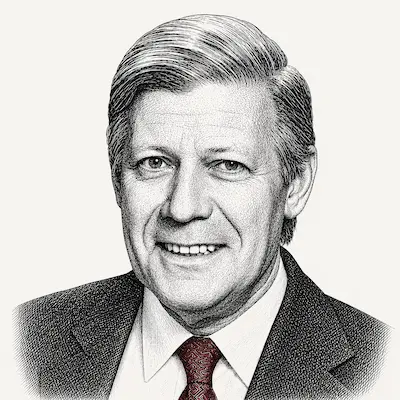
Helmut Schmidt
Will argue: Trust requires leaders who can imagine scenarios worse than the present, make unpopular but necessary decisions, and demonstrate that governance competence matters more than popularity in addressing genuine threats.
Governed effectively during multiple crises while maintaining democratic legitimacy, with documented positions on leadership credibility and the relationship between competence and public trust.
Considered but not selected
Mandela: Exceptional case of post-conflict legitimacy building but not directly applicable to established democratic systems facing trust erosion rather than foundational transition. - Thatcher: Demonstrated strong leadership but her polarizing approach and ideological consistency model may not address pluralist legitimacy requirements in diverse democracies. - LKY: His authoritarian efficiency model directly contradicts democratic accountability principles needed for trust restoration in Western contexts.