Why is there so much unrest in France, and how could this be turned around?
Built from documented writings, speeches, decisions and historical records. Council members argue from those positions, applied to today's question.
- 1A French court overturned Macron's announced nationwide demonstration ban, allowing a student protest march in Paris to proceed.
The council treats these as reported facts, not settled truth. The members supply the reasoning; the asker supplied the sources.
France keeps producing unrest because its institutions block both exit and voice, then treat the pressure as a policing problem.
Hirschman's mechanism is the sharpest anchor here. Rigid labour law, Parisian concentration, and housing regulation close off exit. When people cannot leave a bad situation, they shout. French institutions then read the shouting as disorder rather than as information about what is failing.
Hayek and Palme agree the state lacks the local knowledge to fix this from Paris, but they split on the remedy. Hayek argues deregulating labour and housing restores exit before pressure builds. Palme points to Sweden's 1970s Rehn-Meidner model: co-governance gave workers a channel inside institutions, so the street was not the only option.
Sen adds that aggregate figures hide the actual failure. A credentialed young person in a banlieue with no job is experiencing a real loss of freedom that Paris's budget numbers do not register.
The irreducible split is this: liberalise markets to restore exit, or build co-governance bodies to restore voice. Both diagnoses are correct. Choosing only one deepens what the other was meant to solve.
- 1Devolve labour market and housing regulation to regions, giving Lyon and Marseille authority to set rules matching local conditions.
- 2Build co-governance bodies in French industrial policy, giving workers and unions direct participation in adjustment decisions, not just consultation.
- 3Publish disaggregated capability data for banlieues annually, replacing aggregate GDP metrics as the official diagnostic tool for policy failure.
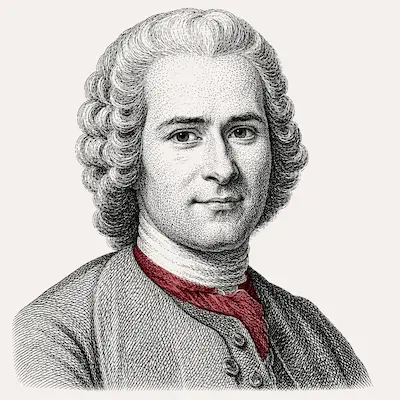
France is not ungovernable. It is ungoverned by its own people.
The street is where the general will goes when it has nowhere else. I watched the Parisian poor in the 1740s, taxed, excluded, spoken at rather than consulted, and I wrote then that property concentrated in few hands makes popular sovereignty theatrical. France has kept the theatre. A court overturning a march ban is not democracy working. It is democracy catching itself before it falls. The social contract is broken when citizens must fight for permission to speak.
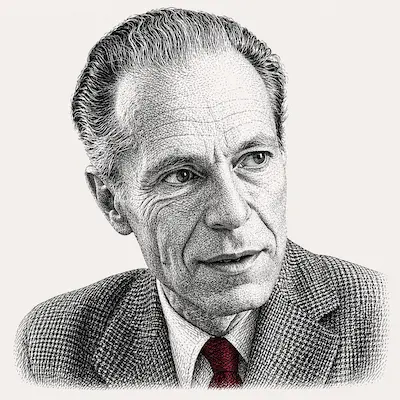
France traps people, then punishes them for shouting.
Rousseau asks what I have spent decades documenting. France suppresses exit on every front. Labour law makes changing jobs costly. Geographic concentration in Paris starves the provinces. Housing regulation blocks mobility. When exit is closed, voice is the only option, but French institutions then treat voice as disorder rather than information. I watched this same structure in Colombia in the 1950s: rigid systems that cannot absorb feedback accumulate pressure until it releases catastrophically. The yellow vests, the pension protests, the student marches are not pathologies. They are the system working exactly as its design requires.
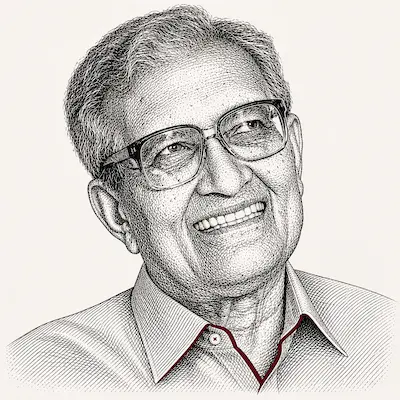
Unrest signals shrinking real freedoms, not ingratitude.
Hirschman asks the right question. Voice is a capability, and it atrophies when institutions do not treat it as information. France's aggregate statistics look reasonable: income, healthcare, life expectancy. But aggregate statistics hide what matters. A young person in a banlieue in 2026 with credentials and no employment, watching a court restore a march that the executive tried to cancel, is experiencing a capability failure that GDP cannot capture. In 1943 Bengal, food was being exported while people starved, the numbers looked fine from London. France's numbers look fine from Brussels. That is the diagnostic error.
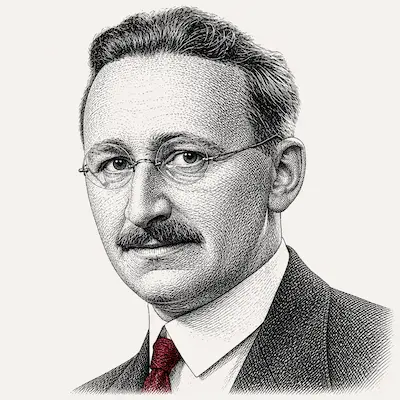
France's state is large enough to block everything, small enough to fix nothing.
Sen frames this as capability failure. I agree on the diagnosis; I dispute the cure. France's dirigiste state does not lack ambition, it lacks knowledge. No ministry in Paris can possess the dispersed local knowledge of what a worker in Lyon or a shopkeeper in Marseille actually needs. The result is uniform rules applied to non-uniform lives, and when those rules fail, the response is more rules. I wrote in 1945 that price signals aggregate what no planner can know. France has suppressed those signals across labour, housing, and enterprise for decades. The unrest is the signal the state refuses to read.
France chose the right destination but built the wrong machinery.
Hayek asks a fair question. Sweden's public sector in the 1970s was proportionally larger than France's. The difference is not size, it is architecture. The Rehn-Meidner model we built gave workers genuine co-governance of adjustment: active retraining, wage solidarity, union participation in industrial policy. We did not manage people from above; we built institutions through which people managed themselves. France built a centralised bureaucracy and called it solidarity. When I met Mitterrand in 1982, I said the same thing I say now: a state that delivers services without delivering voice will always face the street. The court that restored the Paris march this week proved the point, the judiciary had to compensate for what the executive refused.
The convergence note
Where the council converges: France's unrest is structural, not cyclical: institutions suppress feedback, concentrate power, and then treat the resulting pressure as a security problem rather than political information.
Where it divides: Rousseau and Sen argue the state must deepen democratic participation to restore the social contract. Hayek argues the state must shrink and deregulate to allow dispersed adaptation. Palme and Hirschman sit between them: Palme insists co-governed institutions can reconcile state capacity with democratic voice; Hirschman warns that blocking exit makes any institution, large or small, prone to explosive failure.
For a policymaker to decide on: Does France reform by devolving power to regions, sectors, and workers through new co-governance institutions, or by liberalising labour and housing markets to restore exit as a check on institutional failure? These are not the same reform, and choosing the wrong one deepens the problem the other was designed to solve.