The Long Council
Who was selected, and why
Why is there so much unrest in France, and how could this be turned around?
The central tension
Does French unrest reflect a broken social contract that needs more redistribution and participation, or a state that has grown too large and rigid to allow people to exit and adapt?
Where they stand
More state, more voice
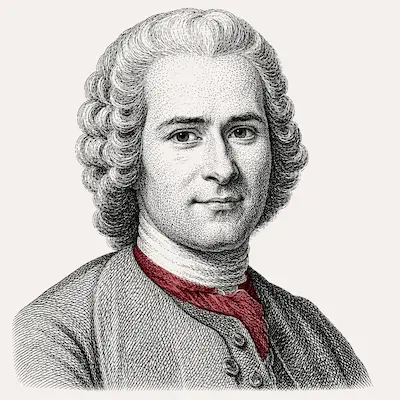 Jean-Jacques Rousseau
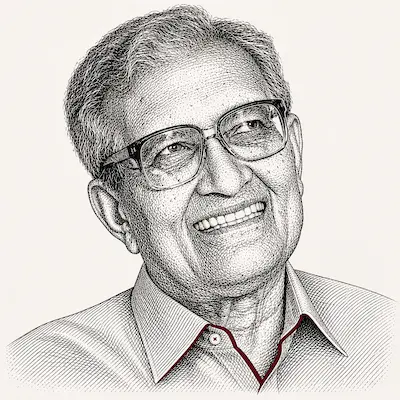 Amartya Sen
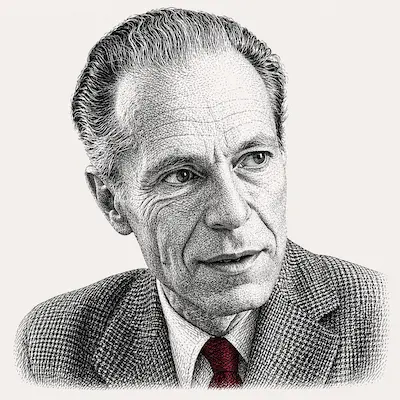 Albert O. Hirschman
Less rigidity, more exit
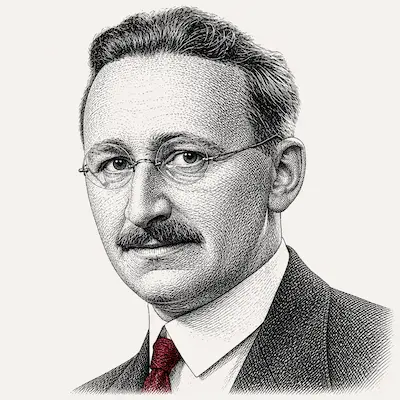 Friedrich Hayek
Tocqueville
Rebalancing note
The roster does not contain a strong liberal
Selected members
Jean-Jacques Rousseau
Will argue: France's unrest is the symptom of unresolved inequality; the social contract is a fraud when economic power remains concentrated and popular sovereignty is theatrical.
French unrest has recurred since 1789 partly because Rousseau's general will is built into French political culture but never fully delivered.
Albert O. Hirschman
Will argue: France suppresses exit options through labour market rigidity and geographic concentration, forcing voice in the streets; reform arguments are then blocked by perversity and futility rhetoric.
His exit/voice/loyalty framework diagnoses exactly when citizens protest, emigrate, or disengage from institutions they find declining.
Amartya Sen
Will argue: French unrest signals a capability failure, people whose real freedoms to participate in economic and civic life are shrinking cannot be pacified by aggregate growth statistics.
He provides the capability framework for evaluating whether French institutions genuinely expand freedom or merely maintain formal equality.
Friedrich Hayek
Will argue: France's unrest is produced not by insufficient redistribution but by a state large enough to prevent adaptation yet not nimble enough to deliver; the cure for rigidity is not more state but rule-of-law constraints on what the state can command.
He provides the structural counterargument that France's centralised state produces the rigidities that cause unrest by preventing adaptive responses to dispersed local knowledge.
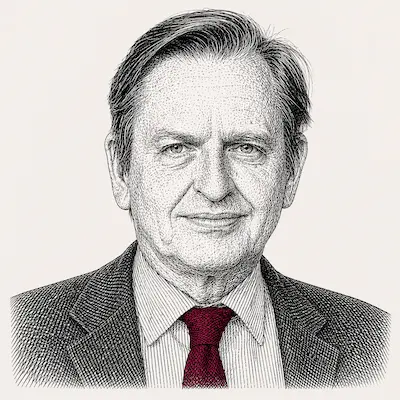
Olof Palme
Will argue: France chose the right destination but the wrong machinery, centralised bureaucracy and adversarial labour relations cannot deliver the trust-based outcomes that only decentralised, co-governed institutions produce.
He governed the closest empirical comparator to France's social ambitions with demonstrably better legitimacy outcomes, making him the council's practitioner test case for what France's model could be.
Considered but not selected
Ibn Khaldun: His asabiyya cycle and dynastic decay framework is analytically interesting for French institutional exhaustion, but his unit of analysis is dynastic solidarity rather than democratic legitimacy. His framework adds less than Rousseau and Hirschman on this specific question, and the table is already diagnostically complete without him.
Frantz Fanon: Potentially relevant if the question were centred on postcolonial minority unrest in France's banlieues, where his framework on colonial psychology and structural exclusion would be powerful. The question as framed addresses France's unrest broadly, and his framework would be most useful in a more specifically targeted sub-question. He could be added if the council narrows its focus.
Margaret Thatcher: A credible defender of the market-rigidity pole, but Hayek provides the more principled theoretical case and her documented record is specific to the British context with a different institutional starting point. Adding her would echo Hayek without adding a distinct analytical register.