What are humanity's biggest mistakes in human nature, and how do they show up in the world we're living in now?
Built from documented writings, speeches, decisions and historical records. Council members argue from documented positions, applied to today's question.
Humanity's greatest mistake is designing institutions that systematically fail to align human behavior with collective flourishing, though the council reveals this failure has multiple, interconnected dimensions that resist any single solution.
Sen identifies the reduction of human potential to narrow economic functions, Machiavelli points to institutional design that ignores self-interest rather than channeling it, Ibn Khaldun exposes how prosperity itself erodes the social bonds that create prosperity, and Rousseau argues that artificial inequality corrupts our natural capacity for cooperation. Each diagnosis captures a real mechanism: we do treat people as means rather than ends, we do build systems assuming virtue will triumph over self-interest, successful societies do lose the discipline that made them strong, and we do mistake constructed inequalities for natural necessity.
The irreducible split lies in whether institutional reform should prioritize human development, effective governance, cyclical management, or fundamental restructuring — a choice that depends on your assessment of human nature's malleability and which trade-offs between stability and justice you're willing to accept.
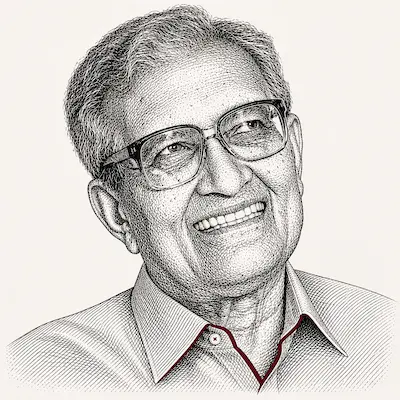
Humanity's greatest mistake is treating people as means rather than ends.
The capability approach reveals our deepest error: we consistently reduce human potential to narrow economic functions or abstract statistics. My work documenting famines showed this clearly — the 1943 Bengal famine occurred while food was being exported because we treated hungry people as market failures rather than human beings with fundamental entitlements. We measure GDP while ignoring whether people can live lives they have reason to value. We design economic systems that deny basic human capabilities — health, education, political participation — then wonder why these systems fail.
This error manifests everywhere in our current world. We accept massive inequality as natural when it systematically prevents millions from developing their human potential. We subordinate education to job training, healthcare to economic productivity, political participation to expert management. The results are visible: democratic backsliding because people feel powerless, economic systems that create wealth but not human development, and societies where technical progress coexists with expanding human deprivation.
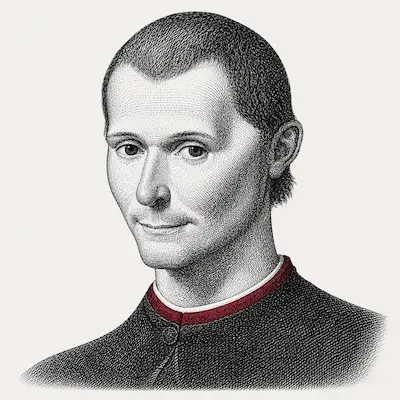
The gravest error is designing institutions for humans as we wish them to be rather than as they are.
Sen's idealism, while admirable, exemplifies our fundamental mistake: assuming good intentions produce good outcomes. My observation of Cesare Borgia and Pope Julius II taught me that humans are primarily self-interested, and institutions that ignore this create the very suffering Sen condemns. The 1943 Bengal famine he cites was not caused by treating people as means rather than ends — it was caused by officials who pursued personal advantage while food rotted in warehouses. No amount of capability-focused rhetoric would have fed the hungry; competent administration backed by effective enforcement might have.
Our current crises — democratic erosion, institutional capture, the gap between policy promises and delivery — stem from this same error. We design systems assuming virtue will triumph over self-interest. Instead, we must channel self-interest toward collective benefit. A ruler who cannot use both law and force, who relies only on moral suasion, will be destroyed by those willing to employ whatever means necessary. This is not cynicism but mathematics: in any system, those who ignore constraints will outcompete those who observe them unless the constraints are enforced.
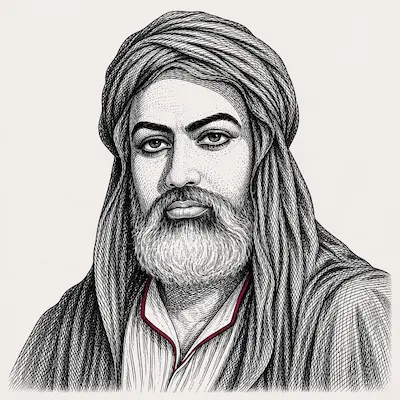
Our greatest failure is not understanding that prosperity destroys the solidarity that creates prosperity.
Both previous speakers miss the temporal dimension. Sen assumes human potential is static and improvable through institutions; Machiavelli assumes human nature is fixed and manageable through design. My analysis of dynastic cycles reveals the deeper error: we fail to understand that social cohesion (asabiyya) — the bonds that enable collective action — systematically weakens under the very conditions it creates.
This appears everywhere in our contemporary world. Wealthy democracies lose civic engagement as material comfort reduces the necessity for mutual dependence. The European Union faces fragmentation as prosperity reduces member states' willingness to sacrifice for collective benefit. American political polarisation reflects the dissolution of social bonds that once enabled compromise. Even China, despite its current strength, shows early signs of the luxury-induced weakness I documented: declining birth rates, reduced social mobility, elite capture of institutions.
The pattern is structural, not moral. Groups with strong solidarity displace comfortable elites, build prosperity, then lose the discipline that made them strong. We see this in corporate life cycles, political movements, even academic institutions. Success breeds entitlement; entitlement breeds vulnerability. The question is not whether this cycle can be prevented — it cannot — but whether societies can manage renewal without catastrophic collapse.
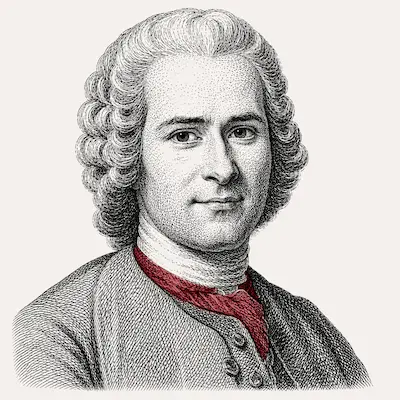
Humanity's deepest error is accepting artificial inequality as natural necessity.
Khaldun's cycles describe symptoms, not causes. The fragmentation he observes results from institutions designed to serve property rather than people, creating artificial scarcity amid abundance. The European Union fragments not because prosperity destroys solidarity, but because it serves capital mobility while restricting human mobility. American polarisation reflects not comfort but systematic exclusion from the economic gains that technological advance should provide to all.
Our fundamental mistake is philosophical: we have inverted the natural order. Property preceded law only because force created it; we then constructed legal systems to protect what force had stolen. The result is societies where a few accumulate beyond any human need while many lack basic necessities. This artificial scarcity creates the competition and mutual suspicion that makes solidarity impossible — not prosperity itself, but its mal-distribution.
Modern technology could enable genuine equality and authentic human development, but we deploy it through institutions designed for accumulation. Social media could enable democratic participation but serves surveillance capitalism. Automation could eliminate drudgery but threatens livelihoods because we cannot imagine prosperity without property relations. The general will — the common good discoverable through genuine democratic participation — remains obscured by institutional structures that privilege private interest over public benefit. Until we recognise that current inequalities are constructed, not natural, we will continue treating their consequences as inevitable rather than remediable.
The convergence note
Where the council converges All members agree that humanity's mistakes stem from institutional design that fails to account for actual human behaviour and social dynamics, not from human nature itself.
Where it divides Sen emphasises human potential constrained by inadequate institutions; Machiavelli emphasises self-interest requiring effective constraints; Ibn Khaldun emphasises cyclical patterns that no institutional design can permanently overcome; Rousseau emphasises artificial inequality corrupting natural human capacity for cooperation.
For a policymaker to decide on Whether current institutional reforms should prioritise human development (Sen), effective governance mechanisms (Machiavelli), managing inevitable cycles (Ibn Khaldun), or fundamental restructuring toward equality (Rousseau) — a choice that requires weighing competing values about human nature, institutional possibility, and acceptable trade-offs between stability and justice.