Built from documented writings, speeches, decisions and historical records. Council members argue from documented positions, applied to today's question.
Countries must build institutions that give educated citizens meaningful work and genuine voice.
Lee Kuan Yew proved city-states can retain talent by creating excellence in governance and infrastructure. Gandhi showed continental democracies can build world-class institutions but failed to create productive employment around them. Sen demonstrates that economic opportunity without intellectual freedom still drives emigration. Sirleaf establishes that post-conflict states must rebuild basic security and revenue collection before competing for talent.
The council splits on sequencing: build economic opportunity fast through external partnerships, or build slowly on indigenous foundations to maintain control.
- 1Build world-class institutions in specific sectors where the country can achieve genuine excellence, not broad mediocrity.
- 2Establish revenue systems that can pay competitive public sector salaries and fund merit-based promotion.
- 3Create intellectual freedom for educated citizens to participate in public debate and pursue meaningful work.
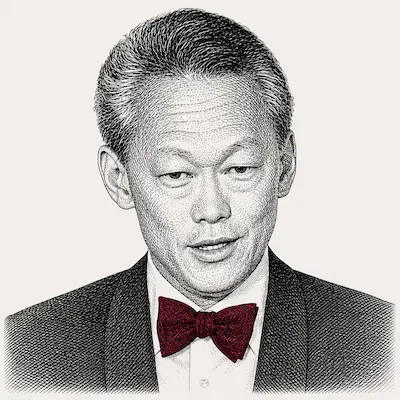
Countries lose talent when they offer no path to excellence.
Singapore in 1965 had no natural resources and a population fleeing to Australia and Britain. I made a simple calculation: if we could not offer higher salaries than London, we had to offer something London could not. We built the world's best airport, the most efficient port, and a government that worked. We paid civil servants more than the private sector and promoted on merit alone. When you create excellence, talent stays to be part of it.
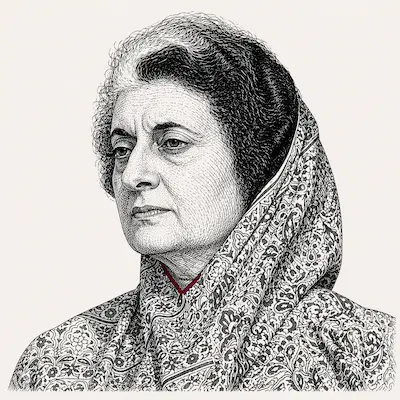
Brain drain reflects state failure, not individual choice.
Continental democracies can build excellence, but differently than city-states. In 1966 I established the IITs not to compete with MIT for the same students, but to create indigenous centers of excellence that would eventually draw talent back. The nuclear programme and space research gave our best scientists meaningful work at home. The failure was not in the institutions we built but in the economy we built around them. India's licence raj could educate engineers but not employ them productively.
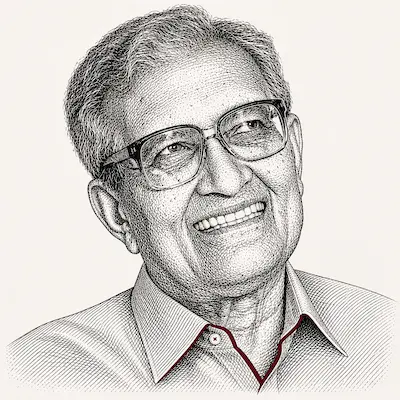
People leave when they cannot live lives they value.
Jobs matter, but freedom to choose meaningful work matters more. I left India for Cambridge not because India lacked universities, but because it lacked the intellectual freedom to pursue the questions that mattered to me. The brain drain reflects not just economic opportunity but the absence of what I call substantive freedoms: the ability to participate in public debate, to criticize policy, to pursue knowledge without political constraint. The 1975 Emergency accelerated emigration precisely because it eliminated these freedoms.

Fragile states must build security before they can retain talent.
Freedom and jobs require institutional foundations that post-conflict states lack entirely. When I took office in 2006, Liberia had no functioning civil service, no electricity grid, and a traumatized population. Our best-educated citizens were refugees in Ghana and the United States. I had to rebuild the basics first: a revenue authority that could pay salaries, courts that could enforce contracts, police that could maintain order. Only then could we attract diaspora talent back to rebuild what war had destroyed.
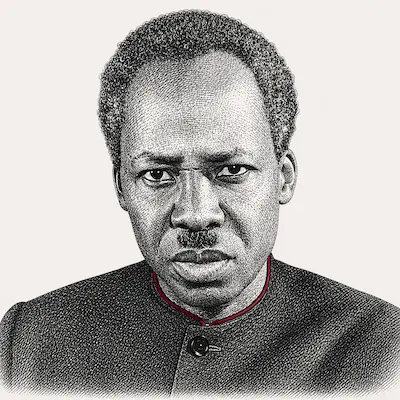
Self-reliance means building what your people can sustain.
External dependency is not the problem; external dependency without building domestic capacity is. I tried to avoid IMF conditions for fifteen years because I believed Tanzania could develop through its own efforts. I was wrong about the timeline but right about the principle. Countries that build only what foreign capital demands create economies that serve external markets, not their own people. The brain drain from Tanzania reflected my failure to create productive work for educated citizens, not the failure of self-reliance as a goal.
The convergence note
Where the council converges: Brain drain reflects governance failure more than market failure. Countries must build institutions that give educated citizens meaningful work and genuine voice.
Where it divides: Whether states should accept external conditions to accelerate development, or build more slowly on indigenous foundations to maintain sovereignty.
For a policymaker to decide on: The sequencing choice: security and institutions first, or economic opportunity first, when resources allow only one.