Which poses a greater threat to democracy: economic inequality or political polarization?
Built from documented writings, speeches, decisions and historical records. Council members argue from documented positions, applied to today's question.
Inequality is the greater threat. Polarization is what inequality produces when citizens notice the gap.
Rousseau, Luxemburg, and Hirschman each trace a separate mechanism from inequality to democratic collapse. Concentrated wealth distorts civic voice, funds elite exit from shared institutions, and lets demagogues fill the space left behind. Hirschman's Colombia case makes this concrete: when wealthy citizens exit public schools and hospitals, those institutions decay, and polarizing rhetoric finds ready audiences in the wreckage.
Arendt's counter-evidence is real and must be named. Weimar Germany in 1932 showed millions of non-starving citizens voting to dissolve a republic, driven by atomization rather than hunger. Polarization can accelerate democratic collapse even when material conditions are not desperate.
But the council's weight falls on the structural side: Palme's Sweden, built on the Rehn-Meidner wage compression model from the 1950s onward, reduced the grievances that polarization feeds on. Arendt names a genuine accelerant; Rousseau, Luxemburg, Palme, and Hirschman name the fuel.
- 1Prioritize redistribution programs that compress material inequality before investing in civic discourse restoration, following Palme's sequencing logic.
- 2Halt elite exit from public schools and hospitals by making shared institutions the default for all income levels.
- 3Publish annual audits of institutional quality gaps between public and private services, naming the exit points Hirschman identified.
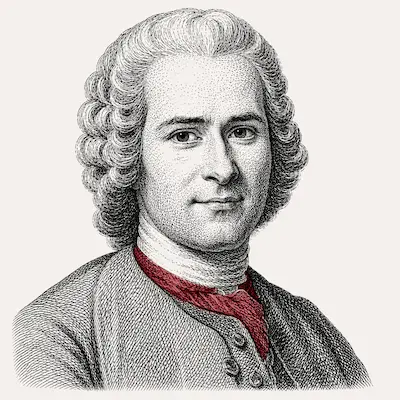
Inequality is the wound; polarization is only the bleeding.
When a small number of men possess what many need, the general will cannot form. I watched this in the Paris salons of the 1750s: men of property spoke the language of common good while protecting arrangements that excluded everyone below them. Polarization is what inequality produces when citizens finally notice the gap. Treating the symptom while leaving the wound open is governance theater, not governance. You cannot have genuine civic equality among people whose material stakes are radically opposed.
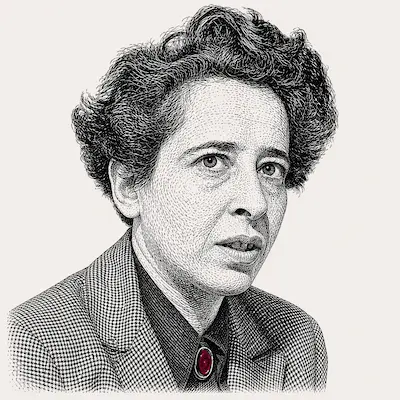
Polarization destroys the shared world democracy requires.
Rousseau asks whether polarization needs inequality as fuel. I answer: not always. I watched totalitarianism rise in Weimar Germany, and the precondition was not poverty alone but atomization. When citizens lose a shared public world, when they can no longer agree on basic facts, they become raw material for demagogues. The November 1932 elections showed this: millions of Germans who were not starving voted to dissolve the republic. Inequality weakens people; the collapse of shared reality destroys the political space where democracy lives.
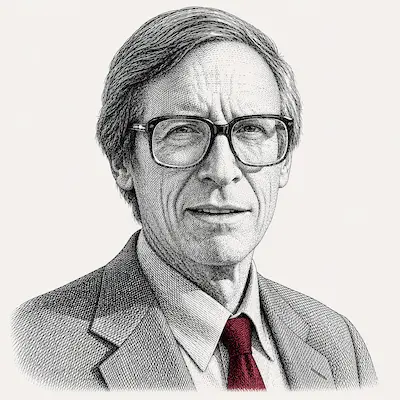
Both threats spiral together through the basic structure.
Arendt's challenge is sharp. My answer: the basic structure of society governs the distribution of rights, opportunities, and wealth. When that structure permits extreme inequality, it corrodes the public reason on which political liberalism depends. Citizens with vastly different material positions cannot sustain the overlapping consensus that justifies shared institutions. But Arendt is also right: when public reason collapses, redistribution becomes politically impossible. The difference principle and the conditions for public deliberation are mutually dependent. Separate them analytically, and both deteriorate together.
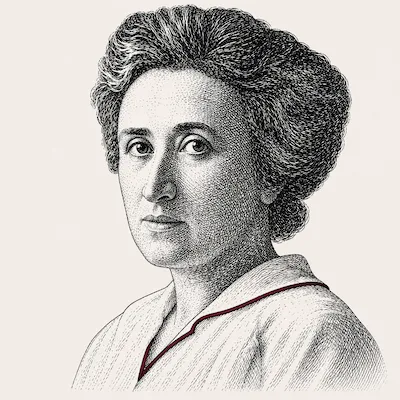
Polarization is capitalism's theater; inequality is its script.
Rawls asks whether parliamentary redistribution can break the spiral. It cannot, and the SPD's August 1914 vote for war credits proved it. When concentrated wealth captures parties, press, and legislative processes, the apparent cultural war between citizens conceals the structural class conflict beneath. I documented this mechanism in 1899 against Bernstein: reforms improve conditions without addressing the mechanism of exploitation. What looks like polarization is wealthy elites mobilizing cultural grievance to prevent citizens from identifying their common material interest.
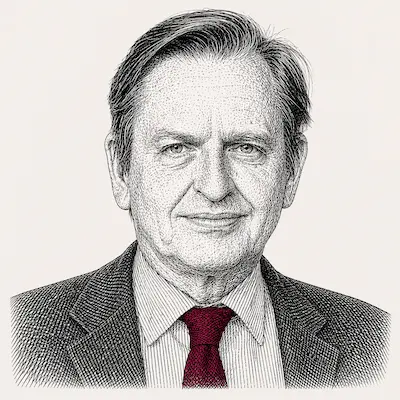
Sustained redistribution reduces the grievances polarization feeds on.
Luxemburg's challenge is the right one. Sweden's answer, built through the Rehn-Meidner model from the 1950s onward, was not to suppress polarization but to remove its material foundation. Universal social insurance, compressed wages, and active labor market policy gave citizens genuinely similar material stakes. When your neighbor's child attends the same school and the same hospital as yours, the demagogue's wedge finds no gap to enter. Luxemburg was right that reform cannot transform capitalism's structure. She was wrong that reform cannot transform democracy's durability.
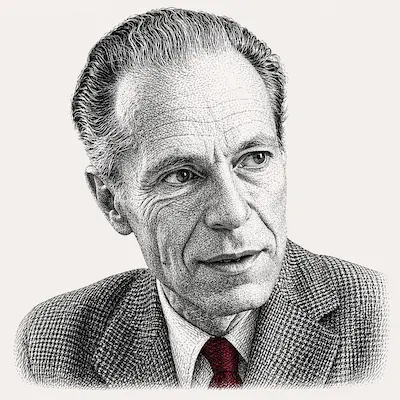
Inequality silences voice; polarization fills the vacuum it leaves.
Palme's redistribution works when elites stay inside shared institutions. My exit/voice framework explains what happens when they leave. In Colombia in the 1950s, I watched wealthy citizens exit public schools, public hospitals, and public spaces. Those institutions then deteriorated, producing exactly the grievances that polarizing rhetoric exploits. Inequality does not simply reduce voice among the poor. It enables elite exit, which hollows out the institutions where common political life is conducted. Polarization is not the cause of democratic erosion. It is what grows in the institutional space that inequality empties.
The convergence note
Where the council converges: Inequality and polarization are causally linked, not independent threats; none of the six treats them as genuinely separable.
Where it divides: Rousseau, Luxemburg, and Palme treat inequality as structurally prior; Arendt insists polarization can destroy democracy independently of material conditions. Luxemburg directly challenges Palme: she argues parliamentary redistribution cannot break the structural loop; Palme's governance record is his counter-evidence.
For a policymaker to decide on: Choose whether to prioritize redistribution programs that reduce material inequality, or invest first in restoring shared civic institutions and factual public discourse, since Hirschman's framework suggests elite exit makes both harder simultaneously.