Built from documented writings, speeches, decisions and historical records. Council members argue from those positions, applied to today's question.
Markets create wealth but cannot justify how it spreads. Government must guarantee floors without destroying the price signals that coordinate production.
Friedman and Hayek anchor in market efficiency: voluntary exchange rewards contribution and aggregates knowledge no planner can possess. Rawls and Sen counter that outcomes need moral justification: inequality must benefit the worst-off and expand real capabilities. Palme bridges both with Sweden's 1970s model, where high taxes funded education that made equality productive.
The split is irreducible: whether market outcomes are discoveries to respect or distributions to judge.
- 1Establish minimum income floors through contributory insurance that citizens feel they have earned, not charity.
- 2Fund education and retraining programs that expand real capabilities, not just redistribute existing wealth.
- 3Maintain price signals for production coordination while redistributing outcomes through taxation, not market interference.
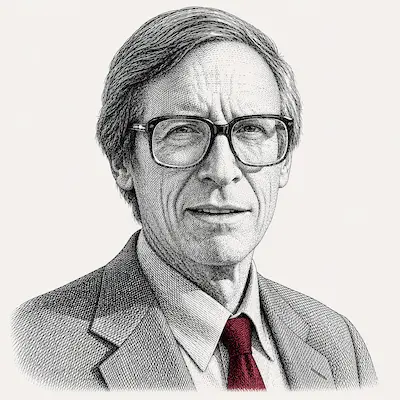
Justice requires inequalities to benefit society's worst-off members.
Behind a veil of ignorance, not knowing whether you would be rich or poor, what distribution would you choose? You would demand that any inequality must improve the position of the least advantaged. In 1971 I developed the difference principle precisely to answer this question. A just society is not one with perfect equality, but one where inequalities work for everyone, especially those with the least. Wealth concentration that merely rewards the already privileged fails this test completely.
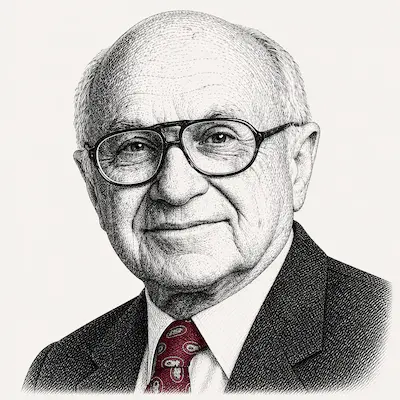
Markets reward contribution and punish waste better than any bureaucrat.
Rawls assumes someone can determine who deserves what. Markets already do this through voluntary exchange. When I buy your services, I pay what they are worth to me. When you work harder or smarter, you earn more. In 1962 I showed that this system produces more prosperity for everyone, including the poor, than any redistribution scheme. The Soviet Union tried planned equality and produced shared poverty. Free markets create the wealth that makes charity possible.
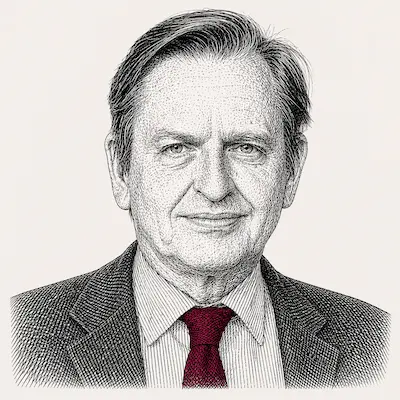
Equality builds the institutional trust that makes economies productive.
Friedman confuses cause and effect. Sweden achieved both equality and efficiency through the Rehn-Meidner model. In the 1970s we combined active labour market policy, solidarity wages, and universal social insurance. The result was full employment, low inflation, and rising productivity simultaneously. High taxes funded education, healthcare, and retraining that made our workforce the most skilled in Europe. Equality was not the cost of growth but its foundation.
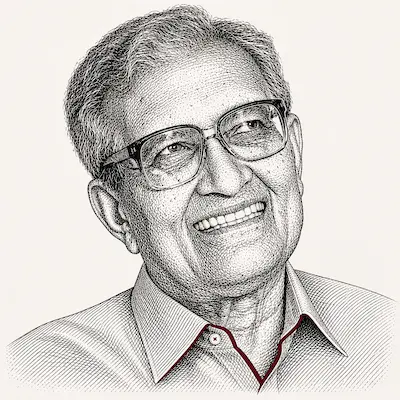
Distribution should enable what people can actually do and be.
Palme's institutional approach is essential but incomplete. Income equality means nothing if women cannot leave their homes, minorities cannot access schools, or disabled people face insurmountable barriers. In my work on capabilities since the 1980s, I have shown that development requires expanding real freedoms, not just redistributing money. A society where everyone has equal income but unequal opportunities to participate, learn, and choose has not achieved justice.
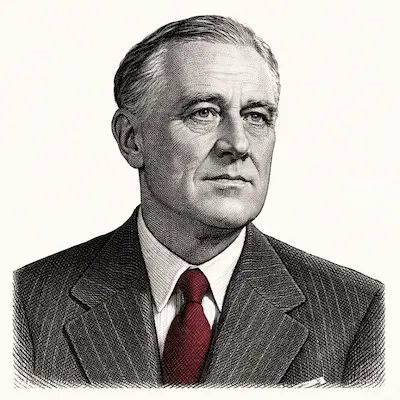
Social insurance saves capitalism from its own excesses.
Sen is right that capability matters, but government must guarantee the floor first. In 1935 I designed Social Security as contributory insurance, not charity, because Americans needed to feel they had earned their benefits. The New Deal was not socialism but capitalism's insurance policy. Markets produce tremendous wealth and occasional catastrophic failures. Government exists to catch people when they fall, not to direct the economy. Without that safety net, capitalism destroys itself through social instability.
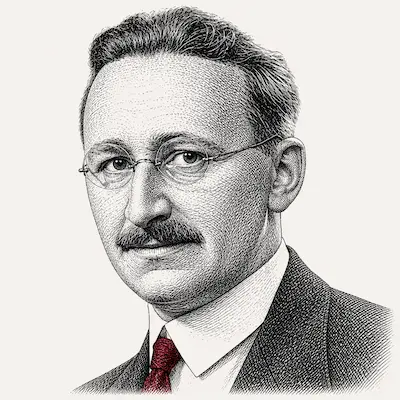
Market outcomes cannot be judged just or unjust because no one designed them.
Roosevelt misunderstands the knowledge problem. When markets "fail," they are discovering information that central planners cannot possess. Prices aggregate the dispersed knowledge of millions of individuals about their needs, preferences, and capabilities. In 1945 I demonstrated that no government can replace this information system. A minimum income floor is compatible with freedom, but attempts to engineer "fair" outcomes destroy the market's ability to coordinate human action. The result is shared poverty, not shared prosperity.
The convergence note
Where the council converges: Markets are powerful wealth-creating mechanisms. Some form of social provision is necessary in modern societies.
Where it divides: Whether inequality requires moral justification (Rawls, Sen) or emerges from voluntary exchange (Friedman, Hayek). Whether equality enables efficiency (Palme) or trades against it (Friedman).
For a policymaker to decide on: How much redistribution to accept, through what mechanisms, and at what cost to economic dynamism.