Built from documented writings, speeches, decisions and historical records. Council members argue from documented positions, applied to today's question.
India must redistribute, but the council splits on whether to transfer income now or redistribute land and credit first.
Sen points to 2013 evidence that Indian states spending more on health and primary education cut poverty faster than high-growth states did. Rawls argues income transfers leave land, capital, and credit concentrated, so citizens remain supplicants rather than owners. Nehru warns that transfers channelled through weak institutions feed intermediaries, not the poor; Deng adds that without growth, redistribution divides scarcity.
The split is real and unresolved: Sen and Rawls say deprivation itself blocks the institutional maturity Nehru wants first. Nehru and Deng say redistributing before capacity is built wastes the transfers.
- 1Expand public spending on health and primary education in low-income Indian states, targeting the capability gap Sen documented.
- 2Broaden land and credit ownership through property registries, not income transfers alone, as Rawls specified.
- 3Build administrative delivery capacity before scaling transfer programmes, to prevent intermediary capture Nehru identified.
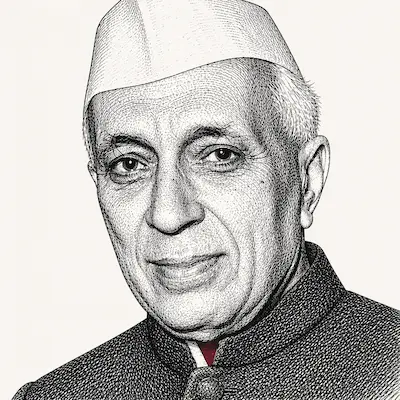
Redistribution without state capacity produces corruption, not justice.
I built the Planning Commission in 1950 believing that coordinated public investment would lift India's poor through industrialisation and infrastructure. I was partly right and badly wrong in sequence. What I underestimated was this: ambitious redistribution channelled through weak institutions does not reach the poor. It feeds the intermediaries. The licence raj I created to direct resources toward equity became a machine for rent extraction. India must build the administrative and legal capacity to deliver before it designs the transfers.
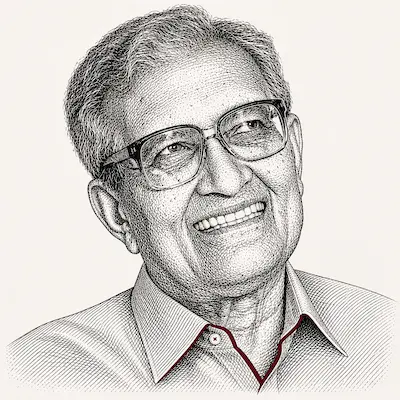
Capability deprivation is itself the barrier to building institutions.
Nehru asks whether capability-building must precede redistribution. I watched India answer that question for seventy years, and the answer is no. In 2013, Jean Drèze and I documented that Indian states with higher public spending on health and primary education showed faster reductions in poverty than states with faster GDP growth. The Bengal famine of 1943 killed three million people not because food was absent but because entitlements collapsed. Waiting for institutional maturity before redistributing is waiting for a condition that deprivation itself prevents.
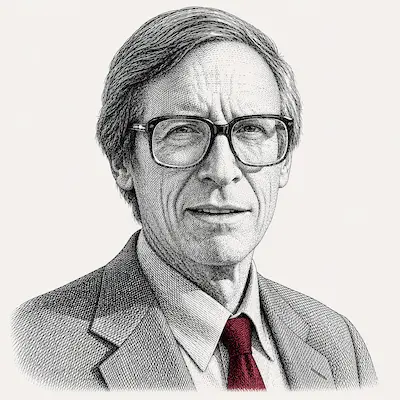
India needs asset redistribution, not merely income transfers.
Sen asks which assets matter. The basic structure of society is the primary subject of justice, and that structure includes who owns productive property. Income transfers leave the underlying ownership of land, capital, and credit intact. A property-owning democracy distributes productive assets broadly so that citizens enter markets as genuine participants, not supplicants. India's wealth concentration is not corrected by welfare payments. From behind a veil of ignorance, no rational person would choose a system that transfers income while leaving asset ownership untouched.
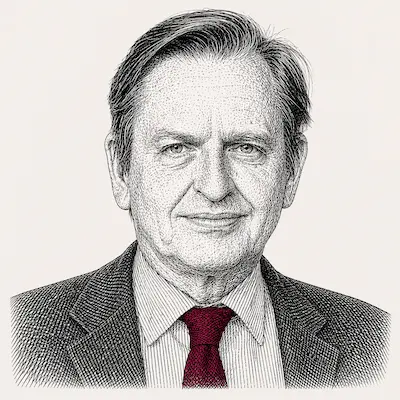
Redistribute through wage structure before wealth concentrates, not after.
Rawls asks whether wages substitute for asset redistribution. In Sweden between 1969 and 1976, the Rehn-Meidner solidarity wage compressed differentials across industries, forcing unproductive firms to restructure while lifting the lowest-paid workers without waiting for transfers. Redistribution happened at the point of income creation, not after. I must flag directly: India's economy is roughly ninety percent informal, and our model assumed a formally employed, unionised workforce. The mechanism cannot transplant. But the principle holds: intercept inequality before it solidifies into inherited wealth, not afterward.
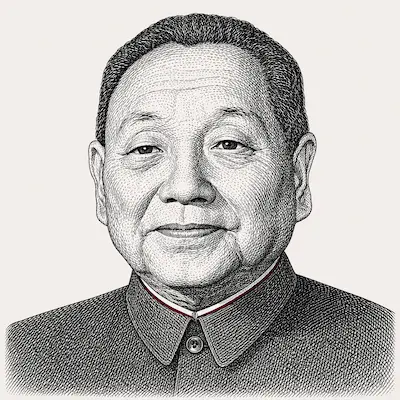
Growth creates the surplus that makes redistribution fiscally real.
Palme asks whether growth-first means redistribution never. In 1978 I dismantled collective agriculture and introduced household responsibility. Within six years, rural poverty fell faster than any transfer programme had achieved. The surplus that growth generates is not a theoretical future benefit. It is the actual tax base, the actual public budget, the actual school and clinic. I governed through authoritarian means unavailable to India, and I say so plainly. But the sequence holds regardless of political system: without growth, redistribution is a division of scarcity. India must grow the numerator before fighting over the denominator.
The convergence note
Where the council converges: Income transfers alone are insufficient. All five members agree that durable redistribution requires institutional capacity, whether through assets, wages, capabilities, or growth.
Where it divides: Nehru and Deng argue that growth and institutional capacity must precede redistribution; Sen and Rawls argue that deprivation itself blocks that sequencing, making early redistribution the precondition. Palme agrees with Sen on timing but disagrees with Rawls that asset redistribution is more important than wage structure.
For a policymaker to decide on: Does India tax and redistribute income now through direct transfers, or does it first expand land, credit, and productive asset ownership broadly? The answer determines whether the next decade of policy targets welfare rolls or property registries.