Should a strong leader take priority over democratic consultation during a crisis?
- HA
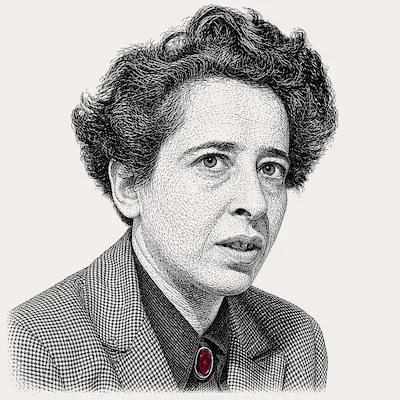 Hannah
Arendt - NM
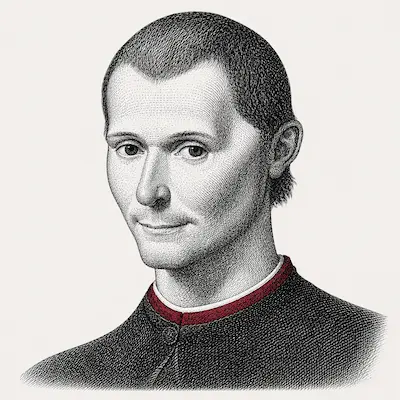 Niccolò
Machiavelli - JR
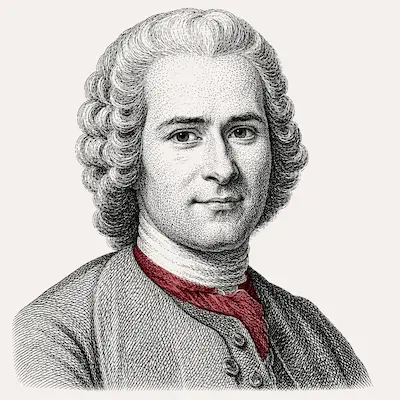 Jean-Jacques
Rousseau - DB
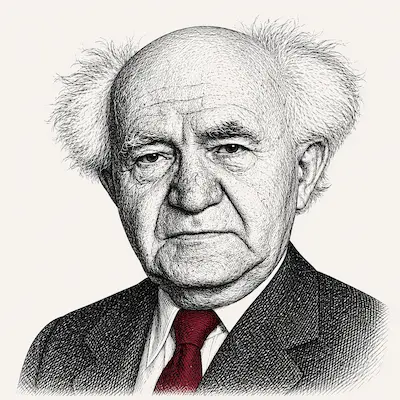 David
Ben-Gurion - MKA
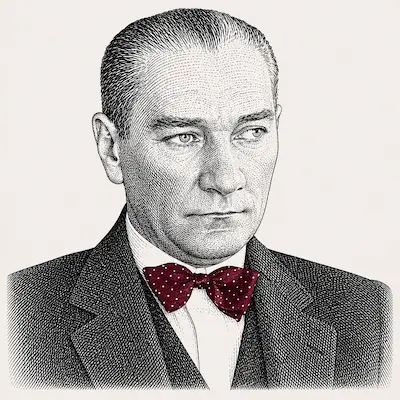 Mustafa Kemal
Atatürk - JN
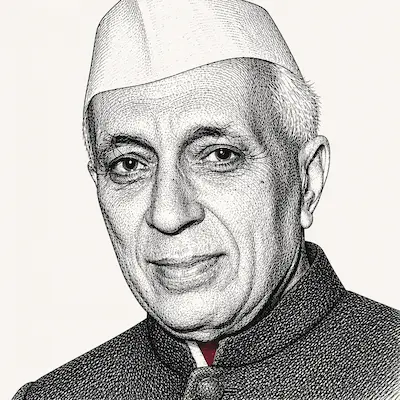 Jawaharlal
Nehru
Built from documented writings, speeches, decisions and historical records. Council members argue from those positions, applied to today's question.
- 1Marine Le Pen is being positioned this weekend as a presidential candidate amid France's unrest.
- 2Le Pen promises order and authority, comparing her approach to General De Gaulle's.
The council treats these as reported facts, not settled truth. The members supply the reasoning; the asker supplied the sources.
A strong leader does not outrank democratic consultation in a crisis; a bounded emergency does, briefly, and only with a fixed exit.
Machiavelli and Ben-Gurion accept fast, centralised action when the state's survival is genuinely at stake. Ben-Gurion fired on the Altalena in June 1948, then dissolved that power into one national army under one government. Atatürk abolished the Caliphate in 1924 to save the Turkish state, but never built the institutions to hand power back. Nehru refused emergency powers after 1947's partition massacres and kept India plural; that restraint outlasted him.
Arendt and Rousseau's objection is sharper than timing: a leader who claims to speak for the nation above its institutions is already describing their collapse, not fixing it. The council splits on whether force can stay bounded by design, Machiavelli and Ben-Gurion say yes if law follows, Atatürk's own record says it usually doesn't.
- 1Define the exit conditions for any emergency authority before granting it, specifying the threat it answers and the moment it ends.
- 2Reject any leader's claim to speak for the nation above its institutions, since this claim itself signals collapse rather than crisis management.
- 3Require that any centralised emergency action dissolve into ordinary institutional control afterward, as Ben-Gurion did with the IDF in 1948.
Order rhetoric in a crisis is the warning sign, not the solution.
A leader who promises to cut through disorder by concentrating authority is describing the collapse of power, not its exercise. In 1951 I traced how atomised citizens, stripped of real political participation, become raw material for exactly this appeal. France's unrest reflects institutions that no longer let people act together, not a deficiency correctable by one strong figure above them. The remedy for a hollowed public life is not a fuller executive. It is restoring the arenas where citizens act in concert.
Order may justify a strong hand, but only briefly and by result.
Arendt is right that force alone builds nothing lasting, but she understates how quickly real disorder outruns deliberation. In the Discourses I wrote that where the safety of the state is at stake, no other consideration should prevail. I watched Cesare Borgia pacify the Romagna through terror in 1502, swiftly and then stop. His failure came not from the method but from building no institutions behind it. A leader who acts first must still answer to law afterward, or they are merely a new disorder wearing the old one's clothes.
Claiming to embody the nation's will is how freedom disappears.
It does not earn consent, it manufactures the appearance of it. I argued in 1762 that sovereignty belongs to the people exercising the general will directly, never to a single figure who declares himself its voice. A leader who says the institutions have failed and only they speak for the true France is using my own vocabulary against the people it was meant to protect. I documented this danger myself: a founder claiming extraordinary authority to give the people laws is a circle I never fully closed.
Emergency power is legitimate only if institutions survive and absorb it.
It becomes domination the moment it outlives the threat that justified it. In June 1948 I ordered the IDF to fire on the Altalena rather than tolerate a second armed force inside our new state. That was centralised, unilateral, and fast. But it built one army under one government, then stopped. France is not fighting for its existence as my country was. Rousseau is right that a leader who claims the nation's voice without submitting to its laws afterward is building nothing but his own position.
Fast, imposed order rescues a state, then refuses to release it.
It mostly entrenched, and I will not pretend otherwise. In 1924 I abolished the Caliphate in a single legislative act, because slow reform would have let the old order mobilise against me. That speed saved the Turkish state from collapse after empire. But the single-party rule I called transitional lasted past my death, and I never built the institutions to hand power back. Ben-Gurion stopped when the threat passed. I did not. Le Pen's appeal to de Gaulle should worry people precisely at that second step, not the first.
Patience under pressure builds the only order that outlasts the leader.
Yes, because the alternative costs more than it saves. In 1947 I governed a nation torn by partition massacres, with every incentive to seize emergency power against Pakistan and against Muslims inside India. I refused, and staked my authority on keeping India plural and parliamentary instead. Atatürk is honest that his order never released its grip. Mine was slower and messier, but it survived me. A leader who says only they can save France is asking the country to bet its institutions on one life.
The convergence note
Where it converges: Every member agrees a leader who claims to embody the nation above its institutions is dangerous. All accept that genuine emergencies can justify fast, forceful action.
Where it divides: Machiavelli and Ben-Gurion say decisive force can be legitimate if bounded and temporary. Arendt and Rousseau say the claim to speak for the nation is itself the danger, not its duration. Atatürk's own record splits the difference and indicts it.
For a policymaker to decide on: Whether France's unrest is an existential threat justifying bounded emergency authority, or a political crisis requiring restored participation. The council's authority bloc demands a visible exit plan before granting any new power.