The Long Council
Who was selected, and why
Should a strong leader take priority over democratic consultation during a crisis?
The central tension
When a country feels like it's falling apart, does a strong single leader fix things, or does bypassing debate make things worse?
The two poles
Decisive authority
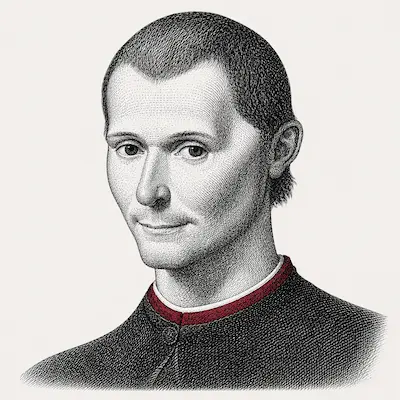 Niccolò Machiavelli
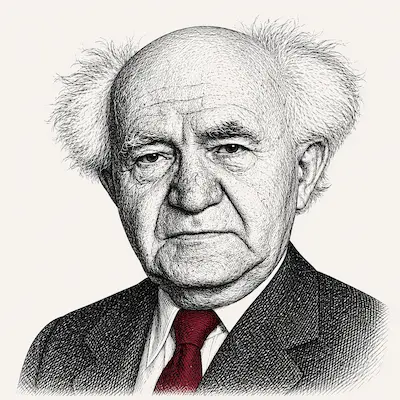 David Ben-Gurion
Democratic consultation and limits on power
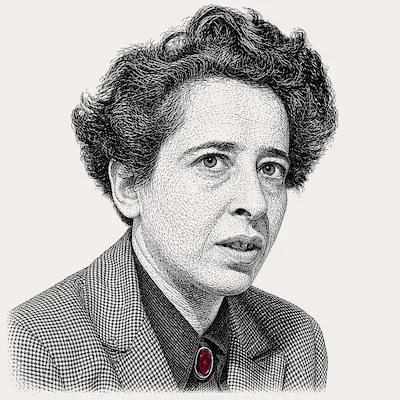 Hannah Arendt
Tocqueville
Selected members
Hannah Arendt
Will argue: Power that requires force to maintain itself has already lost legitimacy and crisis rhetoric is the classic precondition for authoritarian capture.
She is the sharpest documented analyst of how democracies slide into authoritarian rule through crisis and the promise of order.
Niccolò Machiavelli
Will argue: A republic facing real disorder may need a leader who acts first and justifies later, but this must be temporary and tied to restoring institutions.
He is the clearest documented voice arguing that in genuine emergencies ordinary deliberative process is too slow and decisive force is sometimes necessary.
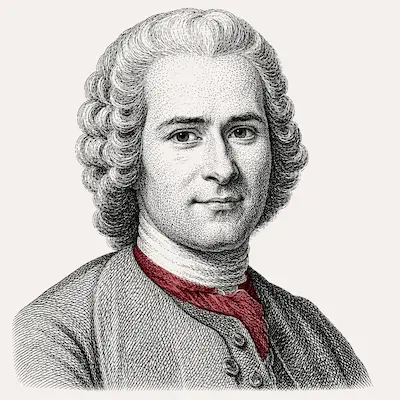
Jean-Jacques Rousseau
Will argue: A leader who claims to speak for the nation above its elected institutions is invoking exactly the logic that can slide from popular sovereignty into domination.
His general will concept is directly implicated whenever a leader claims to embody the true will of the people against existing institutions, which is precisely Le Pen's framing.
David Ben-Gurion
Will argue: Decisive action in crisis is legitimate only when it strengthens state institutions and does not become permanent concentration of personal power.
He is the council's strongest documented practitioner of centralizing authority during existential crisis while still submitting to democratic constraint.
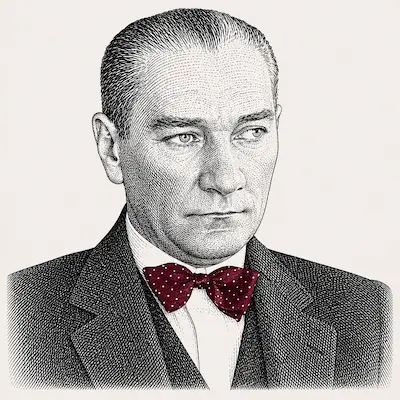
Mustafa Kemal Atatürk
Will argue: Strong leadership can rescue a disordered state quickly, but the documented record shows it tends to entrench itself well past the emergency that justified it.
He is the council's clearest documented case of a leader who used rapid top-down authority explicitly framed around national order and historical destiny, the same rhetorical territory Le Pen invokes with de Gaulle.
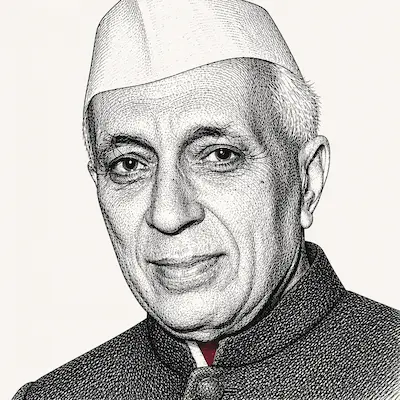
Jawaharlal Nehru
Will argue: Centralizing power in a crisis trades a temporary problem for a durable one, because institutions built hastily around one leader rarely dissolve themselves afterward.
He is the strongest documented practitioner counterargument that democratic consultation can hold even under severe post-crisis pressure, and he explicitly rejected the stability-first authoritarian model.
Considered but not selected
Indira Gandhi: considered for her direct documented experience suspending democracy during the 1975 Emergency, but Nehru already covers the pro-consultation pole with a cleaner documented contrast, and adding her would crowd the authority pole past balance. Charles de Gaulle is not in the roster, so Atatürk and Machiavelli were selected as the closest documented analogues to the "man of order above party politics" archetype Le Pen is explicitly invoking. Helmut Schmidt, considered for crisis leadership under terrorism (German Autumn), but his record is European coalition management rather than the executive-versus-democracy question at the heart of this issue.