Why do societies increasingly frame policy disagreements as existential threats?
Built from documented writings, speeches, decisions and historical records. Council members argue from documented positions, applied to today's question.
Policy disagreements become existential threats when economic inequality destroys shared civic reality and algorithms profit from the resulting conflict.
Arendt identifies the mechanism: when citizens cannot share basic premises about reality, political plurality becomes impossible. Rousseau anchors this in inequality: extreme wealth gaps prevent citizens from meeting as equals in democratic deliberation. Luxemburg adds the structural pressure: capitalism's growth requirements clash with climate limits, making genuine compromise structurally impossible.
Hirschman's rhetorical patterns explain the weaponization but not the underlying cause. The 2022 Pew findings reflect citizens experiencing democracy as zero-sum competition for scarce resources.
- 1Reduce economic inequality through progressive taxation and wealth caps to restore shared civic equality necessary for democratic deliberation.
- 2Regulate algorithmic amplification systems that profit from turning political disagreements into engagement-driving conflict.
- 3Restructure democratic institutions to accommodate capitalism's structural contradictions with climate and inequality constraints.
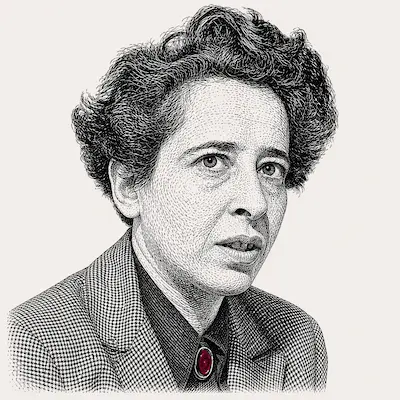
Existential framing signals the collapse of shared political reality.
When ordinary disagreement becomes impossible to distinguish from threats to the polity itself, we are witnessing something more dangerous than polarization. In 1951 I documented how totalitarian movements destroy the public realm by eliminating the possibility of genuine political debate. Today's algorithmic amplification of divisive content creates similar conditions, not through state terror but through the systematic erosion of a common world where citizens can argue about facts rather than realities. The documented pattern is clear: when people cannot share basic premises about what is real, political plurality becomes structurally impossible.
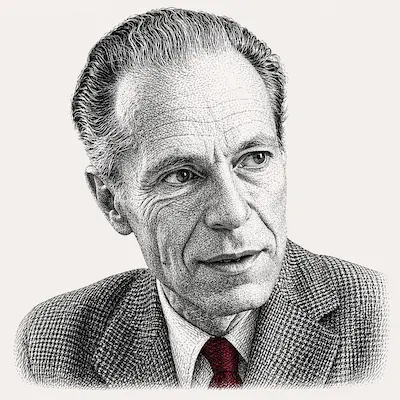
Existential framing follows predictable rhetorical patterns that weaponize legitimate concerns.
Arendt identifies real institutional decay, but we must distinguish between genuine democratic erosion and the rhetoric of reaction I documented in 1991. The three moves are always the same: perversity (your reform will backfire), futility (nothing can really change), and jeopardy (this threatens everything we've built). Trump's January 6th claims follow the jeopardy script perfectly, democracy is threatened, so democratic norms must be suspended to save it. Biden's "democracy under attack" rhetoric uses the same structure from the opposite direction. When every policy disagreement becomes existential, ask whether this is genuine analysis or rhetorical weaponry designed to prevent compromise.
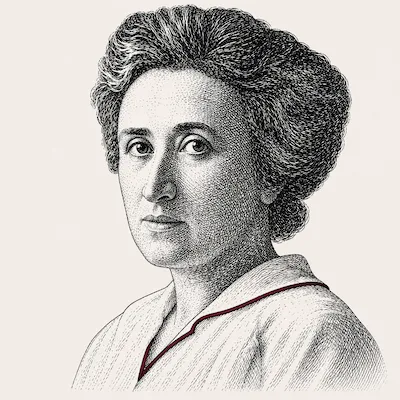
When economic arrangements make compromise impossible, disagreements genuinely become existential.
Hirschman's rhetorical analysis misses the structural foundation. I documented in 1913 how capitalism's contradictions intensify as accumulation proceeds, the system requires continuous expansion but faces absolute limits. Today's existential framing reflects real structural pressures: climate change demands rapid decarbonization while capitalism requires continuous growth; inequality concentrates wealth while democracy requires broad-based legitimacy; global supply chains create interdependence while nationalism demands sovereignty. These aren't rhetorical moves but genuine contradictions. When the system cannot accommodate both positions simultaneously, political disagreements do become existential because one side must lose everything for the other to survive.
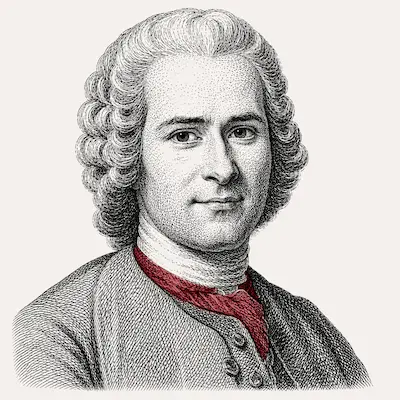
Extreme inequality destroys the civic equality that democratic deliberation requires.
Luxemburg is right about structural contradictions, but the deeper problem is what inequality does to citizenship itself. In 1762 I argued that political freedom requires approximate economic equality, when some citizens control vastly more resources than others, they cannot meet as equals in democratic deliberation. Pew Research's finding that majorities view the opposing party as a threat reflects this structural reality. Citizens who experience democracy as a zero-sum competition for scarce resources cannot engage in the general will, the collective reasoning about common good that democracy requires. Social media algorithms amplify this by turning political difference into profitable engagement, but the underlying cause is the collapse of shared civic equality.
The convergence note
Where the council converges: Existential framing reflects genuine institutional and structural pressures, not merely rhetorical manipulation or psychological polarization.
Where it divides: Arendt sees totalitarian erosion of shared reality; Hirschman sees predictable rhetorical patterns; Luxemburg sees capitalist structural contradictions; Rousseau sees inequality destroying democratic community.
For a policymaker to decide on: Whether to address the symptoms (algorithmic amplification, rhetorical discipline) or the structural causes (inequality, institutional design, economic contradictions).