The Long Council
Who was selected, and why
Why do societies increasingly frame policy disagreements as existential threats?
The central tension
Whether existential framing is a rational response to genuine democratic erosion or a contributing cause of democratic polarisation that makes compromise structurally impossible.
The two poles
Democratic Erosion
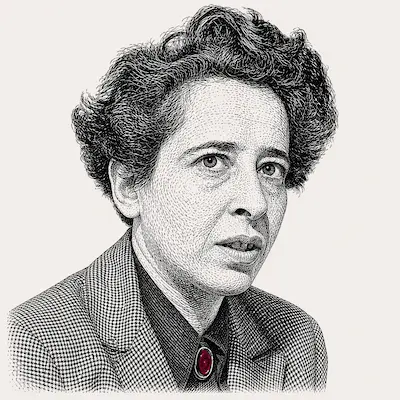 Hannah Arendt
Polarisation Dynamics
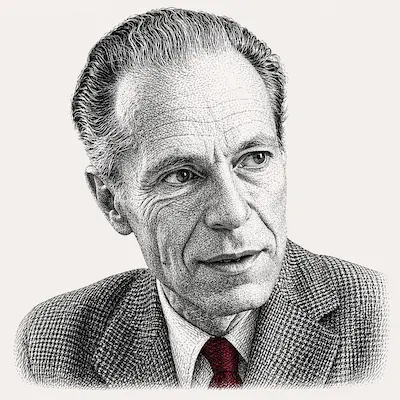 Albert O. Hirschman
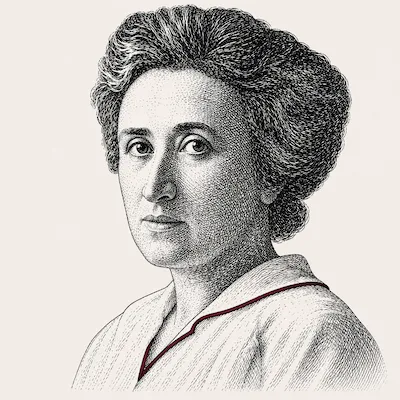 Rosa Luxemburg
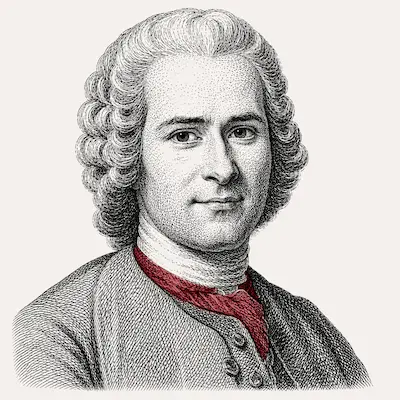 Jean-Jacques Rousseau
Selected members
Hannah Arendt
Will argue: That existential framing may signal genuine democratic erosion, the collapse of shared political reality creates conditions where ordinary disagreements become impossible to distinguish from threats to the polity itself
Her analysis of how totalitarian movements destroy the public realm by eliminating the possibility of genuine political debate and reducing politics to friend-enemy distinctions
Albert O. Hirschman
Will argue: That existential framing follows predictable rhetorical patterns that can be identified and evaluated, when policy opponents claim reforms threaten prior achievements, ask whether this is genuine analysis or rhetorical weaponry
His "Rhetoric of Reaction" identifies perversity, futility and jeopardy as the three recurring rhetorical moves that transform policy disagreements into existential claims
Rosa Luxemburg
Will argue: That existential framing reflects real structural contradictions, when economic arrangements make democratic compromise impossible, political disagreements genuinely do become existential because the system cannot accommodate both positions
Her analysis of how bourgeois democracy becomes impossible under conditions of extreme inequality, structural contradictions produce the political polarisation that makes democratic deliberation unworkable
Jean-Jacques Rousseau
Will argue: That existential framing emerges when the preconditions for legitimate political community have been destroyed, citizens who cannot participate as equals cannot engage in genuine deliberation about the common good
His theory of the general will and the conditions under which genuine political community becomes impossible when economic inequality destroys civic equality
Considered but not selected
John Rawls: His framework assumes the possibility of public reason that the issue suggests has broken down - Confucius: His framework for legitimate authority doesn't directly address democratic polarisation dynamics - Sun Tzu: Would frame this purely as strategic competition rather than addressing the democratic legitimacy dimensions