Why do Israelis perceive Palestinian suffering differently than most Western countries do?
Built from documented writings, speeches, decisions and historical records. Council members argue from those positions, applied to today's question.
Israelis live under existential threat while Western observers debate from safety. Both see the same deaths through different survival calculations.
Ben-Gurion and Ibn Khaldun anchor this in military service and siege mentality. Mandatory conscription creates shared combat experience that Western civilians lack. External pressure consolidates group loyalty but destroys capacity for self-correction.
Arendt, Fanon, and Roosevelt reject survival exceptions to universal principles. Threat creates institutional frameworks where role performance substitutes for moral judgment. But forty thousand Palestinian deaths cannot be justified by structural position alone.
The split turns on whether international law bends to existential claims. Survival necessity versus universal standards cannot be reconciled through argument.
- 1Reject survival exceptions to proportionality requirements in international law enforcement mechanisms.
- 2Anchor Israeli military doctrine to documented threat assessment, not historical victimization narratives.
- 3Apply Universal Declaration standards equally to Israeli and Palestinian civilian casualties in international forums.
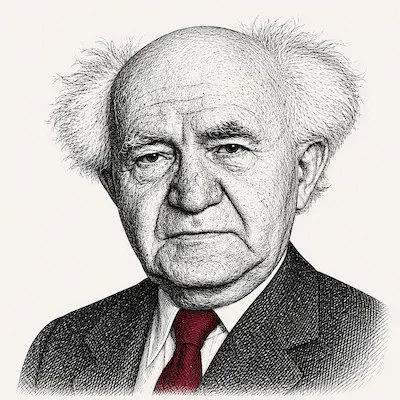
Existential threat creates different moral frameworks than academic debate.
Israelis live with mandatory military service, rocket sirens, and the documented reality that their neighbours have repeatedly attempted to destroy their state. In 1973 I told the Knesset that a people facing annihilation cannot afford the luxury of universal moral standards, survival creates its own ethics. When Hamas kills 1,200 civilians and takes hostages, Israelis see an existential threat requiring decisive response. Western observers see a humanitarian crisis requiring proportional restraint. Both are right within their frameworks. The difference is not moral sophistication but structural position.
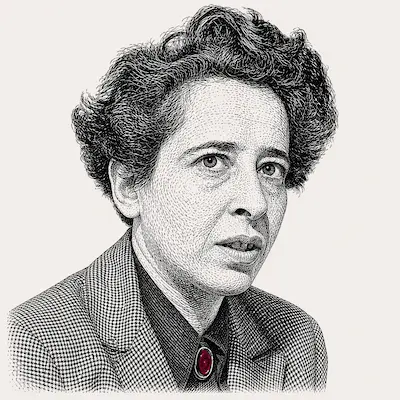
Systematic exposure to threat creates institutional cultures where survival calculations override moral evaluation.
Ben-Gurion identifies the structural reality correctly. Societies under sustained existential pressure develop what I documented in my Eichmann analysis, institutional frameworks where role performance substitutes for moral judgment. Israeli military service creates shared combat experience that Western civilian populations lack. This produces genuine differences in threat perception, not manufactured ones. But this does not eliminate moral responsibility, it transforms how it operates. The institutional culture that enables survival can also enable systematic harm to others. Both dynamics operate simultaneously.
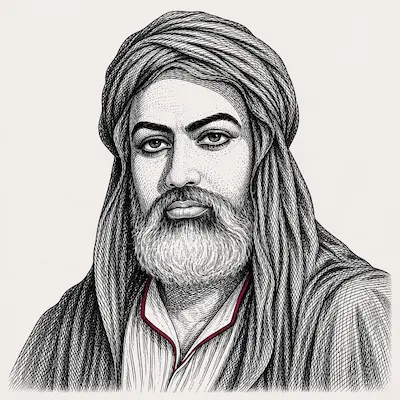
External pressure on a group with strong cohesion strengthens it until it destroys the group's capacity for self-correction.
Arendt grasps the mechanism but underestimates its power. I documented in the Muqaddimah that external military pressure consolidates internal group loyalty, this is the source of Israeli resilience. But the same asabiyya that enables survival also makes groups less capable of recognizing the humanity of those defined as external threats. When I observed the Marinid dynasties under Castilian pressure, they developed siege mentalities that served them militarily and blinded them politically. Israel's documented success in building state capacity under threat comes with documented costs in moral perception of Palestinian suffering.
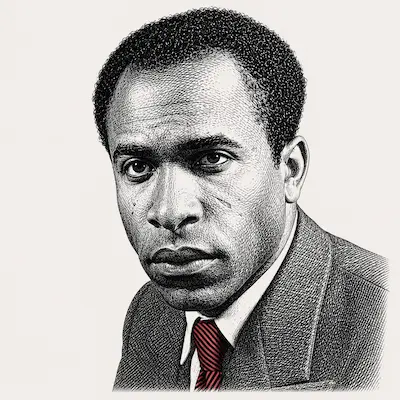
Colonial structures produce split consciousness in both coloniser and colonised.
Ibn Khaldun's group solidarity analysis applies but misses the colonial dimension. I documented in Algeria how colonial rule creates psychological splits, the colonised internalises the coloniser's framework, the coloniser develops mechanisms to avoid seeing the colonised as human. Israeli society exhibits both patterns simultaneously: as former victims of European colonialism and as current practitioners of settler colonialism in Palestine. The split consciousness I analyzed in Black Skin, White Masks operates here: Israelis see Palestinian suffering through the framework of their own historical victimization, which simultaneously validates their pain and obscures their power.
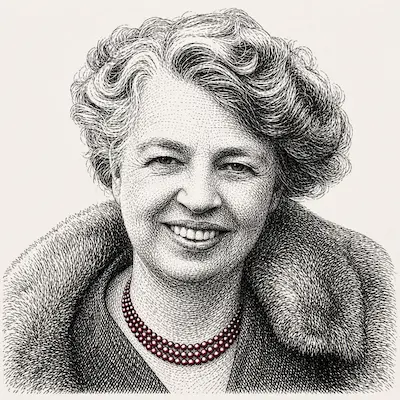
Universal human rights must apply regardless of the survival claims of particular states.
Fanon's structural analysis explains the psychological mechanisms, but it cannot excuse the moral failure. I spent six years negotiating the Universal Declaration with delegations representing different legal traditions and historical experiences. The document's authority rests precisely on its universality, rights that apply only when convenient are not rights but privileges. Israeli civilian casualties matter; Palestinian civilian casualties matter equally. The proportionality principle I helped establish in international law requires that response to attack be necessary and proportionate. Forty thousand Palestinian deaths cannot be justified by 1,200 Israeli deaths, regardless of the psychological or historical context.
The convergence note
Where the council converges: Existential threat genuinely shapes moral perception. Israelis and Western observers occupy different structural positions that produce different frameworks for evaluating violence.
Where it divides: Whether structural position justifies different moral standards. Ben-Gurion and Ibn Khaldun argue survival necessity creates legitimate exceptions. Arendt, Fanon, and Roosevelt insist universal principles must override structural claims.
For a policymaker to decide on: Whether international law applies equally to all states or whether existential threat creates legitimate exceptions to proportionality requirements.