What shape should the ideal distribution of wealth and income in a society take?
Built from documented writings, speeches, decisions and historical records. Council members argue from documented positions, applied to today's question.
A cash floor beats a welfare bureaucracy. Beyond that, the council splits on who should own the machines.
Rawls, Friedman, Sen, and even Luxemburg agree: direct cash transfers serve the poor better than case workers and in-kind conditions. Sen adds that cash alone fails where schools, clinics, and legal standing are absent; a cheque cannot be spent on a hospital that does not exist. Friedman's negative income tax, proposed in 1962, remains the council's shared minimum.
The split is structural. Hayek and Friedman hold that any imposed ownership pattern destroys the price signals that generate wealth in the first place, leaving the poor worse off. Luxemburg argues that wages and transfers are paid from a surplus that dispossession creates; redistribution cannot fix what the production system continuously takes away.
- 1Replace in-kind welfare programmes with direct cash transfers, eliminating caseworker conditions attached to benefits.
- 2Fund schools, clinics, and legal services alongside cash transfers; cash cannot buy infrastructure that does not exist.
- 3Force a legislative choice between three options: negative income tax, dispersed asset ownership, or structural reform of productive capital ownership.
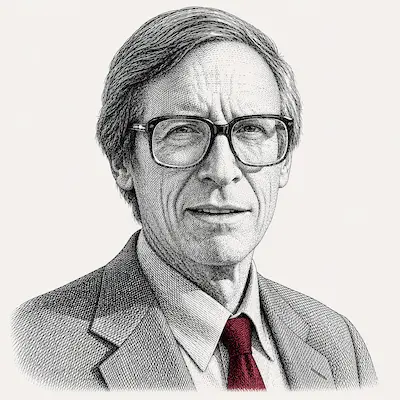
Inequality is only just when it lifts the worst-off.
Behind a veil of ignorance, not knowing whether you would be born into wealth or destitution, you would never gamble with the floor. In 1971 I argued that inequalities in income and wealth are permissible only when they improve the position of the least advantaged members of society. Not equal outcomes, not punitive levelling, but a basic structure arranged so that no one's life prospects are sacrificed to someone else's gain. That is the difference principle, and it is the only morally defensible constraint on inequality.
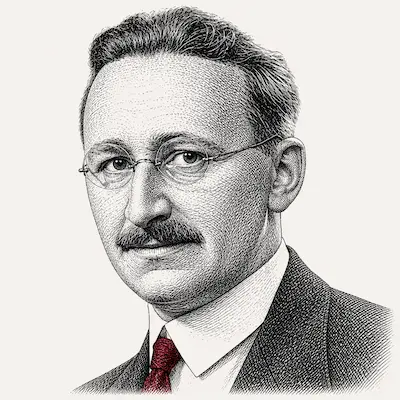
No pattern of distribution can be called just or unjust.
Rawls asks what rational persons would choose from behind a veil of ignorance. I ask who would execute the result. In 1974 I told the Nobel committee that the pretence of possessing knowledge we cannot possess is the most dangerous error in social science. Prices aggregate millions of individual decisions that no planner can replicate. When you impose a distributive pattern on that process, you destroy the information the system generates. You do not redistribute wealth. You reduce it, and the poorest bear the largest share of that reduction.
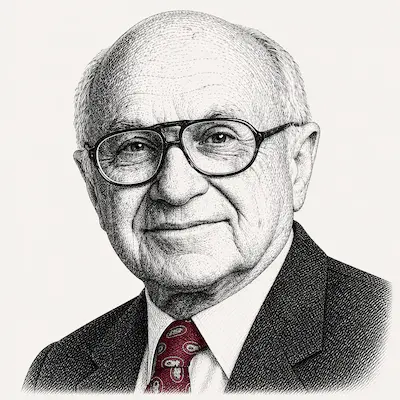
A cash floor preserves freedom; a welfare bureaucracy destroys it.
Hayek is right that market outcomes cannot be engineered without cost, but a floor is not an engineering project. In Capitalism and Freedom I proposed a negative income tax: every citizen below a threshold receives a direct cash transfer, no case worker, no in-kind benefit, no bureaucratic condition attached. The poor spend it as they judge best. When I testified before the Gates Commission in 1969 I applied the same logic to conscription: cash is freedom, compulsion is not. One instrument, one principle. The rest of the welfare state is a machine for employing administrators.
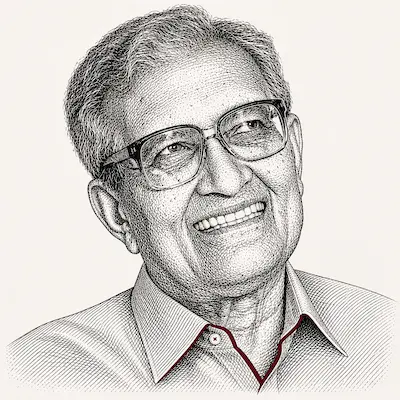
Cash without capability is freedom on paper only.
Friedman asks whether the poor receive a transfer. I ask what they can actually do with it. In 1943 Bengal, food was being exported while people starved, not because they lacked cash in every case but because illness, caste, gender, and illiteracy collapsed their ability to convert any resource into a life worth living. The distribution question cannot be answered in a single metric. A woman with a negative income tax cheque but no school, no clinic, and no legal standing has received a number, not a freedom. Income is an instrument. Capabilities are the point.
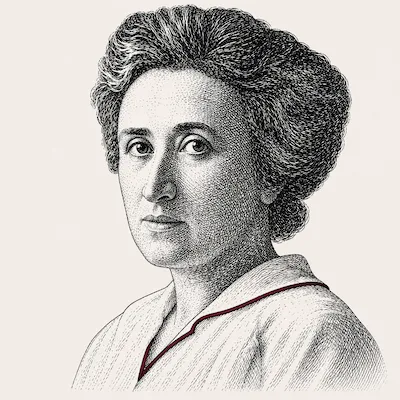
Redistribution within capitalism restores nothing it continuously takes away.
Sen is right that income alone is insufficient, but the question is why capabilities are stripped away in the first place. In 1913 I showed that capitalist accumulation does not merely distribute badly: it requires the continuous dispossession of non-capitalist populations to sustain itself. The Silesian weavers in the 1840s were not failed by a poorly designed transfer mechanism. They were destroyed by the structural logic of production. Rawls designs principles for a basic structure he does not propose to own collectively. Hayek defends a spontaneous order whose spontaneity conceals organised class power. The ideal distribution begins with who owns the means of producing it.
The convergence note
Where the council converges: A bare cash floor is better than bureaucratic in-kind welfare. All five members, including Luxemburg, would abolish the case-worker apparatus in favour of direct transfers.
Where it divides: Rawls and Sen hold that the basic structure must be arranged to benefit the worst-off, while Hayek and Friedman insist that any imposed pattern destroys the market's allocative intelligence. Luxemburg breaks from all four: she argues that distributional questions are unanswerable without first resolving ownership of productive assets, a move Rawls partially acknowledges but does not pursue, and that Hayek and Friedman explicitly reject.
For a policymaker to decide on: Choose between three concrete options: a negative income tax that tops up income while leaving ownership structures intact; a property-owning democracy that disperses asset ownership before redistribution begins; or structural reform of who owns productive capital, accepting that this cannot be achieved through tax-and-transfer policy alone.