The Long Council
Who was selected, and why
What shape should the ideal distribution of wealth and income in a society take?
The central tension
Should society prioritise giving everyone a fair shot at the start, or should it actively correct unequal outcomes even after the game has begun?
Where they stand
Fair rules, market outcomes
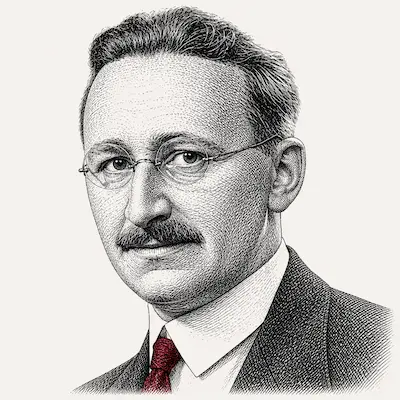 Friedrich Hayek
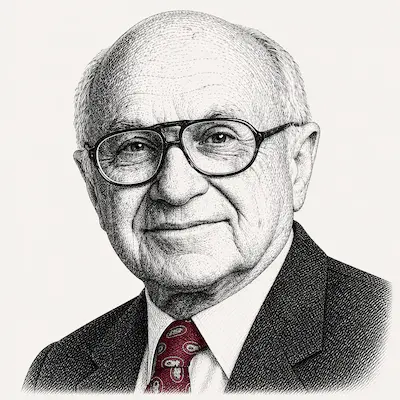 Milton Friedman
Active redistribution and structural correction
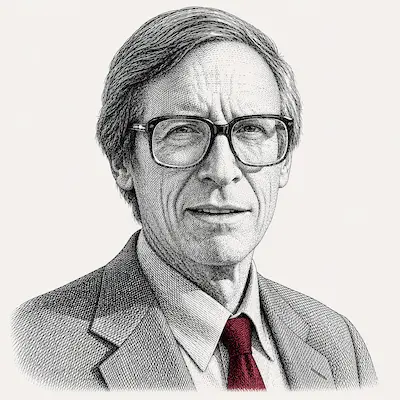 John Rawls
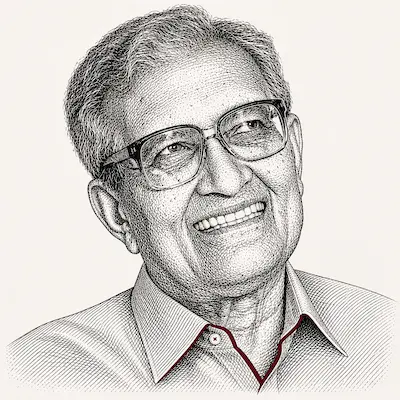 Amartya Sen
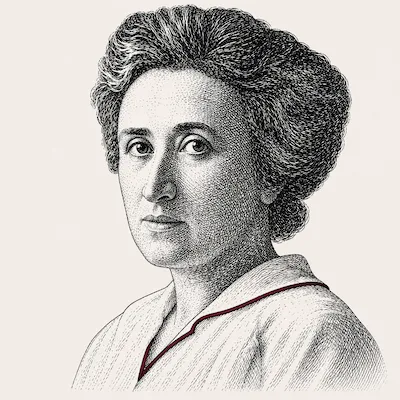 Rosa Luxemburg
Note on imbalance
The redistribution pole holds three voices to the market pole's two. This is one voice over the rough
Selected members
John Rawls
Will argue: Inequalities are only justified when they make the worst-off members of society better off than any more equal alternative would.
His difference principle is the most rigorous philosophical framework ever constructed for asking exactly this question.
Friedrich Hayek
Will argue: No distribution is intrinsically just or unjust because outcomes emerge from millions of individual decisions no planner can second-guess, and attempting to enforce a pattern destroys the information system that makes prosperity possible.
His spontaneous order and knowledge-problem arguments provide the foundational case that market distributions cannot be judged just or unjust because no agent designed them.
Milton Friedman
Will argue: Free markets generate the most wealth for the most people, and the only justified redistribution instrument is a cash floor, the negative income tax, that preserves market incentives rather than replacing them with bureaucratic welfare.
He provides the empirical and policy-specific case for market distributions, including his documented support for a negative income tax as the one corrective instrument compatible with market freedom.
Amartya Sen
Will argue: The question of distribution cannot be answered by looking at income or wealth alone because people convert resources into real freedom at very different rates, so a just distribution must target capabilities not metrics.
His capability approach reframes the question entirely: the metric of distribution is not income but what people can actually do and be, making Sen the essential challenge to both Rawls and the market-pole members.
Rosa Luxemburg
Will argue: Any distribution achieved through redistribution within capitalism is unstable because the underlying relations of production continuously regenerate inequality, so the real question is structural ownership, not policy adjustment.
She argues that the question of distribution cannot be answered within a capitalist framework because the mechanism of exploitation continuously regenerates inequality regardless of redistributive policy.
Considered but not selected
Olof Palme: Excluded because his documented contribution on distribution (the Rehn-Meidner model, the Meidner wage-earner funds) is practitioner-level implementation of principles that Rawls, Sen, and Luxemburg cover at greater analytical depth; he would echo the redistribution pole without adding a distinct line of reasoning on the foundational question.
Jean-Jacques Rousseau: Excluded because his documented argument that property is the origin of inequality and that the social contract as it exists is a fraud on the poor is genuinely relevant, but Luxemburg covers structurally similar ground with far greater analytical precision and documented economic grounding; Rousseau would amplify the structural-critique pole without adding a distinct register.
Margaret Thatcher: Considered as a potential third voice for the market pole (and to narrow the imbalance). Excluded because her documented positions on distribution derive almost entirely from Hayek and Friedman rather than adding an independent analytical framework; she is a practitioner-implementer of their arguments, not a distinct analytical tradition on this specific normative question.