How to secure Europe's future by allowing construction of datacenters, while protecting affordability in energy for the European population?
Built from documented writings, speeches, decisions and historical records. Council members argue from documented positions, applied to today's question.
Europe must choose between cheap energy for consumers today and digital infrastructure that prevents technological dependence tomorrow.
Deng advocates energy zones with gradual consumer price adjustment. Schmidt demands energy priority for sovereign digital infrastructure. Lee calls for transparent choice between subsidized households and technological relevance. Thatcher insists market pricing allocates energy better than administrative rationing. Ostrom requires negotiated governance between communities and energy users.
The split cannot be resolved through technical design. It rests on whether Europeans will accept higher energy costs to avoid digital dependence on America and China.
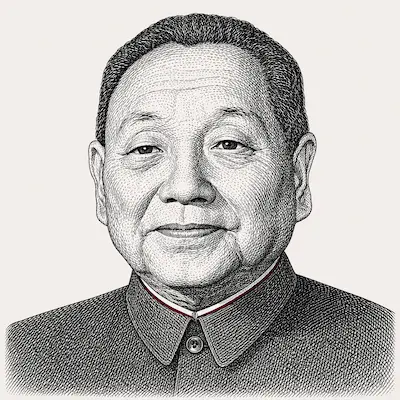
Europe needs designated zones for data centers while protecting people from sudden cost shocks.
When we launched Special Economic Zones in 1979, skeptics said we were creating inequality — some regions would get cheap land and tax incentives while others paid full price. But strategic infrastructure requires strategic thinking. Data centers are to Europe's digital future what Shenzhen was to China's economic opening. You cannot build tomorrow's economy with today's resource allocation.
The solution is gradual and experimental. Create energy zones where data centers pay market rates for power, while household energy remains subsidized during the transition. As digital infrastructure generates economic returns — jobs, tax revenue, technological capability — gradually adjust household pricing. The key is sequencing: build the productive capacity first, then ask people to pay for it when they can see the benefits.
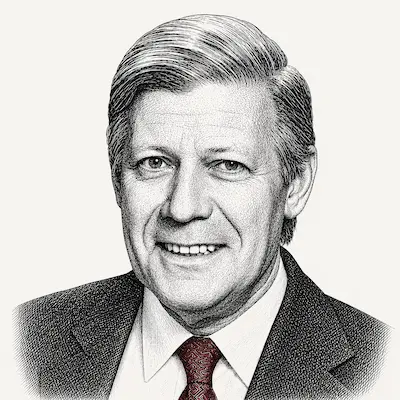
Energy allocation decisions require sovereign strategic calculation about Europe's technological independence.
Deng identifies the right mechanism but misses the strategic imperative. During the 1973 oil crisis, I learned that energy dependence is not an energy question — it is a sovereignty question. Europe's digital infrastructure determines whether European companies control their own data processing or depend on American and Chinese cloud platforms forever.
In November 1973, I told the Bundestag that a statesman who cannot imagine scenarios worse than the present should not make irreversible decisions. The scenario worse than higher energy costs today is European technological dependency tomorrow. Data centers are strategic infrastructure, not commercial luxury. They merit energy priority because they preserve European decision-making capacity in an era when data processing is state power.
The deeper principle is that energy allocation must serve long-term sovereignty, not short-term popularity. Consumer energy costs are manageable through targeted subsidies. Technological dependency is not reversible once established.

Europe must choose between cheap energy for consumers and technological relevance in US-China competition.
Schmidt correctly identifies sovereignty as the core issue, but he underestimates the competitive pressure. When we established Singapore's Economic Development Board in 1961, our doctrine was simple: make yourself so useful that great powers find it in their interest to have you there. Europe faces the same choice at continental scale.
The United States has hyperscale data centers powered by cheap domestic energy. China has built digital infrastructure as a state priority, subsidizing energy costs through directed capital allocation. Europe cannot compete for technological relevance while protecting consumers from energy market realities. The political cost of higher energy prices is manageable. The strategic cost of digital dependence is not.
My approach would be transparent energy pricing with graduated implementation. Tell Europeans the choice clearly: subsidized household energy means technological dependence on America and China. Let them choose with full information. Singapore's political stability came from honest governance about trade-offs, not from pretending trade-offs do not exist.

Market pricing mechanisms will allocate energy more efficiently than administrative rationing between data centers and households.
Lee raises the political question, but the economic answer remains unchanged. When we privatized British utilities in the 1980s, opponents warned that market pricing would hurt ordinary families. What we discovered was that competitive markets delivered lower costs and better service than state monopolies managing scarcity through administrative allocation.
The real issue is not data centers versus households — it is efficient price signals versus political allocation of resources. Energy markets should determine who uses power based on willingness to pay, not on Brussels bureaucrats deciding which use is more "strategic." If data centers create genuine economic value, they will pay market rates. If household demand is genuinely essential, households will pay market rates with government support targeted at those who need it.
Europe's problem is not energy scarcity. Europe's problem is the refusal to allow price mechanisms to coordinate supply and demand. Administrative energy allocation — whether favoring data centers or households — destroys the information that prices provide about relative value and alternative uses.

Energy networks exhibit common-pool resource characteristics that require polycentric governance balancing technical efficiency with community legitimacy.
Thatcher's market framework assumes energy is a private good that can be allocated through price competition. But European energy networks are common-pool resources — shared infrastructure that exhibits both rivalry in consumption and difficulty of exclusion. My research on irrigation systems in Spain and groundwater management in California shows that pure market allocation routinely fails for such resources, while pure state control destroys local knowledge and adaptation.
The effective approach is polycentric governance. European Union frameworks set technical standards and cross-border coordination. National governments manage strategic allocation between sectors like data centers and households. Local authorities govern distribution networks and implement affordability protections. Each level handles what it can manage best, with clear boundaries and conflict resolution mechanisms between levels.
The critical design principle is that energy allocation rules must be developed by those who will live under them. External mandates — whether from Brussels technocrats or market theorists — lack the legitimacy and local knowledge for sustainable governance. Data center energy allocation requires negotiated agreements between communities hosting them and citizens bearing the costs. Pure market allocation ignores these governance requirements.
The convergence note
Where the council converges All members accept that Europe faces a genuine trade-off between digital infrastructure development and consumer energy affordability, and that this choice has strategic consequences for European technological sovereignty.
Where it divides The members divide on allocation mechanisms — gradual state management (Deng), strategic state priority (Schmidt), transparent political choice (Lee), market pricing (Thatcher), or polycentric negotiated governance (Ostrom) — and on whether administrative allocation or price signals better coordinate competing demands on scarce energy resources.
For a policymaker to decide on The irreducible choice between protecting European consumers from energy cost increases in the short term versus accepting those costs to build digital infrastructure that preserves European technological independence in the long term.