Should the Netherlands phase out all remaining Russian LNG imports by end of 2026, even if this means higher consumer energy prices for 18 months?
Built from documented writings, speeches, decisions and historical records. Council members argue from those positions, applied to today's question.
The Netherlands should phase out Russian LNG imports by end-2026. Energy dependency on an adversarial supplier that has already weaponized energy exports constitutes a strategic vulnerability that outweighs temporary consumer costs.
Schmidt warns that energy dependencies embedded in infrastructure become harder to reverse under pressure than to avoid under choice, while Thatcher argues that sovereign states must accept economic costs to preserve independence from those who would hold them hostage. Lee Kuan Yew emphasizes trading single-point Russian vulnerability for diversified supply relationships with multiple partners, and Kautilya calculates that eliminating strategic vulnerability before weaponization costs less than cure after subordination.
The council divides only on transition mechanics — whether complete energy independence is achievable for small states or whether managed diversification among multiple suppliers is the realistic goal.
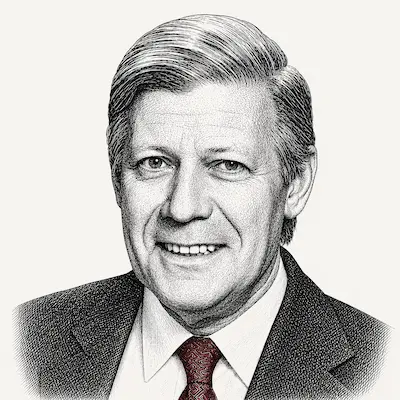
Energy dependence on adversarial suppliers is sovereignty vulnerability, not cost management.
After the 1973 oil embargo, I argued in the Bundestag that energy dependence is not an energy question — it is a question of sovereignty. The Netherlands now faces precisely the same structural problem with Russian LNG that we faced with Arab oil fifty years ago. The arithmetic is simple: an adversarial supplier can weaponise dependency at the moment of maximum strategic vulnerability. This is not theoretical. Putin has already demonstrated his willingness to use energy as a weapon against European states.
The eighteen-month consumer cost is real but secondary. Energy infrastructure decisions create dependencies that last decades. Russian LNG terminals, supply contracts, and distribution networks become embedded in your energy system. Once embedded, they become harder to reverse under pressure than to avoid under choice. The statesman who waits until the dependency becomes weaponised has already lost the strategic initiative.
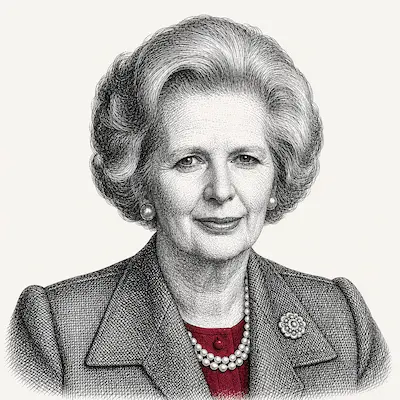
National independence requires accepting economic costs that markets alone would never choose.
Schmidt is absolutely right about the sovereignty principle, and I learned this lesson painfully during my own tenure when external economic pressures constrained British decision-making. The difference is that markets, left to themselves, will always choose the cheapest option regardless of strategic consequences. Russian LNG is cheaper precisely because it comes with strategic strings attached — that discount is the price of future vulnerability.
During my confrontation with the miners in 1984-85, I accepted massive economic disruption to break the political power of those who would hold the state hostage. The same principle applies here. Better to pay higher energy prices as a sovereign choice than to pay them later as the price of liberation from an adversarial supplier. The state's first duty is to preserve the conditions of its own independence. Consumer energy prices are a secondary consideration.
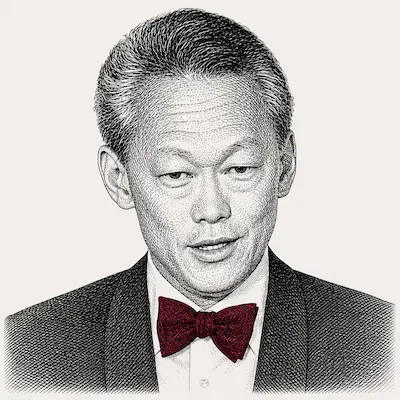
Small states survive by diversifying dependencies, not eliminating them — but Russian gas is now a single-point-of-failure.
Thatcher raises the critical question for any small state: complete independence is often impossible, but which dependencies are manageable and which are existential? When I managed Singapore's water vulnerability with Malaysia, I never achieved independence — but I achieved alternatives. We developed NEWater, built desalination capacity, and negotiated long-term agreements to ensure Malaysia could not easily weaponise our dependency.
The Netherlands' situation is different because Putin has already demonstrated willingness to weaponise energy exports for political objectives. This makes Russian LNG qualitatively different from other energy dependencies — it is a strategic liability, not just an economic relationship. The transition cost is significant, but the cost of maintaining a dependency that can be weaponised at will is higher. The key insight: phase out Russian LNG while building multiple alternative supply relationships — American, Qatari, Norwegian — so you trade single-point vulnerability for managed diversification.

A treasury depleted by precautionary measures is stronger than one filled by accepting strategic vulnerability.
The question Kuan Yew poses has a systematic answer: the cost of eliminating vulnerability before it is weaponised is always lower than the cost of eliminating it after weaponisation. This is not speculation — it is the geometric nature of strategic dependencies. A hostile supplier who has successfully embedded themselves in your essential infrastructure can extract multiple times the economic value through political pressure that they could earn through normal commercial relationships.
The eighteen-month consumer cost is an investment in permanent strategic capacity. The deeper principle: a state that makes itself indispensable to an adversary gains leverage, but a state that makes an adversary indispensable to itself accepts subordination. Russian LNG creates asymmetric leverage — the Netherlands needs the gas more urgently than Russia needs the revenue, particularly when Russia has multiple customers. This asymmetry grows over time as infrastructure investments deepen the dependency.
The treasury is the foundation of all state capacity. Better to spend treasury resources eliminating strategic vulnerability than to preserve treasury resources while accepting strategic subordination. The first strengthens state capacity over time; the second erodes it.
The convergence note
Where the council converges All members agree that energy dependency on an adversarial supplier constitutes a strategic vulnerability that outweighs short-term economic costs.
Where it divides Schmidt and Thatcher prioritise immediate elimination of Russian LNG regardless of cost, while Lee Kuan Yew emphasises managed diversification to multiple suppliers, and Kautilya focuses on the structural calculation of when prevention costs less than cure. They disagree on whether complete energy independence is achievable or necessary for small states.
For a policymaker to decide on The specific timeline and transition mechanism — whether to phase out Russian LNG by end-2026 or pursue a longer transition with interim alternatives — requires judgments about domestic political tolerance for energy price increases and alternative supply availability that the council cannot determine.