How can Europe develop AI capabilities while reducing its dependence on the US?
Built from documented writings, speeches, decisions and historical records. Council members argue from documented positions, applied to today's question.
Europe must build shared compute infrastructure and use public procurement to anchor European AI capacity before dependency becomes impossible to reverse.
Schmidt and Prebisch both identify the same structural problem: Europe exports AI rules and imports AI capability, which transfers value outward, not inward. Hirschman adds the sharper point: cloud contracts, chip supply chains, and embedded APIs lock member states in deeper each year. Deng's record in Shenzhen shows that sequenced protection, anchor customers first, competition later, can build frontier capability that markets alone would not have produced.
Ostrom's diagnosis is the operational obstacle. Each member state has cut its own cloud deal with US hyperscalers because pooling compute sovereignty costs more than any single government will pay alone. Without binding contribution rules and graduated penalties for free-riders, a shared European compute infrastructure will not be funded.
Hayek's objection stands as a real constraint, not a veto. Brussels cannot pick which AI models will matter in 2035. But the council's majority holds that shared infrastructure and procurement commitments do not require picking winners. They require building the capacity for European actors to compete, which is a different and more defensible choice.
- 1Pool EU member state compute investment into shared European AI infrastructure, with binding contribution rules and graduated penalties for free-riders.
- 2Designate European public institutions as anchor customers for European frontier AI models before exposing those models to full competition.
- 3Audit existing cloud contracts and embedded APIs in European public services to measure how close dependency is to irreversibility.
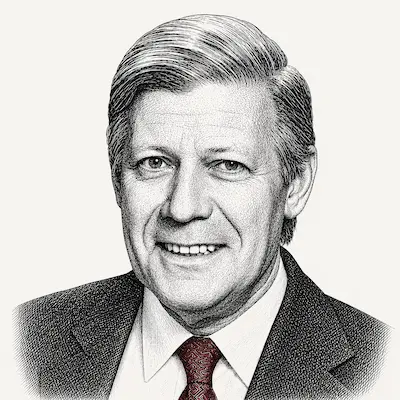
Europe's AI gap is a sovereignty gap, not a technology gap.
In November 1973 I told the Bundestag that energy dependence was not an energy question but a sovereignty question. The same logic applies here. Europe today exports governance, the AI Act, while importing capability from American hyperscalers. That is the precise structure of dependency I spent my chancellorship trying to prevent. When I built the European Monetary System with Giscard, we were not trying to match the dollar. We were trying to ensure no single external power could dictate European monetary conditions. Compute infrastructure requires the same logic. Mistral's emergence is not a curiosity. It is evidence that European capability exists and needs deliberate investment before the dependency becomes irreversible.
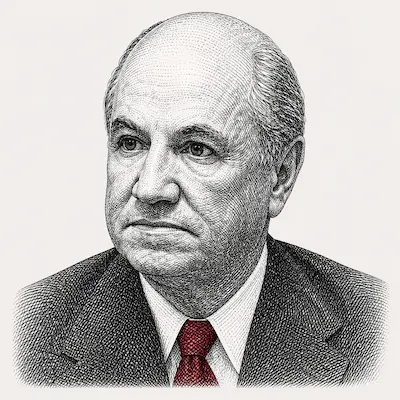
Europe is exporting AI governance while importing AI value: that is the periphery's position.
Schmidt frames this correctly as a sovereignty question, and I can supply the structural mechanism. When I documented Britain's trade data from 1876 to 1947, I found that primary exporters systematically transferred real income to manufactured goods exporters through the price structure of trade itself. Europe now occupies an analogous position in the AI economy: it exports regulatory standards, talent, and data while the platform layer, where value accumulates, sits in American hands. The EU AI Act without complementary industrial policy is not a corrective. It is a sophisticated form of dependency, dressed in the language of governance.
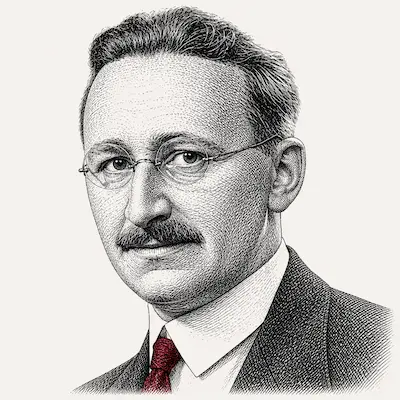
No planning authority can know which AI capabilities will matter in ten years.
Prebisch's structural argument has force in commodity markets with stable price mechanisms. It does not transfer cleanly to a technology frontier where the relevant capabilities shift faster than any industrial policy can track. The knowledge problem is not a theoretical abstraction here. It is operational. Mistral exists because competitive market conditions in European research universities and private capital created the conditions for it, not because Brussels selected it. The EU AI Act's compliance costs fall hardest on European startups, which lack the legal infrastructure of American hyperscalers. Europe risks building a regulatory fortress that protects incumbents and suffocates the very challengers it claims to cultivate.

Irreversibility is the question Europe has not yet asked itself.
Hayek is right that planners cannot predict which specific capabilities will matter. But he is asking the wrong question. The strategic question is not which AI model to back. It is whether the dependency being built today can be undone tomorrow. When I studied development projects in Colombia in the early 1950s, I found that infrastructure choices locked in development paths for decades. Cloud architecture, chip supply chains, and foundation model APIs embedded in European public services and research institutions are exactly this kind of commitment. Exit becomes harder with each year of deeper integration. The hiding hand is relevant too: if European policymakers fully priced the difficulty of building frontier AI capacity, they might abandon the project, and that abandonment would itself be the strategic error.

Europe's AI dependence is a collective action failure, not a market failure.
Hirschman's irreversibility threshold is exactly right, and it points directly to the governance problem. Each EU member state has rationally negotiated bilateral cloud deals with American hyperscalers because the individual cost of pooling sovereignty in shared European compute infrastructure exceeds any single state's willingness to pay. This is the commons problem I documented in irrigation systems, fisheries, and alpine meadows: individually rational choices produce collectively irrational outcomes. The EU AI Act creates a common regulatory boundary, which is one of my eight design principles for durable common-pool institutions. But it provides no common compute, no shared data infrastructure, and no graduated sanctions for member states that free-ride on others' AI investments. Without those elements, the boundary alone will not hold.
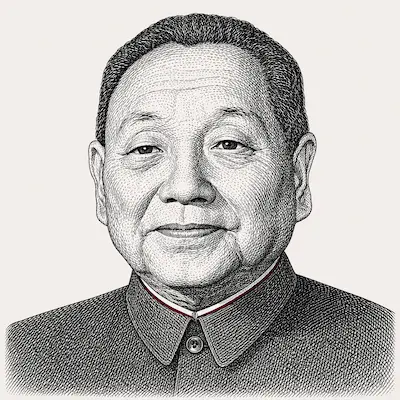
Sequenced protection builds capability; premature openness destroys it.
Ostrom identifies the coordination problem correctly. But I governed a country with 27 provinces that had competing interests, and I solved the coordination problem not by waiting for consensus but by designating specific zones where different rules applied. In 1979 I established Shenzhen, Zhuhai, Shantou, and Xiamen as laboratories. They operated under market conditions while the rest of the country did not. The learning moved inward over time. Europe can do this without a single government. Designate protected AI development zones with asymmetric procurement rules, shelter European frontier model capacity from full competition until it reaches scale, and use public institutions as anchor customers. Mistral needed a market before it needed a regulator. The sequencing matters more than the mechanism.
The convergence note
Where the council converges: Europe's current position, exporting AI governance while importing AI capability, is a structural vulnerability, not a temporary market gap. Doing nothing accelerates irreversible dependency.
Where it divides: Hayek argues that industrial policy cannot identify the right capabilities to protect and risks entrenching mediocrity behind regulatory walls. Deng, Prebisch, and Schmidt argue that sequenced protection is the documented path to closing technology gaps, and that waiting for markets to self-correct cedes the platform layer permanently. Ostrom and Hirschman sit between them: the coordination failure is real, but so is the irreversibility risk if Europe acts too slowly.
For a policymaker to decide on: Should Europe pool compute investment and procurement into shared AI infrastructure with binding contribution rules for member states, accepting the coordination costs and free-rider risks? Or should it rely on regulatory pressure and market incentives to grow European AI champions, accepting that the platform layer may remain American for a generation?