Should the Netherlands allow the American company Kyndryl to acquire Solvinity, given concerns about digital sovereignty?
Built from documented writings, speeches, decisions and historical records. Council members argue from documented positions, applied to today's question.
Block the acquisition and build domestic alternatives at higher cost.
Schmidt warns that digital dependencies compound like energy dependencies did in 1973. Lee argues small states must control irreplaceable assets while partnering on replaceable ones. Deng notes that Kyndryl already dominates globally and needs nothing from the Netherlands. Hayek counters that markets allocate resources better than political planners can.
Ostrom proposes hybrid governance with local oversight and data residency requirements. But the council splits on whether conditions can discipline a company that already controls global markets.

Critical digital infrastructure requires the same sovereignty protections as energy infrastructure.
In November 1973 I told the Bundestag that energy dependence was not an energy question but a sovereignty question. The same logic applies to digital infrastructure. When the 1973 oil embargo hit, we discovered that our industrial capacity was hostage to external suppliers who could shut us off for political reasons. Digital infrastructure creates identical vulnerabilities. If American companies control your cloud services, data processing, and cybersecurity systems, they control your economic resilience. The Netherlands would be surrendering strategic autonomy for short-term market efficiency.
Dependencies compound over time. Today Kyndryl manages IT systems. Tomorrow they hold the keys to everything that runs on those systems. Energy taught us that diversification is expensive when you have it, invaluable when you need it. The Dutch should treat digital sovereignty like energy security: maintain domestic capacity even when foreign alternatives look cheaper.
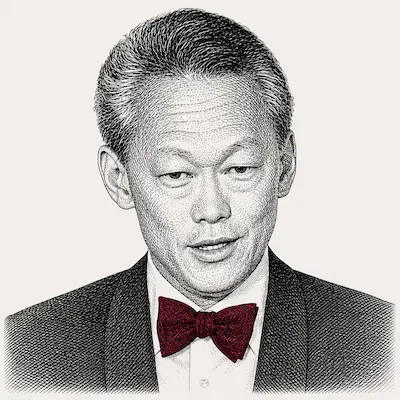
Small states survive by making themselves indispensable, not by surrendering strategic assets.
Schmidt is right about dependencies, but small states cannot build everything domestically. We face this choice constantly. In 1965 I separated Singapore from Malaysia not because I wanted independence but because the alternative was racial collapse. Survival came first. The lesson: control what you cannot replace, partner on what you can. Digital infrastructure falls into the first category. Once you surrender control of your data flows and processing capacity, you cannot get it back quickly.
The Netherlands should demand technology transfer, local data residency, and Dutch personnel in critical positions. Make the acquisition conditional on building Dutch capabilities, not just accessing American ones. Singapore attracts global companies but insists they train our people and transfer knowledge. We become indispensable to them while reducing our dependence on them. Partnership, not surrender.
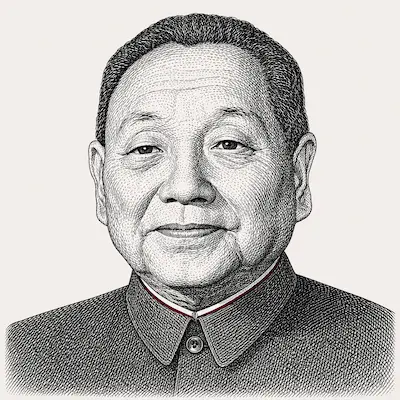
Foreign investment should build domestic capacity, not create permanent dependency.
Lee understands the principle, but he underestimates what American market dominance means. In 1978 I opened China selectively: I imported technology and capital, kept political control, and let neither run loose. The Four Modernisations named science alongside agriculture and defence because states fund what markets ignore. But this worked because America needed access to Chinese markets. The Netherlands needs access to American technology. The bargaining positions are reversed.
Kyndryl already controls the global market. They do not need to transfer technology to the Dutch to succeed in the Netherlands. They can simply acquire Solvinity and run it as a subsidiary. The Chinese model requires that foreign companies need something from you that they cannot get elsewhere. What does the Netherlands have that Kyndryl cannot access without this acquisition? If the answer is nothing, then the acquisition creates dependency without compensation.
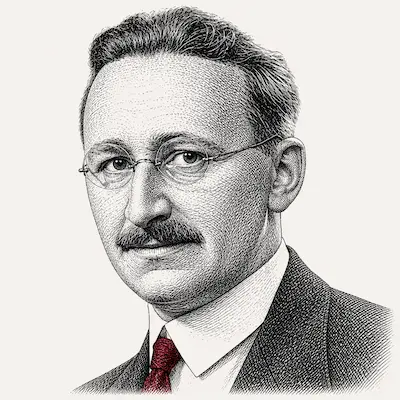
Government intervention in market-driven acquisitions destroys the price signals that allocate resources efficiently.
Deng's selective opening worked because China was a closed economy becoming an open one. The Netherlands is already open. Blocking this acquisition means substituting political judgment for market judgment about where resources should flow. Markets aggregate dispersed knowledge that no government planner can possess. If Kyndryl values Solvinity enough to acquire it, and Solvinity's shareholders accept the price, then resources are flowing to their most valued use.
The sovereignty argument assumes government officials know better than market participants what constitutes strategic value. They do not. They cannot. The knowledge problem applies to digital infrastructure as much as any other resource allocation question. Political interference creates the very inefficiencies and dependencies that these leaders claim to prevent. The Netherlands should focus on maintaining competitive markets, not picking national champions or blocking foreign investment.

Critical digital infrastructure requires hybrid governance that combines market efficiency with democratic accountability.
Hayek's market solution ignores that digital infrastructure is not a normal market good. It exhibits network effects, creates switching costs, and generates data that becomes more valuable as it concentrates. These characteristics make pure market governance inadequate. But Schmidt's state control solution ignores that innovation requires the flexibility and incentives that markets provide better than bureaucracies.
My research on common-pool resources suggests a third approach: polycentric governance. Allow the acquisition but require governance structures that serve multiple stakeholders. Dutch users, European regulators, and global markets all have legitimate interests in how this infrastructure operates. Design institutions that make Kyndryl accountable to all three constituencies, not just shareholders. This means data residency requirements, local advisory boards with real authority, and transparent pricing. The goal is not to block market forces but to embed them in governance structures that serve broader purposes.
The Netherlands should treat digital infrastructure like other critical commons: neither pure market nor pure state control, but structured governance that aligns private incentives with public needs.
The convergence note
Where the council converges: Digital infrastructure creates strategic dependencies that compound over time. Pure market solutions ignore sovereignty concerns.
Where it divides: Whether selective conditions can work when the acquiring company already dominates global markets. Whether polycentric governance can discipline network monopolies.
For a policymaker to decide on: Accept the acquisition with binding technology transfer requirements, or block it and build domestic alternatives at higher cost.