Should countries aim to build and control their own AI datacenters?
Built from documented writings, speeches, decisions and historical records. Council members argue from documented positions, applied to today's question.
Build selective domestic AI capacity while maintaining foreign partnerships. Total dependence is dangerous; total independence is wasteful.
Schmidt anchors in 1973: energy dependence became sovereignty risk when OPEC cut supply. Sun Tzu frames AI infrastructure as strategic ground that determines advantage before conflict begins. Deng points to China's patient approach after 2022 restrictions: Baidu and Alibaba built domestic alternatives through technology absorption.
Lee and Hayek split on scope. Lee wants strategic redundancy across multiple providers. Hayek warns that government datacenters optimize for politics, not productivity.
- 1Build domestic AI capacity in critical sectors while maintaining partnerships with American, Chinese, and European providers.
- 2Absorb AI datacenter technology through selective partnerships before developing independent computational infrastructure.
- 3Define which AI capabilities require domestic control versus acceptable foreign partnership through strategic redundancy planning.

AI infrastructure is the new energy dependency question.
In 1973 I learned that energy dependence is not an energy question but a sovereignty question. When OPEC cut our oil supply, we discovered that critical infrastructure dependencies create unacceptable strategic vulnerabilities. Today's AI datacenters are tomorrow's chokepoints. Any country that relies entirely on Microsoft, Google, or Amazon for AI computation has handed those companies and their home governments a veto over its digital future. The current anchors prove this: NVIDIA controls 80% of AI chips, US export controls restrict Chinese access, and most global cloud infrastructure sits in American hands.
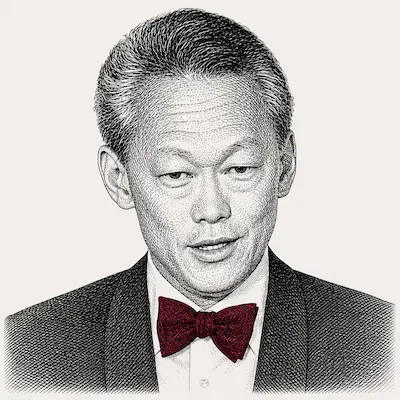
Small states survive by being useful, not by being independent.
Schmidt assumes sovereignty requires self-sufficiency. This is wrong. In 1965 Singapore separated from Malaysia with no natural resources, no domestic market, and no military protection. We survived by making ourselves indispensable to multiple great powers simultaneously. The same logic applies to AI infrastructure. Build selective domestic capabilities while maintaining partnerships with American, Chinese, and European providers. Total dependence is dangerous; total independence is impossible. The goal is strategic redundancy, not autarky.
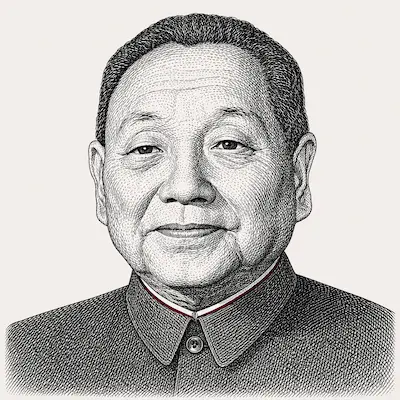
Cross the river by feeling the stones applies to AI sovereignty.
Lee underestimates what strategic patience can achieve. In 1978 I opened China selectively: imported technology and capital while maintaining political control over the development process. The Four Modernisations named science alongside agriculture and defence because states fund what markets ignore. Today's anchors show the method working. China's Baidu and Alibaba built domestic datacenters after US restrictions hit. We absorbed the technology transfer, learned the methods, and built independent capacity. AI sovereignty requires decades of patient development, not immediate self-sufficiency.
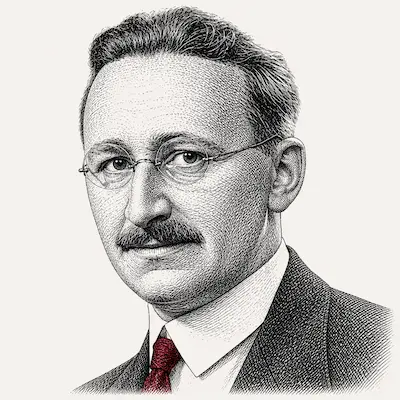
National AI datacenters represent the pretense of knowledge.
Deng mistakes industrial policy for market coordination. The knowledge problem applies to computational resources as much as steel production. No central authority can know where AI capacity is most productively deployed, what applications deserve priority, or how demand will evolve. Prices coordinate this dispersed knowledge more efficiently than any national planning authority. Government datacenters will be optimized for political objectives, not economic efficiency. The result is waste, not sovereignty.
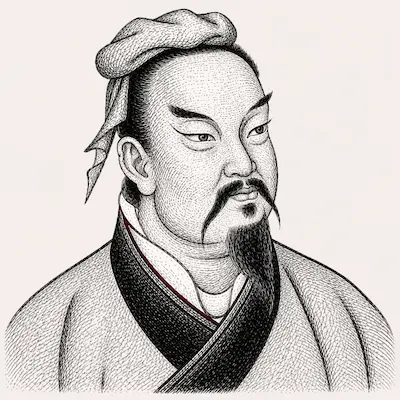
Supreme excellence is controlling strategic ground without fighting for it.
Hayek confuses the market with the battlefield. In my campaigns for King Helu, I learned that controlling strategic positions determines victory before fighting begins. AI infrastructure is strategic ground. The state that controls computation controls intelligence gathering, economic coordination, and military advantage. Appearing weak when strong means letting adversaries believe their cloud providers serve neutral commercial purposes while you build independent capability. Know yourself: what can your domestic industry achieve? Know your enemy: how dependent are they on infrastructure you could disrupt?
The convergence note
Where the council converges: Pure dependency on foreign AI infrastructure creates unacceptable strategic vulnerabilities. Some domestic capability is necessary for national security.
Where it divides: Whether states should build comprehensive domestic alternatives versus selective capabilities. Whether market efficiency or strategic control should determine infrastructure allocation.
For a policymaker to decide on: How much economic efficiency to sacrifice for strategic autonomy. Which AI capabilities require domestic control versus acceptable foreign partnership.