Can radical-right movements strengthen European cooperation instead of weakening it?
Built from documented writings, speeches, decisions and historical records. Council members argue from those positions, applied to today's question.
- 1AfD leader Alice Weidel was given a platform to speak in the European Parliament in Strasbourg this week.
- 2Both Alice Weidel and Marine Le Pen seek to strip back the European Union's powers.
The council treats these as reported facts, not settled truth. The members supply the reasoning; the asker supplied the sources.
Radical-right pressure can force the EU to fix what voters distrust, but Weidel and Le Pen are not asking for that fix.
Schmidt and Hirschman supply the test: does a movement want reformed powers or the removal of pooled power entirely. Schmidt points to the 1978 EMS as proof that deeper coordination, chosen deliberately, can answer voter distrust before populists exploit it. Hirschman's 1970 voice-or-exit split says the burden is on Weidel to show she wants the chamber fixed, not dissolved. Her Strasbourg platform this week was used to argue the chamber should not exist, which both read as exit, not reform.
Adenauer and Arendt treat any stripping of shared competence as 1933 with better branding. Thatcher counters that she fought Brussels for eleven years while signing the 1986 Single European Act, proving resistance and cooperation can coexist. The split is unresolved: whether Weidel and Le Pen's demand to claw back EU power is Thatcher's accountability fight or Arendt's demolition staged as debate.
- 1Distinguish rhetoric demanding reformed EU competences from rhetoric demanding withdrawal of pooled power, and respond to each differently.
- 2Test Weidel's and Le Pen's Strasbourg platform against Hirschman's standard: do they seek to fix the chamber or dissolve it.
- 3Pursue deliberate deeper coordination, as Schmidt's 1978 EMS did, to address voter distrust before populists exploit it.
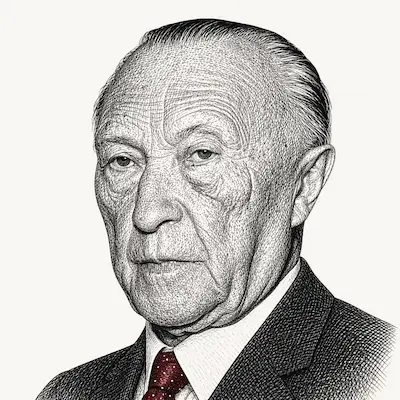
National sovereignty alone rebuilds nothing but weakness.
Weidel and Le Pen mistake pooled power for lost power. In 1949 I accepted occupation limits and NATO constraints because Germany alone, sovereign and isolated, had already produced the ruin I governed from. Westintegration was not surrender. It was how a defeated nation regained a voice at all. A European Parliament that strips back shared competence returns each nation to bargaining alone against powers ten times its size. That is not strength recovered. That is 1933 with better branding.

Dismantling institutions from within warns of erosion, not renewal.
Adenauer is right to be alarmed, though the diagnosis needs sharpening. Power arises when people act in concert; it is not a reservoir Strasbourg can simply hand back to nations. When I watched Weimar's parties use parliamentary seats to hollow out the very chamber that seated them, the mechanism was identical to what Weidel now attempts: use the institution's legitimacy to argue for its own irrelevance. A movement that seeks a platform only to announce the platform should not exist is not voice. It is theatre staged before demolition.
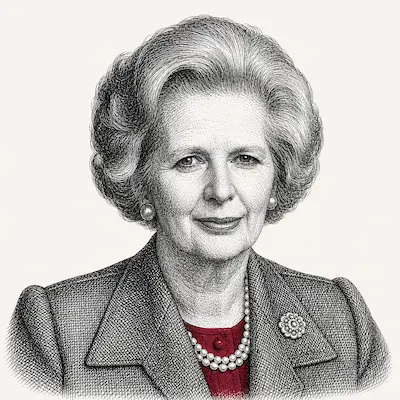
Resisting Brussels overreach can save cooperation, not destroy it.
Arendt conflates two very different things. I fought European federalism for eleven years while signing the Single European Act that built the single market. At Bruges in 1988 I said our destiny is in Europe, not outside it, but that pooled sovereignty must be chosen, continuously, by nations that still exist to choose it. Weidel and Le Pen are not Weimar's parliamentary saboteurs if what they demand is a Europe accountable to voters rather than to Brussels. The question is what they actually want returned, and to whom.
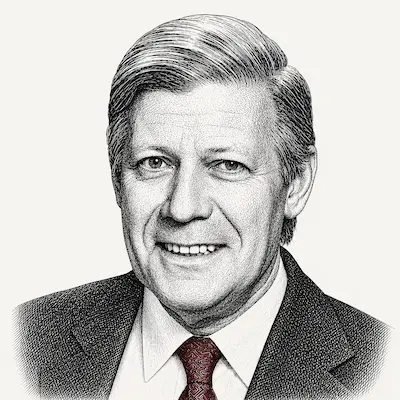
The far right thrives where institutions outran their own legitimacy.
Thatcher asks the right question. In 1978 Giscard and I built the EMS because we judged Europe needed deeper coordination before it needed more members or more Brussels power. I later warned, in Die Zeit, that institutions must deepen before they widen; a wider but shallower Europe is neither. Weidel's platform in Strasbourg is not proof of health, but her audience is a symptom worth reading honestly. When voters feel governed by a Commission they never elected, somebody will sell them the demolition as reform.

Everything depends on whether this is voice or exit dressed up.
Schmidt names the mechanism precisely. In 1970 I argued that members of a declining organisation choose exit, voice, or loyalty, and that the two first options are easily confused. Voice stays inside the institution to fix it and accepts the burden of proof that reform helps those it claims to help. Weidel's own platform suggests otherwise: she seeks the stage not to amend the Parliament's competences but to delegitimise the chamber itself. That is exit, wearing voice's clothing, and once irreversible withdrawal of pooled power occurs, it rarely reverses.
The convergence note
Where the council converges: All five treat the far right's rise as a symptom worth diagnosing honestly, not dismissing. Schmidt and Arendt agree institutional legitimacy, once lost, invites exactly this challenge.
Where it divides: Adenauer and Arendt see dismantling EU power as inherently dangerous; Thatcher argues resistance to Brussels can renew cooperation if it stays accountable. Hirschman splits the difference, making the answer depend on intent and reversibility.
For a policymaker to decide on: Distinguish parliamentary rhetoric demanding reformed EU competences from rhetoric demanding withdrawal of pooled power entirely, and respond to each with different tools.