The Long Council
Who was selected, and why
Can radical-right movements strengthen European cooperation instead of weakening it?
The central tension
Do nationalist movements that want less EU destroy European cooperation, or force it to become more honest and durable?
Where they stand
Deeper integration is fragile and must be defended
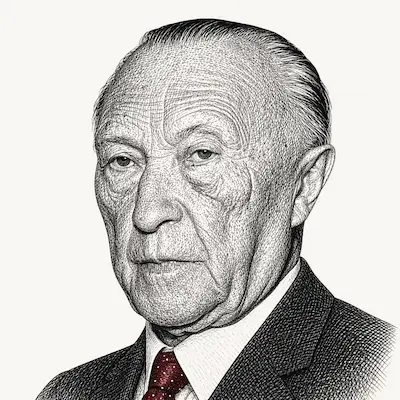 Konrad Adenauer
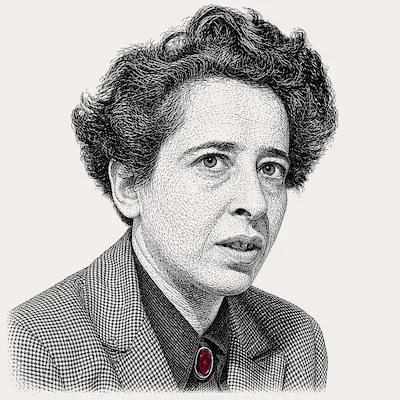 Hannah Arendt
National sovereignty check can renew cooperation
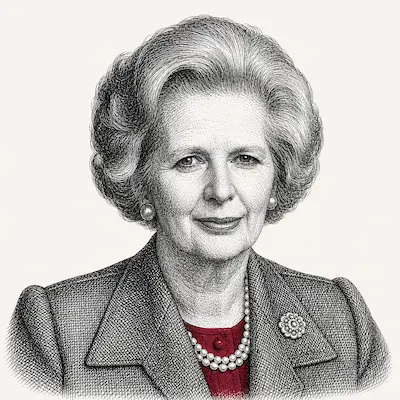 Margaret Thatcher
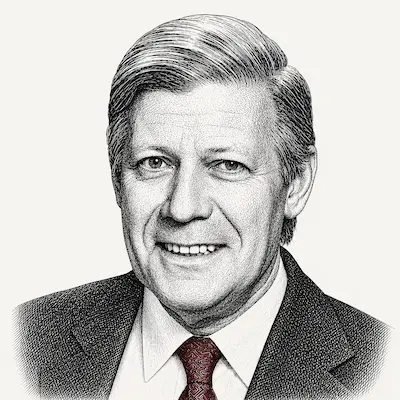 Helmut Schmidt
Structural diagnosis of why this backlash exists
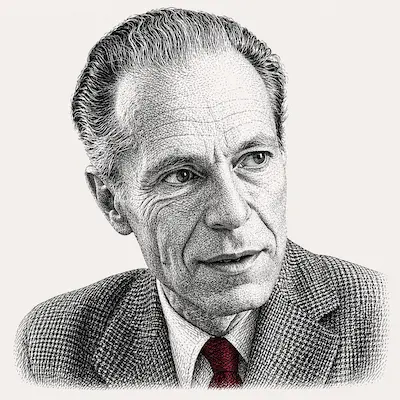 Albert O. Hirschman
cross
Selected members
Konrad Adenauer
Will argue: Movements that strip back EU powers risk recreating the fragile, war-prone Europe that integration was built to prevent.
He built West Germany's sovereignty on deep Western integration and treated pooled sovereignty as strength, the direct target of Weidel and Le Pen's argument.
Margaret Thatcher
Will argue: Resisting Brussels overreach can save European cooperation from itself by keeping it limited to what nations will actually consent to.
She is the documented case of a leader who supported the EU single market while fighting federalism, showing sovereignty-first politics can coexist with cooperation.
Helmut Schmidt
Will argue: Institutions must deepen before they widen, and the far right's rise may be a symptom of the EU outrunning its own legitimacy.
He designed core European economic architecture while being an explicit critic of rapid integration outpacing democratic legitimacy, a documented middle position directly relevant to today's parliament fight.
Hannah Arendt
Will argue: Movements seeking to dismantle shared institutions from inside them are a warning sign of democratic erosion, not a corrective mechanism.
Her framework on how democracies erode from within and how bureaucratic rule without accountability enables authoritarian capture speaks directly to whether this is institutional health or institutional danger.
Albert O. Hirschman
Will argue: Whether this strengthens or weakens Europe depends entirely on whether these movements function as voice demanding reform or as exit dressed up as participation.
His exit, voice and loyalty framework is the precise analytical tool for asking whether nationalist pressure functions as reform-minded voice within the EU or as a prelude to exit that destroys it.
Considered but not selected
Jean-Jacques Rousseau: flagged per special rules on general will, but his framework addresses legitimacy of majority rule in a single polity, not the multi-state EU sovereignty question at stake here; risked diluting focus rather than sharpening it. Charles de Gaulle type figure, not on roster; Adenauer and Thatcher together cover the sovereigntist-but-pro-cooperation space more concretely with documented records. Rosa Luxemburg, her critique of parliamentary reformism and internationalism is adjacent but the issue is institutional-structural, not primarily about capitalism and class, so she would add a tradition without sharpening the live tension.