Can radical-right movements strengthen European cooperation instead of weakening it?
Built from documented writings, speeches, decisions and historical records. Council members argue from those positions, applied to today's question.
- 1The European Parliament in Strasbourg hosted AfD leader Alice Weidel this week.
- 2Alice Weidel, like Marine Le Pen, seeks to reduce the European Union's powers.
The council treats these as reported facts, not settled truth. The members supply the reasoning; the asker supplied the sources.
Returning named powers to national parliaments could strengthen the EU; leaving the table to gut it could not.
The council splits on which one Weidel and Le Pen are actually offering.
Hayek and Thatcher argue a Union that routes power back to elected parliaments gains consent rather than losing strength. Thatcher's 1988 Bruges speech backs this: she asked for a Community of independent trading nations, not withdrawal. Adenauer and Schmidt reject that reading of today's radical right. Schmidt's 1978 Monetary System shows why: currency and energy need shared depth, and exit at that scale leaves every state exposed alone.
Arendt locates the real driver below both sides: citizens who never deliberate before Brussels rules arrive will vote against the institution regardless of its design. The council cannot settle whether Weidel's demand is reform or exit, because that depends on reading her actual intent, not just her stated aim.
- 1Define explicitly which specific powers would return to national parliaments versus which require shared EU depth, before judging radical-right demands as reform or exit.
- 2Build forums where citizens deliberate on Brussels rules before they arrive, addressing Arendt's point that absent participation drives the vote regardless of institutional design.
- 3Test Weidel's and Le Pen's actual proposals against Thatcher's Bruges standard: cooperation among independent trading nations versus withdrawal from shared commitments.
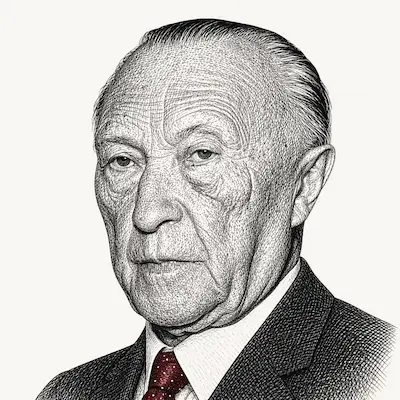
Clawing back Brussels powers weakens the peace it built.
In January 1963 I signed the Élysée Treaty with de Gaulle after fourteen years of patient work binding France and Germany together. That bond held because neither nation could easily walk away from shared institutions. Alice Weidel's demand to shrink the Union does not reform that architecture, it dismantles the very mechanism that makes German strength trustworthy to its neighbours. A Europe of loosely cooperating sovereign states is the Europe that produced two wars within my own lifetime.
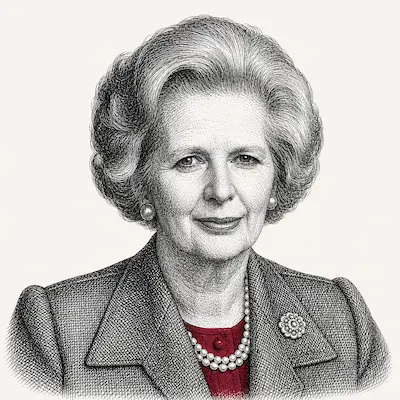
A looser Europe of nations can still cooperate well.
I accept the challenge directly: Bruges was reform, not dismantling. In September 1988 I told the College of Europe that Britain's destiny lay in Europe, as part of a Community of independent nations trading and defending freely together. I never opposed cooperation. I opposed a Brussels that legislated into every corner of national life. If Weidel's demand is genuinely to return powers to elected parliaments, that strengthens consent. If it is really a demand to leave the table altogether, that is a different thing entirely.
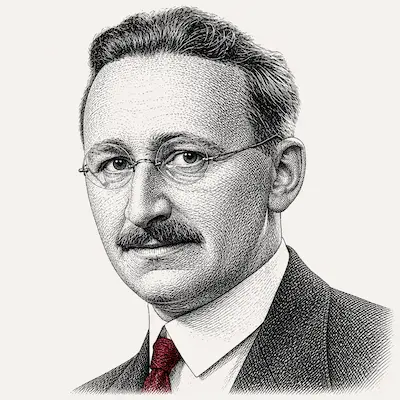
Decentralised rules can cooperate better than one voice.
It can, because unity of voice was never the measure of a working order. In 1945 I argued that no planner in Brussels, Bonn or Paris possesses the dispersed knowledge that local decision carries. A Europe that routes power back toward national parliaments is not weaker, it is more legitimate, because its rules match what people actually consented to. The danger is not decentralisation. The danger is a movement that wants to smash the common market along with the common bureaucracy.
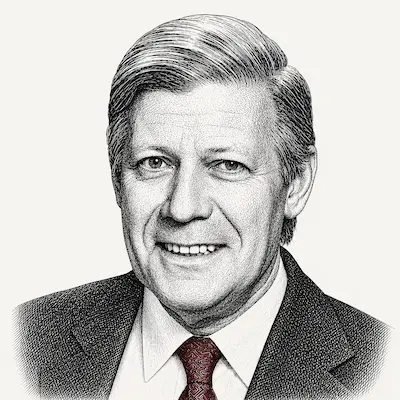
She wants no Europe, dressed as reform.
I built the European Monetary System in 1978 with Giscard precisely because dollar volatility was a sovereignty threat no single state could manage alone. Energy, currency, defence: these require depth, not retreat. Hayek is right that Brussels overreaches in small matters. But Weidel and Le Pen are not proposing subsidiarity, they are proposing exit from shared commitments at the exact moment Europe needs a common energy and security policy most. Institutions must deepen before they widen, I said in 1997. They cannot do either while being gutted.

The vote for Weidel measures lost political community, not ideology.
It is a symptom, and treating it only as a doctrine to defeat misses what produced it. In 1951 I argued that totalitarian movements grow from atomised people who no longer act together in any public space that matters to them. Brussels, for many citizens, is exactly such an absent space: rules arrive, no deliberation reaches them. Neither Adenauer's deeper institutions nor Thatcher's looser ones answer that unless ordinary people recover a forum where their consent is actually asked and heard.
The convergence note
Where the council converges: All five agree some current EU practice is too distant from citizens to command real consent. None treats the radical right as a neutral technical correction.
Where it divides: Adenauer and Schmidt see Weidel's project as institutional sabotage; Thatcher and Hayek see a legitimate demand for subsidiarity if its aims are honest. Arendt breaks from both camps, locating the real cause in lost participation rather than institutional design.
For a policymaker to decide on: Whether to answer radical-right pressure by returning specific named powers to national parliaments, or by building new forums for direct deliberation, rather than only defending or dismantling Brussels as it stands.