The Long Council
Who was selected, and why
Can radical-right movements strengthen European cooperation instead of weakening it?
The central tension
Some think giving in to anti-EU movements by shrinking Brussels' power could make cooperation more durable, others think it only weakens Europe's ability to act together.
Where they stand
Reform through retreat
looser
nation
Deepen or defend integration
Europe needs strong shared institutions to function at all
Diagnostic outsider
treats the nationalist challenge as a symptom of deeper social fracture
Selected members
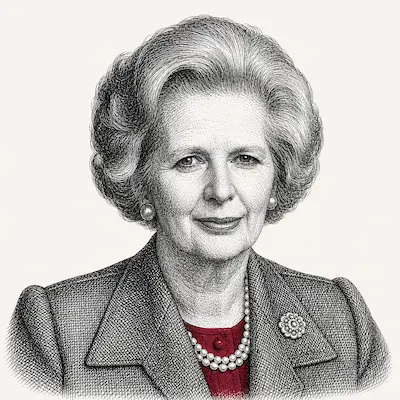
Margaret Thatcher
Will argue: National sovereignty within a looser cooperative Europe is more durable than forced centralisation and could absorb today's populist energy constructively.
She fought explicitly for a Europe of independent nations instead of a federal superstate, the live question radical-right parties now raise.
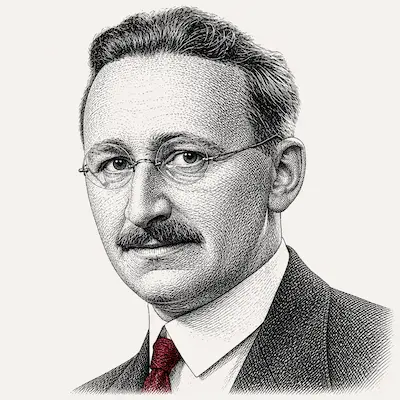
Friedrich Hayek
Will argue: Pressure that decentralises decision-making back toward national and local knowledge can strengthen cooperation by making it more legitimate, not weaker.
His spontaneous order argument and scepticism of centralised design speaks directly to whether EU institutions can be legitimately redesigned from pressure rather than destroyed.
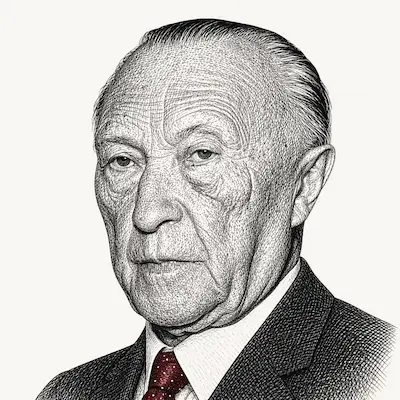
Konrad Adenauer
Will argue: Radical-right efforts to claw back powers from Brussels are a direct threat to the structures that have kept peace and prosperity, not a corrective to them.
He built the postwar case that pooling sovereignty in durable European institutions was what made German and European stability possible at all.
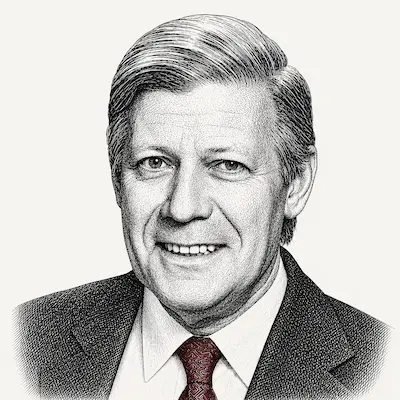
Helmut Schmidt
Will argue: Cooperation needs deepening in strategic areas like energy and currency but radical-right nationalism threatens to hollow it out rather than reform it.
As architect of the EMS and a documented late-career critic of rapid EU federalism and enlargement, he offers a pragmatic defender's view sharper than Adenauer's founding idealism and attentive to the 2026 reality of AfD and Le Pen gaining ground.
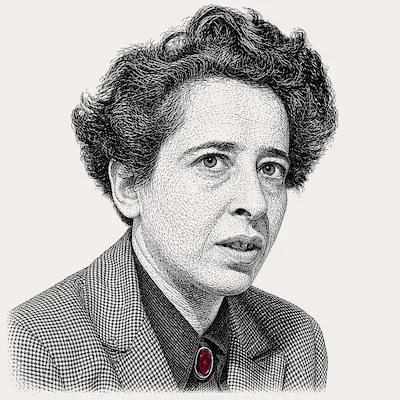
Hannah Arendt
Will argue: Radical-right success signals a crisis of genuine political participation in Europe that neither more centralisation nor more nationalism alone will fix.
Her analysis of how democratic erosion and the collapse of political community produce the atomisation that fuels mass movements is directly relevant to explaining why radical-right parties are rising now.
Considered but not selected
Rousseau: his general will framework is relevant to populist claims to speak for "the people" against Brussels, but Arendt already covers the democratic-legitimacy angle with more direct textual traction on nationalism and movements; adding him risks redundancy given the five-seat table. Flagging per special rule that his general will concept is live here but not selected as a primary seat. Ibn Khaldun, his asabiyya and dynastic-decay framework could extrapolate to EU institutional fatigue, but this requires heavy ◇ extrapolation beyond his documented domain and adds less than Arendt's direct treatment of European totalitarian dynamics. Nehru/Indira Gandhi, continental-democracy governance questions are adjacent but not central; the issue is specifically European integration, not general large-state federalism.