What political system best serves its people and the planet, and how should it account for externalities?
Built from documented writings, speeches, decisions and historical records. Council members argue from those positions, applied to today's question.
Environmental protection requires both state capacity and democratic accountability. No system delivers both perfectly.
Maathai and Sen anchor in democratic failures: Bhopal killed thousands because affected communities had no voice. Deng counters with China's billion-tree reforestation while democracies spent decades debating carbon taxes. Ostrom splits the difference with polycentric design that nests local control within larger coordination.
The council divides on timing: democratic participation versus environmental urgency. Expanding voice risks delay; limiting voice risks capture by polluters.
- 1Establish polycentric environmental governance that nests local community control within regional and national coordination frameworks.
- 2Require that those who benefit from pollution pay its full social cost to affected communities and future generations.
- 3Create democratic oversight mechanisms for environmental decisions that give voice to affected populations, not just market actors.

Environmental protection requires democratic participation because communities only protect what they govern.
Democratic accountability is the precondition for environmental sustainability, not a luxury that comes after development. In 1989 I led the campaign against President Moi's plan to build a 60-storey monument in Uhuru Park. The project collapsed when international donors withdrew funding after sustained public pressure. Communities will only protect forests, watersheds, and soils when they control the decisions that affect them. Authoritarian regimes treat both people and nature as resources to be extracted.
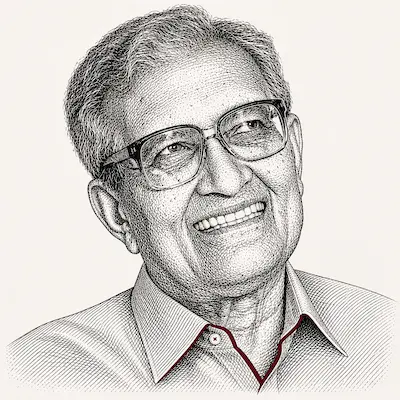
Democratic institutions prevent environmental disasters because they force governments to respond to affected populations.
Markets alone cannot price environmental externalities accurately because the most affected people often lack market power. No democracy has experienced a major famine because democratic governments must respond to public pressure and media coverage. The same logic applies to environmental degradation. In 1984 the Bhopal disaster killed thousands because Union Carbide faced no democratic accountability in India's regulatory capture. Environmental sustainability requires both market mechanisms and democratic institutions that give voice to those who bear the costs.

Polycentric governance handles environmental externalities better than either pure markets or centralized states.
Neither markets nor states alone can govern complex environmental systems effectively. Markets ignore externalities; centralized states lack local knowledge and enforcement capacity. In my research on irrigation systems in Spain and the Philippines, communities sustained shared water resources for centuries through nested governance arrangements. Multiple overlapping authorities create redundancy and learning. For climate change, we need city governments, regional authorities, national policies, and international agreements working simultaneously. No single level can solve it alone.

Environmental costs must be distributed fairly both within and between generations.
A just political system cannot impose environmental harms on future generations or on those least able to bear them. Behind the veil of ignorance, not knowing whether you would be born in 1950 or 2050, in Bangladesh or Boston, you would choose institutions that internalize environmental costs rather than exporting them across space and time. Current carbon emissions violate the difference principle because they benefit present wealthy populations while imposing costs on future and poorer ones. Justice requires that those who benefit from pollution pay its full social cost.
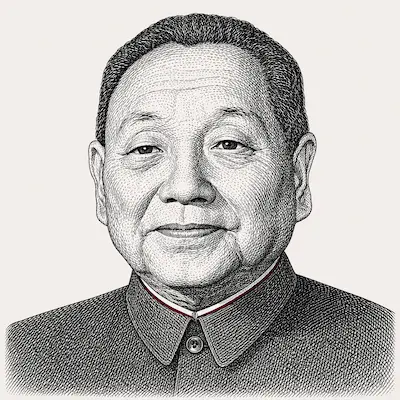
Strong state capacity delivers long-term environmental protection better than electoral cycles and interest group capture.
Democratic systems cannot make the hard choices environmental protection requires because voters punish leaders who impose costs today for benefits tomorrow. In 1978 I launched China's reforestation program alongside economic reform because the state could plan beyond electoral cycles. We planted billions of trees while Western democracies debated carbon taxes for decades. Environmental protection needs decisive action, consistent policy, and the ability to override local opposition. Markets discover prices; states build the infrastructure that markets need to function.
The convergence note
Where the council converges: All agree that neither pure markets nor pure state control adequately handles environmental externalities.
Where it divides: Maathai and Sen insist democratic participation is essential for environmental protection. Deng argues authoritarian capacity delivers better long-term results. Ostrom and Rawls seek institutional designs that balance multiple governance levels.
For a policymaker to decide on: Whether environmental urgency justifies limiting democratic participation, or whether sustainability requires expanding it.