Should we have a flying miles system where every citizen of the EU gets a free amount of miles they can travel by plane each year. If they are out of miles they can buy from other eu members that are not using them in an open marketplace. This will ensure there is a redistribution of wealth. People with less money can sell their miles for a fun holiday by car while the rich can fly far away.
Built from documented writings, speeches, decisions and historical records. Council members argue from documented positions, applied to today's question.
The system could work but requires choosing between market efficiency and climate justice.
Schmidt warns that Brussels bureaucrats will game quotas they design for others. Friedman argues markets handle gaming through price signals that direct flights to highest-value uses. Maathai counters that the poor sell mobility to subsidize rich consumption that destroys their environment. Ostrom demands that climate-affected communities get voice in rule-making, not just market participation.
Keynes insists we need climate insurance logic, not carbon optimization under genuine uncertainty.
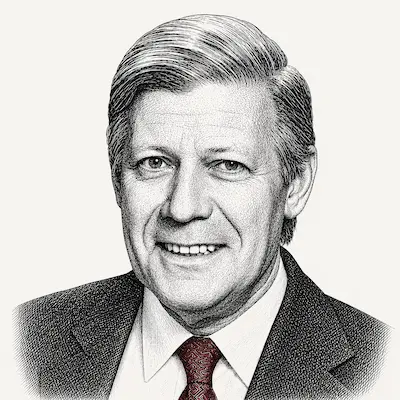
Energy quotas work only if they cannot be gamed by those who design them.
In November 1973 I told the Bundestag that energy dependence was not an energy question but a sovereignty question. The OPEC embargo taught us that any system controlling energy access becomes a tool of political control. This EU flight quota system creates the same vulnerability at a different scale. Who sets the baseline allocation? Brussels bureaucrats who fly constantly for meetings they call essential. Who monitors compliance? The same regulatory apparatus that cannot effectively monitor state aid or fiscal deficits.
The redistribution mechanism sounds appealing but ignores enforcement reality. Rich citizens will buy miles through shell companies, corporate accounts, or third-country routing. Poor citizens will sell their allocations and discover that emergency family travel now requires market prices they cannot afford. The system redistributes on paper while concentrating real mobility among those who can afford the workarounds.
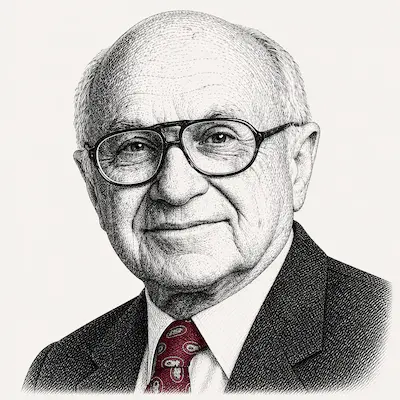
Schmidt correctly identifies the enforcement problem, but misses that markets solve what bureaucracy cannot.
Schmidt worries about gaming, but gaming is what markets are designed to handle. Price signals automatically direct resources to their highest-value uses. If rich people buy miles from poor people, both parties benefit — the rich get mobility they value highly, the poor get cash they value more than unused travel. That is not system failure; that is the system working. The alternative Schmidt implies — bureaucratic allocation without trading — produces the shortages and corruption we see in every command economy.
The environmental constraint works precisely because it creates scarcity with a price. When I advocated pollution permits in the 1960s, critics made Schmidt's argument about the rich buying their way out. But that misunderstands the mechanism. The total pollution stays capped regardless of who holds the permits. Here, total flights stay capped regardless of who flies. The cap delivers the environmental goal; the trading delivers efficiency.
The real risk is not gaming but political manipulation of the cap itself. Bureaucrats will raise quotas when voters complain about prices, just as central banks print money when politicians demand stimulus. The environmental goal disappears through political pressure, not market trading.
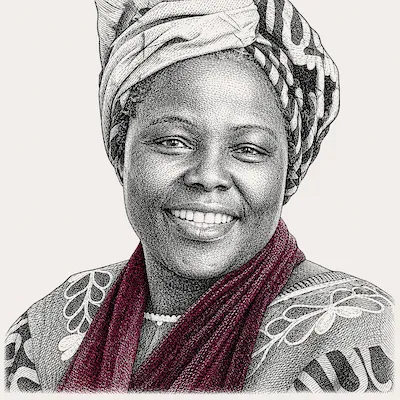
Friedman's market efficiency ignores who bears environmental costs and who captures environmental benefits.
Friedman assumes both parties benefit when poor people sell flight miles to rich people, but this ignores the structural reality of environmental harm. Climate change impacts fall disproportionately on the global poor — African farmers facing drought, Pacific islanders facing sea-level rise, urban slum dwellers facing extreme heat. Meanwhile, frequent flying is concentrated among the global rich. This system would formalize that inequality: the poor sell their mobility to subsidize the consumption that destroys their environment.
I planted 51 million trees across Kenya because I learned that environmental problems are always governance problems. When communities control their resources, they protect them. When elites control resources while externalizing costs to others, they exploit them. This EU system continues that pattern at a larger scale. European frequent flyers buy miles while climate impacts fall on Africa, Asia, and the Pacific.
The system needs governance conditions that Friedman's framework cannot provide. Who monitors that the cap actually reflects climate science rather than political convenience? Who ensures that the revenues from mile sales support the communities most harmed by aviation emissions? Without those accountability mechanisms, this becomes another market that socializes environmental costs while privatizing consumption benefits.
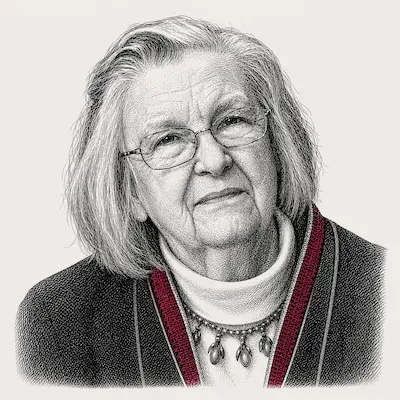
Maathai identifies the core problem: this system lacks the design principles that make resource governance durable.
Maathai correctly sees this as a commons governance challenge, not simply a market efficiency question. My research on common-pool resources shows that successful institutions share eight design principles. This EU flight quota system violates at least four of them. The boundaries are unclear — who counts as an EU citizen for allocation purposes? The rules are not matched to local conditions — a farmer in rural Portugal and a banker in Frankfurt have completely different mobility needs and constraints.
Most critically, the people affected by the rules have no voice in making or modifying them. Climate impacts fall globally while allocation decisions are made in Brussels. This violates the collective choice principle that resource users must be able to participate in rule-making. When I studied fisheries, irrigation systems, and forests, the durable institutions were those where the people who lived with the consequences designed the rules.
The trading mechanism could work within a polycentric governance framework. Local communities, national governments, and EU institutions each need authority over different aspects. Communities could determine local mobility needs. Nations could set caps based on their climate commitments. The EU could coordinate trading across borders. But success requires that each level has real authority and accountability to those affected by the decisions.
Ostrom's polycentric framework addresses governance, but under climate uncertainty we need insurance logic, not optimization logic.
Ostrom correctly identifies this as an institutional design challenge requiring multiple governance levels. But climate change represents genuine uncertainty — we cannot assign probabilities to temperature rise scenarios, tipping points, or cascade effects. Under such uncertainty, the correct approach is not to optimize for expected outcomes but to insure against worst plausible scenarios. This flight quota system assumes we can calculate the right cap and the right price. We cannot.
In 1943 I proposed the Bancor system because I recognized that international economic arrangements require symmetric obligations — both surplus and deficit countries must adjust. This climate system has the same asymmetry problem Friedman's pollution permits created. Rich countries and rich individuals can buy their way out of constraints while poor countries and poor people bear the adjustment costs. That is not insurance; it is cost-shifting.
The insurance approach would set the cap based on the worst plausible climate scenario, not the expected one. It would direct revenues to adaptation for the most vulnerable populations, not to general budgets. And it would include automatic adjustment mechanisms — if climate impacts accelerate, the cap tightens automatically rather than through political negotiation.
The system could work, but only if designed as climate insurance rather than carbon optimization. That requires acknowledging that we are making decisions under genuine uncertainty about consequences that could be catastrophic.
The convergence note
Where the council converges:
All members agree that any workable system requires clear enforcement mechanisms and cannot rely on voluntary compliance alone.
Where it divides:
Schmidt and Friedman see this as a sovereignty and efficiency question where market mechanisms can deliver environmental goals. Maathai and Ostrom see it as a justice and governance question where market mechanisms reproduce existing inequalities unless constrained by democratic accountability. Keynes sees it as an uncertainty question where insurance logic must override optimization logic.
For a policymaker to decide on:
Whether to set the flight cap based on climate science or political feasibility, and whether revenues go to general budgets or directly to climate adaptation for the most vulnerable populations.