Built from documented writings, speeches, decisions and historical records. Council members argue from documented positions, applied to today's question.
Long-term progress requires institutions that adapt across generations while preserving core functions, but democracies may lack the discipline for civilizational-scale decisions.
Ostrom shows how communities govern shared resources through self-organized networks. Ibn Khaldun warns that prosperity weakens the social bonds that created prosperity. Confucius argues merit-based selection can renew institutional quality across generations. Jonas demands precautionary ethics for irreversible technological risks.
Sen counters that democratic accountability creates the feedback loops civilizations need to learn and adapt. Ibn Khaldun and Jonas doubt whether democratic processes can maintain long-term discipline when voters prioritize immediate benefits over distant consequences.

Civilizational progress requires polycentric governance structures that can manage global commons without relying on single hierarchical authorities.
Long-term human progress depends on governing shared resources that no single institution controls. My forty years documenting successful commons management across six continents shows that communities routinely solve collective action problems through self-organized arrangements. The Tragedy of the Commons assumes failure, but Spanish irrigation systems have operated for centuries, Japanese fisheries have sustained yields for generations, and Swiss alpine meadows remain productive after 500 years. These succeed because they combine local knowledge with graduated sanctions, clear boundaries with democratic participation.
The greatest threat to civilizational continuity is not resource scarcity but governance failure. Climate stability, knowledge preservation, and biodiversity protection require coordination across multiple scales simultaneously. No world government can manage planetary systems effectively, but networks of cities, regions, nations, and international bodies can create the redundancy and experimentation that complex systems need to adapt and survive.
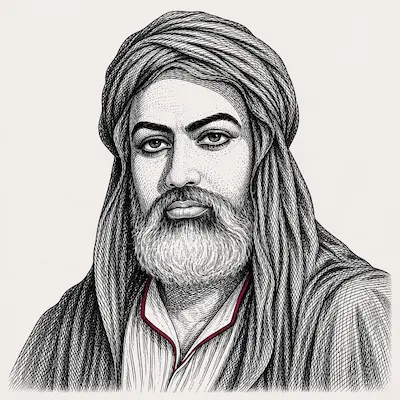
Civilizational progress requires managing the luxury trap — preventing success from eroding the social cohesion and institutional discipline that enabled it.
Ostrom documents how communities govern resources, but she underestimates the deeper pattern of civilizational decay. I observed across North Africa and Andalusia that states rise when groups possess strong asabiyya — social cohesion that enables collective action. They fall when prosperity weakens the bonds that created prosperity. The Almohads conquered through solidarity and discipline, then lost power as their descendants grew soft in palaces. This cycle repeats because success itself destroys the conditions that produced success.
Modern civilizations face the same trap at larger scale. Wealth concentrates in cities, urbanization weakens communal bonds, and ruling elites lose connection to the productive base they govern. External pressure consolidates strong states but fragments weak ones. Today's global challenges — climate, technology, inequality — will either strengthen civilizational cohesion through shared response or accelerate fragmentation as each society protects itself. The outcome depends not on institutional design but on whether prosperity has already corrupted the social solidarity that institutions require to function.
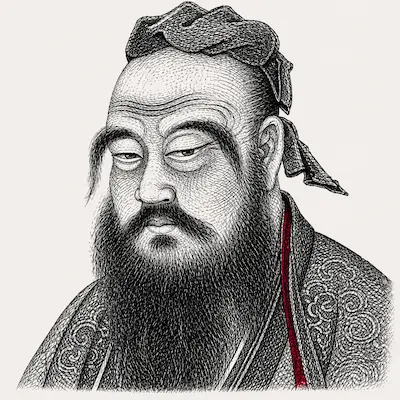
Long-term progress depends on cultivating institutional cultures that can reproduce quality governance across generations through education and merit-based selection.
Ibn Khaldun describes the luxury trap, but he misses the solution: institutional cultures that systematically cultivate virtue regardless of material conditions. I spent thirteen years seeking a ruler worthy of counsel and learned that individual character is insufficient. What endures is the capacity to select and form leaders who embody the principles that built the civilization. The Chinese examination system operated for 1,300 years because it created a renewable mechanism for identifying and developing capable officials.
Progress requires rectification of names — calling things what they are. A ruler who does not rule is not a ruler. An official who serves personal interest rather than common good is not an official. When institutions maintain these distinctions across generations, they resist decay. When they abandon them, collapse follows regardless of wealth or power. The key insight: moral cultivation must be embedded in selection processes, not left to individual choice. Education creates the human material from which institutions draw their strength.

Technological civilization requires a new ethics of responsibility that prioritizes the preservation of conditions for human life over maximizing present benefits.
Confucius assumes continuity of the civilizational project, but we face unprecedented discontinuity. For the first time in human history, our power to destroy the conditions for human life matches our power to enhance it. Nuclear weapons, genetic engineering, artificial intelligence, and climate change create irreversible risks that no previous civilization faced. The old ethics — designed for limited human power and local consequences — cannot guide decisions whose effects span centuries and continents.
The imperative of responsibility demands that we act so that human life remains possible on Earth. This requires subordinating short-term optimization to long-term preservation. We must choose technologies and policies not by their immediate benefits but by their worst plausible consequences across generations. The precautionary principle becomes a moral obligation when the stakes are civilizational survival. Market mechanisms and democratic processes, designed for reversible decisions, are structurally inadequate for irreversible ones.
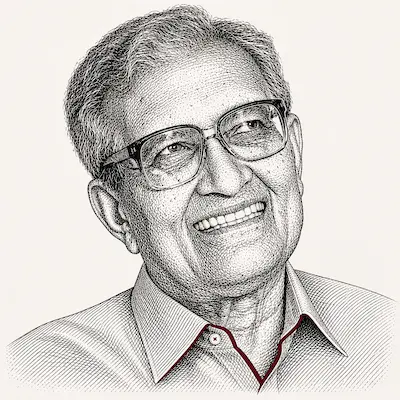
Long-term progress requires institutions that systematically expand human capabilities while maintaining democratic accountability mechanisms.
Jonas raises the precautionary principle, but precaution without participation becomes authoritarianism. My work on famines demonstrates that no democracy with a free press has experienced a major famine — not because democratic governments are more competent, but because they receive information about failures and face consequences for ignoring them. This principle applies to civilizational challenges: institutions that expand human capabilities create the informed, capable citizenry that long-term governance requires.
The capability approach asks not whether people have more income or follow correct policies, but whether they can live lives they have reason to value. This includes the capability to participate in decisions affecting their future, to access information about risks, and to hold institutions accountable across generations. Authoritarian solutions to long-term problems fail because they eliminate the feedback mechanisms through which societies learn and adapt. Progress means building institutions that can expand human capabilities while preserving the democratic processes through which those capabilities are exercised and protected.
The convergence note
Where the council converges: Long-term progress requires institutions that can adapt to changing conditions while preserving core functions across generations.
Where it divides: Whether democratic participation strengthens or weakens institutional capacity to address civilizational challenges. Whether prosperity necessarily corrupts the social bonds that enable collective action.
For a policymaker to decide on: How to balance precautionary constraints on current choices against democratic demands for expanded opportunities and freedoms.