What actions must be taken today to ensure the future of next generations?
Built from documented writings, speeches, decisions and historical records. Council members argue from documented positions, applied to today's question.
Build institutions that survive electoral cycles and restore the environmental commons that sustain democracy itself.
Maathai and Ostrom establish that environmental destruction is governance failure that steals from future generations. Sen and Rawls agree that justice requires each generation to expand rather than mortgage the next generation's capabilities. Schmidt anchors this in the 1973 oil crisis: energy dependence became sovereignty dependence within a decade.
The council splits on sequencing: Sen prioritizes global redistribution to enable local capabilities; Ostrom trusts polycentric governance to generate resilience without central redistribution.
- 1Build strategic reserves and infrastructure that survive electoral cycles, following Schmidt's energy independence model from the 1973 oil crisis.
- 2Restore degraded commons through community governance, expanding Maathai's tree-planting approach to watersheds and soil conservation.
- 3Institutionalise the precautionary principle for irreversible technologies, as Jonas demands for genetic engineering and climate interventions.
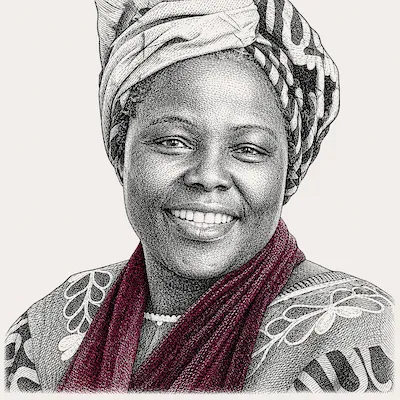
Intergenerational justice requires restoring the commons we have degraded.
Environmental destruction is a governance failure that steals from future generations. When I founded the Green Belt Movement in 1977, rural women told me their rivers were drying up, their soil eroding, their children walking farther for firewood. These were not natural disasters but political choices — forests cleared for export crops, watersheds sold to developers, commons privatised for elite profit. We planted 51 million trees because restoration is the practical foundation of intergenerational obligation. Democracy and environmental stewardship are inseparable: communities protect what they govern.
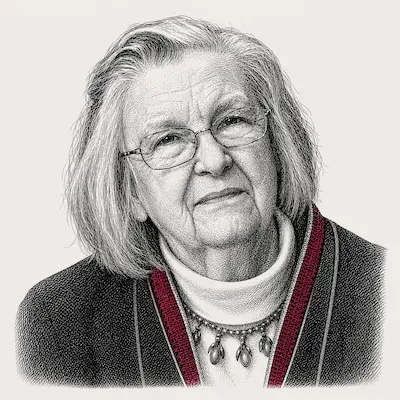
Polycentric governance builds resilience across generations better than single authorities.
Local governance can and must scale, but not through centralisation. My research documented how communities from Swiss alpine meadows to Philippine fisheries governed shared resources sustainably for centuries through polycentric institutions — multiple overlapping authorities at different scales. For climate and global commons, we need networks of city, regional, national, and international commitments, not a single global authority. Redundancy creates resilience. When one level fails, others compensate. Future generations need governance systems that can adapt and learn, not brittle hierarchies that break under pressure.
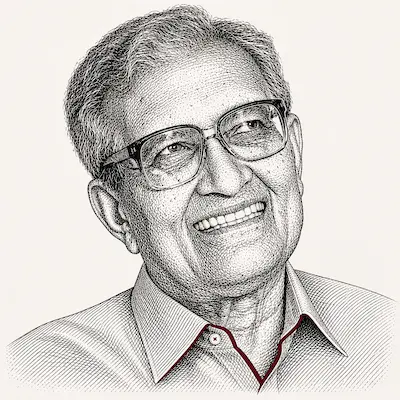
Future generations need expanded capabilities, not just wealth transfers.
Both matter, but capabilities come first. My capability approach asks what people are actually able to do and be — not just their income level. Future generations need health, education, political participation, and the substantive freedom to live lives they have reason to value. Ostrom's polycentric governance enables this by keeping decision-making close to communities. But severe global inequality means local control without redistribution leaves billions unable to develop their capabilities. We need global institutions that ensure every child can reach their potential while preserving the local democratic governance that makes development meaningful.
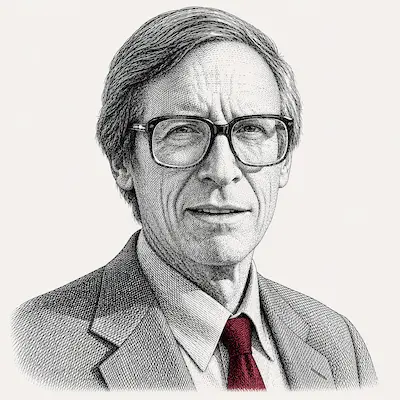
Justice requires institutions that treat future welfare as seriously as present.
Yes, if they didn't know which generation they'd belong to. My original position — choosing principles of justice from behind a veil of ignorance — must extend across time. Rational persons would choose a just savings principle: each generation saves and invests enough to give the next generation at least equal opportunities. This means current consumption cannot mortgage future capabilities through environmental destruction or institutional decay. The difference principle applies intergenerationally: inequalities are only justified if they benefit the least advantaged across all generations. We need institutions designed to resist short-term political pressures that sacrifice long-term justice.

Technology's irreversible power creates an imperative of responsibility unprecedented in history.
Responsibility must be felt before it can be institutionalised, but institutions must embody what individuals cannot sustain alone. My imperative of responsibility — act so that humanity can continue to exist on Earth — arises from technology's new power to destroy irreversibly. Nuclear weapons, genetic engineering, climate change: these create consequences across geological time that no previous generation could imagine. Rawls's institutional design is necessary but insufficient. We need a new ethic that makes future generations present to current conscience. The precautionary principle: when facing irreversible harm, uncertainty is not an excuse for inaction.
Leaders must imagine scenarios worse than the present and prepare for them.
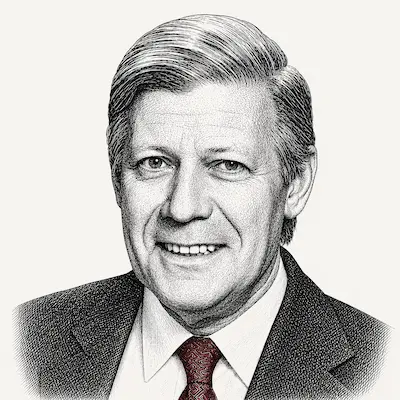
You institutionalise long-term thinking through infrastructure, treaties, and fiscal discipline that survive electoral cycles. When I managed the 1973 oil crisis, I learned that energy dependence is sovereignty dependence. We built strategic reserves, diversified supply, invested in efficiency — decisions that protected Germany for decades. Jonas is right about technology's irreversible power, but responsibility without capability is sentimentality. Future generations need leaders who can make unpopular decisions now: carbon pricing that raises costs today, infrastructure investment that requires current sacrifice, international cooperation that constrains national sovereignty. Democracy survives by occasionally acting against immediate popular will.
The convergence note
Where the council converges: Future generations require both local democratic governance and global institutional cooperation. Environmental stewardship and democratic accountability are inseparable preconditions.
Where it divides: Whether global redistribution or local capability-building should take priority. Whether responsibility can be institutionalised or requires moral transformation.
For a policymaker to decide on: How much current consumption to sacrifice for future capability. Which irreversible decisions require immediate action despite uncertainty.