How can we adapt our democracy so that the interests of future generations are taken into account?
Built from documented writings, speeches, decisions and historical records. Council members argue from documented positions, applied to today's question.
Democracy must represent future generations through constitutional limits on irreversible decisions and institutions with long-term mandates.
Roosevelt established that future generations have rights requiring institutional protection. Ostrom showed polycentric governance can create accountability across generations through nested institutions and monitoring. Burke argued present majorities cannot legitimately mortgage future inheritance. Rawls demonstrated justice requires designing institutions as if we don't know which generation we belong to.
Maathai alone dissented: expanding participation to those bearing current costs matters more than new institutions.

Future generations have rights that present generations must recognize and protect.
In 1948 I led fifty-six delegations through two years of negotiations to produce the Universal Declaration of Human Rights. We faced the same question you face now: how do we create binding obligations to people who cannot yet speak for themselves? Our answer was Article 25 — the right to adequate living standards for health and well-being — which explicitly includes "security in the event of unemployment, sickness, disability, widowhood, old age or other lack of livelihood in circumstances beyond his control." This was not charity but recognition that each generation inherits obligations from the past and owes obligations to the future.
The mechanism we created was imperfect but functional: international institutions with moral authority to articulate standards, even when they lack enforcement power. You cannot compel governments to protect future generations any more than we could compel them to protect refugees. But you can create frameworks that make the cost of ignoring those obligations visible and politically expensive.
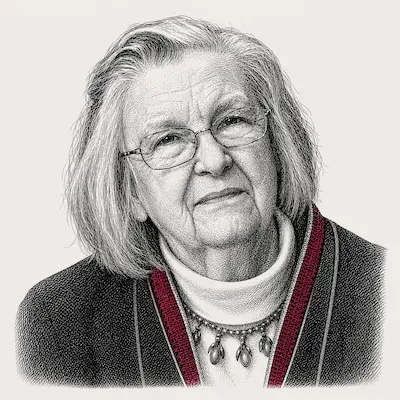
Polycentric governance with nested institutions can create accountability to future generations through design principles that ensure long-term thinking.
Roosevelt is right that we need institutional frameworks, but international declarations without local implementation remain aspirational. My research on common-pool resources shows that communities successfully manage shared resources across generations when they follow specific design principles: clearly defined boundaries, rules matched to local conditions, collective choice arrangements, effective monitoring, graduated sanctions, conflict resolution mechanisms, recognition by external authorities, and nested governance. The key insight is that institutions governing resources used by future generations must include users in rule-making and must monitor compliance continuously.
For future generations, this means creating nested governance systems where local communities, regional authorities, and national governments each have roles in protecting long-term interests. Constitutional courts that can strike down laws harming future generations, ombudspersons for future generations, and mandatory impact assessments for policies extending beyond electoral cycles. The commons that future generations will inherit — climate, biodiversity, fiscal capacity — require the same institutional design principles that make local resource governance durable.

Society is a partnership between the living, the dead, and the yet unborn — democracy cannot mortgage the inheritance of future generations.
Ostrom's institutional mechanisms are valuable, but she understates the deeper problem. Democracy as currently practiced treats each election as a mandate to dispose of the entire inheritance — fiscal, environmental, constitutional — that previous generations built. This is not democracy but generational tyranny. The social contract extends across time. We are trustees, not owners, of what we inherited, and we have no right to consume the capital that future generations will require.
My experience with the French Revolution taught me that present majorities, inflamed by immediate passion, will destroy in months what took centuries to build. Your climate crisis and debt accumulation are the same phenomenon: present convenience purchased with future suffering. The remedy is not technocratic institutions but constitutional limits on what present majorities can legitimately decide. Certain questions — the destruction of irreplaceable resources, the accumulation of unpayable debts, the erosion of constitutional foundations — must be placed beyond the reach of ordinary democratic majorities.
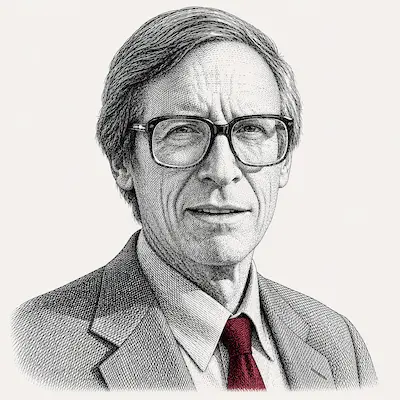
Justice requires designing democratic institutions from behind a veil of ignorance where decision-makers do not know which generation they belong to.
Burke correctly identifies the problem but his solution — placing decisions beyond democratic reach — abandons the principle that legitimate authority requires the consent of the governed. The better approach is institutional design that makes future generations' interests constitutive of present decision-making. From behind a veil of ignorance, where rational persons do not know whether they will live in 2024 or 2074, they would choose institutions that protect the interests of all affected parties across time.
This requires specific mechanisms: constitutional provisions requiring supermajorities for decisions with irreversible consequences; independent institutions with long-term mandates; and representation systems that weight future interests appropriately. The difference principle applies across generations — inequalities between present and future generations are only justified if they benefit the least advantaged across time. A wealthy present generation that impoverishes its successors violates justice as fairness.
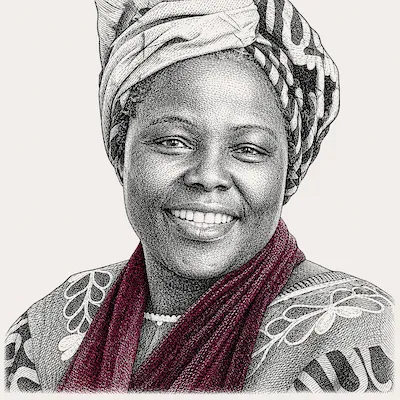
Democratic participation that excludes those who bear the consequences is not genuine democracy — it is elite extraction disguised as popular will.
Rawls assumes that current democratic institutions represent genuine participation, but my thirty years organizing in Kenya taught me otherwise. The people who bear the immediate costs of environmental destruction — rural women walking further for water, communities losing forests to logging concessions — are systematically excluded from the decisions that affect them. When we planted fifty-one million trees, we created democratic participation: women who planted controlled the nurseries, earned the income, and made the land-use decisions.
The same principle applies to future generations. Climate change, debt accumulation, and resource depletion harm the poorest first and worst. Protecting future generations requires expanding genuine democratic participation to include those who currently bear uncompensated costs. This means land tenure reform so communities can invest in long-term stewardship. It means women's control over natural resources. It means debt relief so governments can invest in infrastructure future generations will inherit rather than servicing debts they did not contract.
The three-legged stool of peace, democracy, and sustainable resource management cannot be separated. You cannot protect future generations through institutions that exclude present victims. Environmental democracy and intergenerational justice are the same project.
The convergence note
Where the council converges: Current democratic institutions systematically discount future generations' interests. Protecting long-term welfare requires specific institutional mechanisms that make future costs visible in present decisions.
Where it divides: Roosevelt and Rawls favor new representative institutions. Burke wants constitutional constraints on majority rule. Ostrom emphasizes polycentric governance with local participation. Maathai argues for expanding genuine democratic participation to currently excluded populations.
For a policymaker to decide on: Whether to pursue constitutional limits, institutional representation, expanded participation, or international frameworks — and how quickly democratic institutions can adapt when the costs of delay compound exponentially.