Should one private company control infrastructure critical to a nation's war effort?
Built from documented writings, speeches, decisions and historical records. Council members argue from those positions, applied to today's question.
- 1SpaceX's Starlink internet service was throttled in Ukraine amid Russian attacks, disabling connectivity for objects moving faster than 100mph.
- 2Ukrainian President Volodymyr Zelenskyy warned "people will die" after the service restriction caused failures in combat missions.
- 3Reuters reported the request to throttle Starlink/StarShield in Ukraine came from the White House, which Musk denies controlling.
- 4In 2022, SpaceX personally cut off Starlink service during Ukraine's counteroffensive in Kherson and Donetsk regions.
- 5Musk refused Ukraine's 2022 request to extend Starlink connectivity to Crimea.
The council treats these as reported facts, not settled truth. The members supply the reasoning; the asker supplied the sources.
No company should hold a single switch that can silence an army mid-battle.
Ukraine must bind that power into a contract written before the next war starts, not after.
Ben-Gurion, Schmidt, and Khaldun each name the same wound from a different angle: a foreign actor's unilateral control over a battlefield system, whether gas pipeline, mercenary army, or satellite link, leaves the state unable to command its own defence. Schmidt points to 1973, when he told the Bundestag energy dependence was a sovereignty question; he argues Starlink repeats that structure with satellites instead of pipelines. Hayek and Friedman counter that nationalizing Starlink would trade a fast failure for a slower one, since no defence ministry matches the engineering base that let one company launch thousands of satellites while state programs stalled. Friedman locates the actual failure in Kyiv's 2022 contract, which granted one man unilateral kill-switch power over combat terminals with no penalty clause.
Ostrom's objection cuts through both camps: a contract between one buyer and one seller still leaves no appeal when the seller flips the switch. The real split is whether sovereignty means owning the infrastructure, as Ben-Gurion and Khaldun argue, or binding it with enforceable multi-party rules, as Hayek, Friedman, and Ostrom argue; the council leans toward the latter as the only fix that doesn't sacrifice the capability Ukraine depends on.
- 1Write enforceable multi-party governance into Ukraine's Starlink contract, binding NATO states, Ukraine, and the company under shared rules none can unilaterally override.
- 2Replace unilateral kill-switch discretion with service guarantees, arbitration, and penalty clauses negotiated before the next contract, not during a war.
- 3Build monitoring and sanctions mechanisms into battlefield communications agreements now, so no single company decides who dies in the next war.
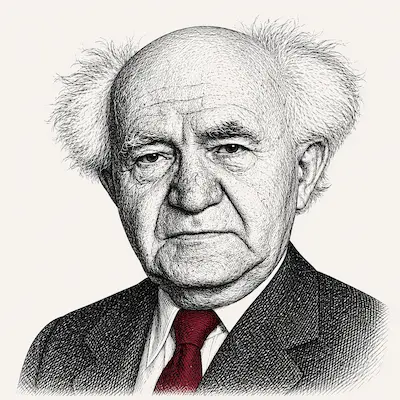
A state that cannot command its own lifeline is not sovereign.
In 1956 I learned at Suez that even allies will pull support when their interests shift, so I built Dimona rather than trust borrowed power indefinitely. A country whose soldiers lose their communications because a foreign executive flips a switch has outsourced the thing a state exists to hold: command over its own defence. Ukraine's army should not depend on one man's discretion in California. That dependency is a strategic wound, whatever the contract says.
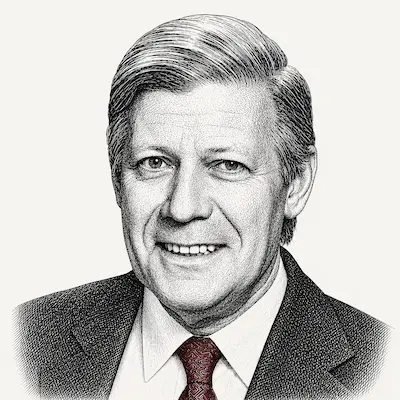
Single-supplier dependence is the same failure, communications or gas.
Ben-Gurion is right to call it a wound, and yes, I once called Russian gas a reciprocal instrument, not a risk. I was wrong to stop there. In 1973 I told the Bundestag that energy dependence is a sovereignty question, not an energy question. Starlink is the same structure with satellites instead of pipelines: one unaccountable supplier, one switch, one army's fate riding on it. You diversify before the crisis. Ukraine did not, and now it pays in soldiers' lives.

A state leaning on a foreign company has already lost cohesion.
Weaker, yes. I watched dynasties that hired mercenary armies decay faster than those who fought with their own tribes, because a soldier bought with money owes no loyalty beyond the payment. A nation whose battlefield communications run through a company owing it nothing has the same defect, only dressed in fibre and satellites instead of swords. In 1401 I told Timur that cities defended by hired men fall faster than cities defended by their own people. Ukraine's dependency is that pattern repeated.
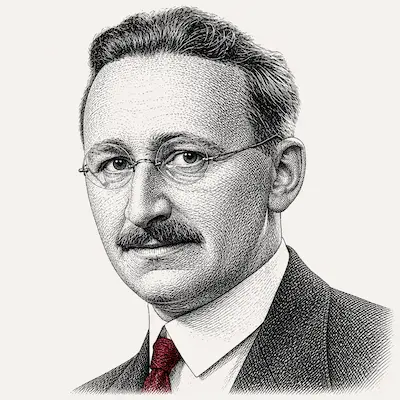
Nationalise the system and you trade one failure for a slower one.
Khaldun describes real decay, but his remedy, state command, invites a different one. No defence ministry possesses the dispersed engineering knowledge that let one company launch thousands of satellites while European state programmes stalled for a decade. I accepted antitrust regulation in the Constitution of Liberty because concentrated power needs limits, not because the state should own the plant. The fix is binding contractual rules written before the war starts, not nationalisation after the first switch gets flipped.
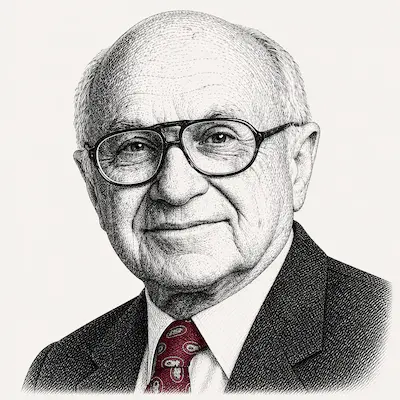
The flaw is the contract's discretion, not private ownership itself.
Hayek names it correctly. Nobody forced Kyiv to sign an agreement granting one man a unilateral kill switch over combat terminals. That was a procurement failure, not proof markets fail at infrastructure. In 1975 I told Pinochet that liberalising prices does not require handing anyone unchecked power, and I was not fully heeded there either. Write enforceable service guarantees, arbitration, penalty clauses, before the next contract, and the company remains private while the discretion disappears.

Neither owning it nor contracting it away solves this alone.
Friedman's contract fix helps but it is still one buyer facing one seller with no appeal. In the Maine lobster fisheries I documented, durable systems worked because users, monitors, and outside authorities all held real power to enforce rules, not because a single contract clause did. Battlefield communications need the same: NATO states, Ukraine, and the company bound together under rules none can unilaterally override, with monitoring and sanctions built in before the next war, not negotiated during it.
The convergence note
Where the council converges: Every member treats a unilateral off-switch as the core failure, not private ownership itself. Ben-Gurion, Schmidt, and Khaldun converge on dependency as the deeper danger.
Where it divides: Ben-Gurion and Khaldun favour sovereign command; Hayek and Friedman insist ownership change solves nothing without fixing contract design. Ostrom rejects both state and pure market framing outright.
For a policymaker to decide on: Write enforceable multi-party governance into the contract now, with monitoring and penalties, or accept that one company's discretion can decide who dies in the next war.