The Long Council
Who was selected, and why
Should one private company control infrastructure critical to a nation's war effort?
The central tension
Should a country ever let one private company hold the power to switch off its army's lifeline in a war?
Selected members
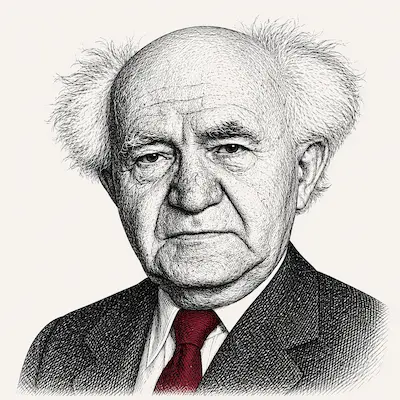
David Ben-Gurion
Will argue: A nation that cannot control its own war-fighting infrastructure has not actually achieved sovereignty, whatever flag flies over it.
He built a state under existential threat and insisted the state must hold a monopoly on the tools of its own survival.
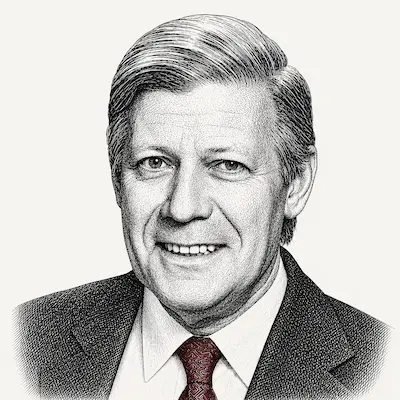
Helmut Schmidt
Will argue: A single company controlling battlefield communications is strategically identical to single-supplier energy dependence and must be diversified or nationalised before the next crisis, not after.
His entire doctrine rests on never letting one external actor hold a switch over a nation's critical infrastructure, learned from the 1973 oil shock.
Ibn Khaldun
Will argue: A state dependent on a foreign private actor for the instruments of war has already ceded the asabiyya that makes it capable of defending itself.
His asabiyya framework explains why a state that outsources the coercive and communicative sinews of power to an outside actor hollows out its own cohesion.
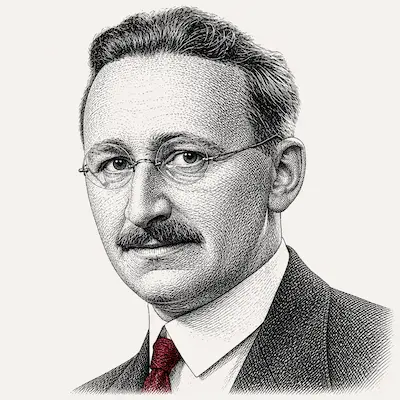
Friedrich Hayek
Will argue: Nationalising or duplicating critical infrastructure by state fiat risks replacing one single point of failure with a slower, less innovative one, so the fix is contractual and regulatory, not ownership.
He provides the strongest documented case that concentrated power, including concentrated state power over infrastructure, carries its own dangers and private provision can be more innovative than nationalisation.
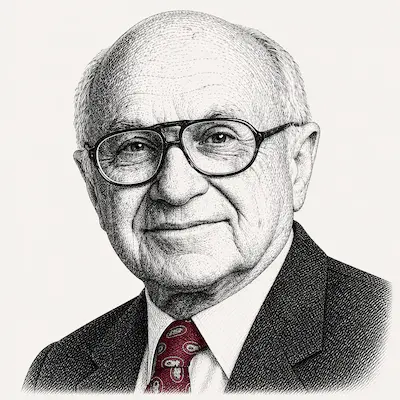
Milton Friedman
Will argue: The problem is not that a company controls the system but that the contract gave one man unreviewable discretion, and that is a fixable design flaw, not an argument for state ownership.
He offers the sharpest documented challenge to the instinct to nationalise, arguing government control of infrastructure is itself a historically unreliable guarantor of good outcomes.

Elinor Ostrom
Will argue: The answer is neither full state ownership nor unchecked private control but binding multi-party governance rules that no single actor, state or company, can unilaterally override.
Battlefield communications during wartime function as a shared critical resource where neither pure private control nor pure nationalisation has proven adequate, which is her specialist domain.
Considered but not selected
Sun Tzu: flagged against for cooperative governance problems, and while this has a competitive dimension, the core question is institutional design and sovereignty, not battlefield strategy itself. Hannah Arendt, her bureaucratic accountability framework is adjacent but the issue is more concretely economic-sovereignty than totalitarianism or "rule by nobody," so a more direct voice was prioritised. Kautilya, his state-capacity and alliance-geometry framework is relevant but substantially overlaps with Ibn Khaldun and Ben-Gurion already at the table without adding a distinct angle.