With an increasing grip of technology and state surveillance, how can a “Brave New World” scenario be avoided?
Built from documented writings, speeches, decisions and historical records. Council members argue from documented positions, applied to today's question.
Surveillance must be stopped before it is built, not governed after the state holds the data.
Arendt identifies the mechanism: when every action is visible to power, people stop associating, and a population that cannot associate cannot resist. Hayek adds the 1944 planning argument: concentrated information becomes concentrated control, and the temptation to use it is irresistible once it exists. Locke frames the constitutional case: a state that maps private life forfeits its mandate, giving citizens not rebellion but restoration.
Luxemburg, Ostrom, and Sen press the harder objection. Legal rights written on paper did not stop the German Imperial state from monitoring SPD correspondence in 1915. Ostrom's forty years of field research show that oversight bodies without user participation reliably fail. Sen adds that a population which self-censors is already contracting, not developing. Rights hold only when organised citizens, accountable institutions, and a free press make violations costly.
- 1Prohibit state collection of mass communications data by constitutional rule, before surveillance infrastructure is built and entrenched.
- 2Establish user-accountable oversight institutions with real monitoring capacity and graduated sanctions against data violations.
- 3Protect press freedom as a structural requirement; without it, no oversight institution can make surveillance abuses visible and correctable.

Surveillance does not watch citizens. It unmakes them.
Pervasive monitoring destroys the public realm by making every action visible to power before it can become political. I watched this mechanism operate in Germany after 1933: not through dramatic arrests alone, but through the slow withdrawal of people from public life, from association, from the risk of being seen with the wrong person. Atomised individuals cannot act in concert. They cannot generate power. A population that cannot act in concert is not governed, it is administered. The answer is not better privacy law. It is rebuilding the plural spaces where people appear before one another as political equals.

Surveillance infrastructure is always built to break the opposition.
Arendt is right that atomisation is the mechanism, but she stops before naming who benefits. In 1915 I watched the German Imperial state monitor SPD correspondence, infiltrate union meetings, and use wartime emergency powers to silence every voice that opposed the war. The apparatus was built for security. It was used for class control. Every surveillance system in history has followed this path: the stated purpose becomes the cover, and the operational purpose is suppressing the people most likely to organise against those in power. Legal limits on that apparatus mean nothing without the organised mass capacity to enforce them.

A state that reads your mind has already ended its mandate.
Luxemburg asks whether rights can restrain a state armed with data. My answer is that a state which penetrates the inner life of its citizens has already dissolved the compact that gave it authority. In 1689 I argued that the sovereign's legitimate domain ends at the boundary of the private person: coercion may govern outward conduct, but it cannot reach thought, conscience, or private association without becoming tyranny. Surveillance that maps every communication and relationship crosses that line completely. When a government systematically destroys the conditions of private life, it does not merely abuse power. It forfeits it. The people's right to reconstitute authority becomes not rebellion but restoration.
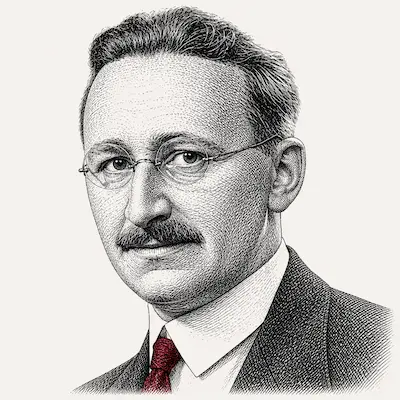
Centralised data gives the state the power it was never meant to hold.
Locke asks what stops the state taking the data. I answer: only constitutional rules that prohibit collection in the first place, because once the information exists, the temptation to use it is irresistible. In 1944 I argued that economic planning fails not because planners are malicious but because concentrated information becomes concentrated control. Digital surveillance is the completion of that logic. Every message recorded, every movement logged, every association mapped gives the state exactly the knowledge asymmetry that makes individual resistance impossible. The rule of law requires that government act under general rules known in advance, not that it accumulate private knowledge and deploy it selectively. A state that knows everything about everyone governs by discretion, not by law.

Neither state monopoly nor market capture governs surveillance data well.
Hayek is right that concentrated information corrupts, but the solution is not simply to prohibit collection. The question is who governs the data that already exists and will continue to be generated. I spent forty years studying irrigation systems in Spain, fisheries in Maine, and forests in Japan, and the consistent finding was this: resources governed by a single authority, whether state or private, are depleted or abused. Resources governed by clearly bounded, locally monitored, user-accountable institutions with graduated sanctions persist. Surveillance data is a commons problem. Citizens are the users whose information is taken. They must have defined rights, real monitoring capacity, and meaningful sanctions against violations. External oversight bodies with no user participation reliably fail.
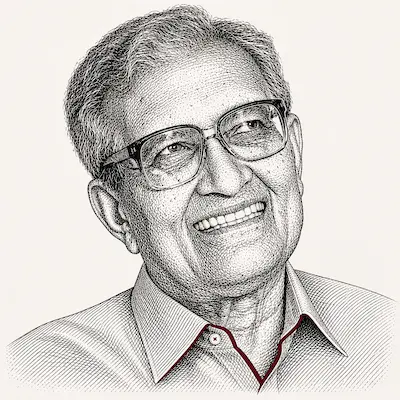
Surveillance chills the capabilities that make development real.
Ostrom identifies the governance problem precisely. I want to name what is lost when surveillance succeeds. In my work on famine I showed that no democracy with a free press has starved its population, because open information forces governments to respond to suffering they cannot hide. The same structure applies here. When surveillance chills speech, association, and dissent, governments lose the information they need to correct their own failures. Citizens lose the political freedom, transparency, and social opportunity that I identified in 1999 as the five freedoms development actually requires. A population that self-censors because it knows it is watched is not developing. It is contracting. The free press is not decoration. It is the mechanism by which abuse becomes visible and correctable.
The convergence note
Where the council converges: Surveillance concentrates power in ways that corrupt governance and destroy the political capacity of citizens. No member disputes this.
Where it divides: Arendt, Locke, and Hayek locate the remedy in structural limits on state power: constitutional prohibition, rule of law, the forfeiture of authority. Luxemburg, Ostrom, and Sen insist that legal limits mean nothing without organised mass capacity, user-accountable institutions, and a free press to make violations visible. The disagreement is whether rights restrain power or whether only countervailing power restrains power.
For a policymaker to decide on: Choose between two concrete paths: hard constitutional prohibition on data collection before systems are built, or polycentric accountability institutions that govern data already being gathered. The first requires political will before the apparatus exists; the second requires it after, when the state already holds the advantage.