Is cutting a fuel deal with Russia a betrayal of Ukraine, or just realism?
Built from documented writings, speeches, decisions and historical records. Council members argue from documented positions, applied to today's question.
Buying Russian oil while Ukraine fights funds the war either way; the dispute is whether a landlocked state had any other choice.
Schmidt and Hirschman trace Slovakia and Hungary's Druzhba purchases to pipelines built in the 1960s, long before this war existed. Kautilya calls the exemptions sama, cheap conciliation by militarily exposed states while the real contest plays out elsewhere. Ben-Gurion counters that EU members with alternatives and years of warning are not cornered the way Israel was in 1952. Luxemburg goes further: every barrel delivered finances the shells landing on Ukrainian cities, whatever the buyer intended.
Kautilya and Hirschman treat the deals as structural leverage inherited from the past, revisable once conditions allow. Ben-Gurion and Luxemburg treat continued purchase as a choice renewed every day the exemption stands. Ukraine's own 2025 transit lapse shows exit is possible; whether Slovakia and Hungary are building toward that exit or simply enjoying the discount is the question no one at this table can settle for them.
- 1Require Slovakia and Hungary to publish a dated plan for ending Druzhba purchases, converting tolerated exemption into managed divestment.
- 2Reject framing continued Russian oil purchases as neutral commerce; treat each shipment as financing the war until exit begins.
- 3Distinguish publicly between states with alternatives and years of warning and states genuinely cornered, per Ben-Gurion's test.

Realism without diversification is just a slower surrender.
In November 1973 I told the Bundestag that energy dependence is a sovereignty question, not an economics one. That logic cuts both ways today. Slovakia and Hungary taking Druzhba oil is not betrayal by itself, but it only survives as realism if it is a bridge, not a destination. I defended Russian gas in the 1980s because it was reciprocal and diversified. A small state that buys from one source with no exit plan has stopped practising statecraft and started practising dependency.

A weak state's fuel deal is tactics, not loyalty or treachery.
I trained Chandragupta to use conciliation, incentive, division and force in sequence, never force first. Slovakia and Hungary are landlocked states without Ukraine's military exposure. Buying pipeline oil under exemption is sama, conciliation purchased cheaply while the real contest continues elsewhere. My treaties with Seleucus ceded territory for five hundred elephants; I did not call that betrayal of my own soldiers, I called it arithmetic. A treaty is revisable the moment conditions change. The question is whether these states are preparing their exit or simply enjoying the discount.
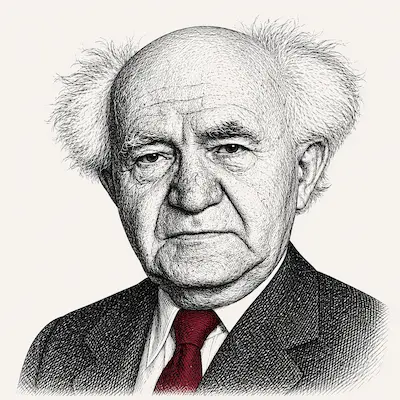
Pragmatism has limits; funding your ally's invader crosses them.
I negotiated reparations with West Germany in 1952 against survivors who called me a traitor, because Israel needed the money and moral purity does not feed people. But I never funded the army occupying my own people while asking them to bleed for me. That is the difference here. Hungary and Slovakia are not isolated and starving, they are EU members with alternatives and years of warning. Kautilya's arithmetic assumes no better option exists. Here, one did, and was refused.

Buying the aggressor's oil is war financing dressed as thrift.
Ben-Gurion is right that this is not neutral commerce, though I would push further than he does. In 1913 I showed that capitalism survives by continuous expansion into territory it can extract from, and war is the predictable result when that expansion is contested. Every barrel Druzhba delivers finances the shells falling on Ukrainian cities. Calling this realism launders a material transfer to the war machine as prudent housekeeping. Solidarity is not sentiment here, it is the only policy that refuses to subsidise the killing.

The real betrayal happened decades ago, in the pipeline's concrete.
Luxemburg names the war financing correctly, but the moral drama obscures the structural failure. Druzhba was built in the 1960s as Soviet infrastructure; its irreversibility is why Slovakia and Hungary are still trapped in 2025. I argued that permanent commitments need a far higher burden of justification than reversible ones, and pipeline infrastructure is about as permanent as commitments get. Ukraine itself exploited this leverage through transit fees before finally letting the contract lapse in January 2025, exercising exit after decades of forced loyalty. The scandal is the sunk concrete, not this week's purchase order.
The convergence note
Where the council converges: All five agree dependency itself, not any single purchase, is the deeper failure. Schmidt, Kautilya, and Hirschman treat the current deals as symptoms of decisions made decades earlier.
Where it divides: Ben-Gurion and Luxemburg call continued purchases active complicity in war financing; Kautilya treats them as neutral tactical accommodation by weaker states. Hirschman reframes the whole question as a false present-tense dilemma masking a past infrastructure failure.
For a policymaker to decide on: Should exemptions require a binding, dated exit schedule, turning tolerated dependency into managed divestment, or does any exemption without immediate sanction already fund the war regardless of future intent?