Should one private company control infrastructure critical to a nation's war effort?
- DB
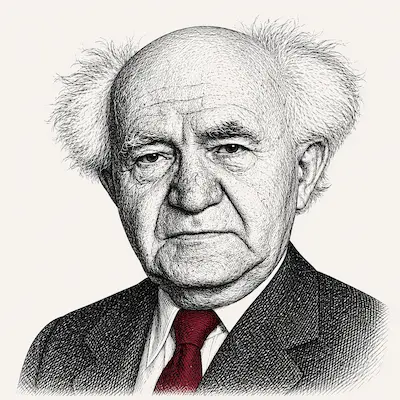 David
Ben-Gurion - FH
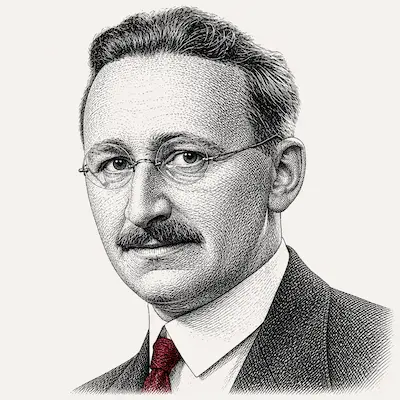 Friedrich
Hayek - MF
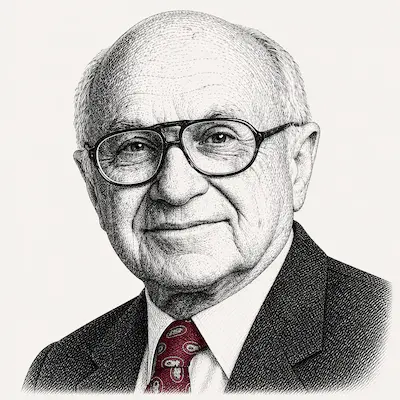 Milton
Friedman - EO
 Elinor
Ostrom - AOH
 Albert O.
Hirschman - ER
 Eleanor
Roosevelt
Built from documented writings, speeches, decisions and historical records. Council members argue from those positions, applied to today's question.
- 1SpaceX's Starlink-derived StarShield service, which Ukraine relies on, was throttled amid Russian attacks, disabling connectivity for drones moving faster than 100mph.
- 2Reuters reported the request to throttle the service in Ukraine came from the White House, which Musk and officials including Trump and Rubio denied ordering.
- 3In 2022, SpaceX cut off Starlink service during a Ukrainian counteroffensive in Kherson and Donetsk, and Musk refused to extend coverage to Crimea.
The council treats these as reported facts, not settled truth. The members supply the reasoning; the asker supplied the sources.
No single company or state should hold a kill switch over a nation's war effort. Ukraine needed multiple satellite providers bound by enforceable contracts, not one founder's discretion.
Ben-Gurion names the real failure: Kyiv cannot fight a war it does not fully control, and Starlink throttling proves the point. Hayek and Friedman agree the danger is concentration itself, not who sits in Musk's chair; Friedman notes the Reuters report that the White House also pushed to throttle the service, denied by Musk, Trump and Rubio, meaning a state would not have fixed this either. Ostrom turns that diagnosis into a design: her fieldwork on fisheries and irrigation systems found durable systems rely on multiple overlapping providers, not one owner or one ministry. Hirschman pushes the timeline back further: Ukraine accepted an irreversible dependency on StarShield in wartime with no alternative lined up, which is the real error, not the 2026 throttling itself.
The split is over what replaces discretion. Ben-Gurion wants the state to take the switch back, while Hayek, Friedman, Ostrom and Roosevelt all warn that just moves the same danger into a ministry or a committee.
- 1Build redundant satellite providers for Ukraine, including OneWeb and EU systems, alongside any single commercial supplier.
- 2Draft binding wartime service contracts with penalties specifying obligations in advance, replacing reliance on a founder's discretion.
- 3Reject proposals that simply transfer control from the company to a state ministry as an adequate fix.
A state that cannot flip its own switches has not won its war.
In June 1948 I ordered the IDF to sink the Altalena rather than tolerate a second armed force inside my own country. One army, one command, no exceptions. Ukraine's drones go dark because Musk, not Kyiv, decides who gets signal. That is not an alliance. That is dependency dressed as partnership. A state at war that cannot control the infrastructure its survival depends on has not achieved sovereignty, whatever the battlefield map says today.
Concentrated control is the danger, not which hand holds it.
Ben-Gurion is right that dependency is dangerous, but wrong about the remedy. In 1944 I warned that central planning fails because no authority possesses the dispersed knowledge markets aggregate. Nationalising StarShield would not distribute that knowledge, it would merely move the single point of failure from a Texas boardroom to a Kyiv ministry, or worse, a Brussels committee. The defect is concentration itself. Ukraine's error was building its entire battlefield communication on one node, owned by anyone.
A private veto over war is dangerous but a government one is worse.
Hayek is right that the flaw is concentration, and I will go further. The Reuters report alleges the throttling request came from the White House itself, denied by Musk, Trump and Rubio alike. If true, the danger was never only Musk, it was two concentrated powers colluding over a third country's drones. In 1962 I argued concentrated power is never rendered harmless by the good intentions of those who hold it. Private or state, the same warning applies.
Neither privatise nor nationalise, build redundant providers under binding rules.
Friedman names the real trap correctly: concentrated power corrupts whoever holds it. My field research across fisheries and irrigation systems on six continents found the same answer every time, durable governance needs multiple overlapping authorities, not a single owner and not a single ministry. Ukraine built one supplier with no exit option and no enforceable service rules. The fix is a polycentric network, OneWeb, EU satellites, national systems, bound by contracts that specify wartime obligations in advance, not after a blackout.
The failure predates the throttling, it is the absence of an exit option.
Ostrom's redundancy is the right fix but arrives too late for the decision already made. In 1970 I argued that organisations decay when members have no credible exit, only voice or loyalty. Ukraine accepted a single, irreversible dependency on StarShield with no alternative provider lined up. An irreversible commitment demands a far higher burden of justification than a reversible one. Kyiv crossed that threshold in wartime without building the exit that would have disciplined the supplier's behaviour.
Only binding commitments, not private goodwill, can govern life and death power.
Hirschman is right that Ukraine should have built the exit before the war, but I would press further back. In 1948 I fought to make the UDHR specific enough to be enforceable, not merely aspirational, because declarations without obligation protect no one. A company's private assurance that it will not throttle service in a warzone is exactly that kind of empty declaration. What Ukraine needed, and still needs, is a binding wartime service contract with penalties, not a founder's discretion.
The convergence note
Where the council converges: All six agree concentrated control over war-critical infrastructure is dangerous regardless of who holds it. All reject both pure privatisation and pure nationalisation as adequate fixes.
Where it divides: Ben-Gurion wants state control restored as the sovereign baseline, while Hayek and Friedman warn state control merely relocates the same danger. Ostrom and Hirschman locate the failure in design choices made before the war, not in the throttling itself.
For a policymaker to decide on: Build binding, penalty-backed wartime contracts with multiple redundant satellite providers now, before the next single point of failure goes dark.