Which global institutions should exist to prevent an arms race in dangerous technologies like AI?
Built from documented writings, speeches, decisions and historical records. Council members argue from documented positions, applied to today's question.
Build overlapping institutions at different scales rather than one global AI authority.
Schmidt argues democratic allies must set binding standards first, then negotiate from strength. Roosevelt counters that excluding major powers destroys legitimacy and guarantees non-compliance. Lee Kuan Yew and Ostrom both see the solution in multiple frameworks: bilateral agreements on specific risks, alliance standards among democracies, regional protections for middle powers.
Sun Tzu adds that intelligence-sharing institutions must stay separate from development institutions to prevent miscalculation without stopping competition.

Technology arms races require coalitions of the capable, not universal institutions that include those racing to dominate.
In December 1979 I drove through the NATO Double-Track Decision against Soviet intermediate-range missiles. The lesson was clear: technology competition between adversaries cannot be managed by including the adversaries in the same institution. We built alliance cohesion first, then negotiated from strength. Today's AI competition follows the same structure. China views AI as a strategic asset for regime survival and global influence. The United States views it as a competitive advantage and security imperative. No global institution can bridge that gap because the gap is not technical but political.
The democratic allies — US, EU, Japan, South Korea, Australia — share enough common ground to build binding commitments on AI development standards, testing protocols, and deployment restrictions. Start there. Build the institutional muscle among countries that can actually agree. China will either join when the costs of exclusion become prohibitive, or it will not. Either outcome is preferable to a toothless global framework that constrains the responsible while the irresponsible race ahead.

Moral authority without universal participation is not authority — it is alignment.
Schmidt's alliance approach creates exactly the legitimacy problem we faced in 1948. When we drafted the Universal Declaration, the temptation was to include only the countries that already agreed with us. We included the Soviet Union, Saudi Arabia, and South Africa precisely because a human rights framework that excluded the worst violators would have no moral standing to constrain them. The same logic applies to AI governance. A democratic-only institution may produce elegant standards, but it cannot prevent an AI arms race if China, Russia, and other major powers operate outside it.
The Universal Declaration succeeded not because it had enforcement power — it had none — but because it established norms that even violators had to acknowledge publicly. When Stalin's delegation voted for the Declaration, they created a standard their successors could be held to. Today's AI governance needs the same universal framework. China may not comply immediately, but excluding them from the conversation guarantees they will not comply ever.
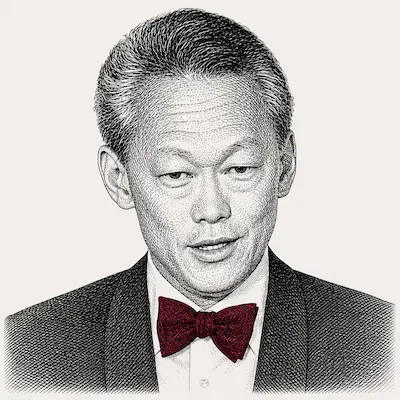
Roosevelt is right that universal frameworks provide legitimacy, but legitimacy without enforcement is just aspiration.
In 1965 Singapore separated from Malaysia because federal arrangements only work when all parties accept the same rules. Today's AI competition is more like the Cold War than the post-war institution-building Roosevelt remembers. The United States and China are not negotiating partners on AI — they are strategic competitors who view AI advantage as existential. Any institution that includes both will be paralysed by their competition.
But Schmidt's democratic alliance approach creates a different problem. It forces every other country to choose sides in a technology competition they did not start and cannot win. Singapore needs access to both American and Chinese AI systems. South Korea needs to trade with China while maintaining security ties with America. A world divided into competing AI blocs forces middle powers into impossible choices.
The answer is polycentric — multiple overlapping institutions at different levels. Bilateral agreements between the US and China on specific risks like nuclear command systems. Democratic alliances on shared standards. Regional frameworks in ASEAN, the EU, and Africa for countries that need protection from great power technology dominance. No single institution can manage this competition, but multiple institutions can contain it.
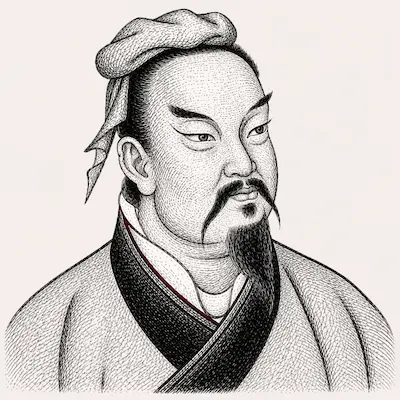
The supreme excellence is to prevent the arms race without fighting it — but this requires each side to believe the other can win.
Lee Kuan Yew understands the structure correctly. This is strategic competition, not cooperation. In the Warring States period, no single institution could have prevented the military competition between Qin and the other states. But the competition could be managed through intelligence, positioning, and the careful management of perceptions. The same principles apply to AI.
The danger is not that one side will achieve decisive AI advantage — the danger is that one side will believe the other is about to achieve decisive advantage and will act precipitously. In 512 BC I advised King Helu that the greatest victories come from battles the enemy chooses not to fight. Today's AI governance must focus on strategic signaling: ensuring that each major power understands the others' capabilities and intentions clearly enough to avoid miscalculation.
This requires intelligence-sharing institutions that are separate from development institutions. The United States and China need mechanisms to communicate about AI capabilities and deployment timelines without sharing the technologies themselves. Think of nuclear arms control verification — not cooperation on weapons development, but transparency about what each side is building. The goal is not to prevent AI development but to prevent surprise and miscalculation that could trigger genuine technological warfare.

AI governance is not a single commons problem — it is multiple overlapping commons that require polycentric solutions.
Sun Tzu frames this as pure competition, but that misses the shared vulnerabilities that make cooperation possible even between competitors. In my research on fisheries, I found that even rival fishing communities cooperated on navigation safety, weather information, and search-and-rescue because the ocean threatened all of them equally. AI creates similar shared risks — system failures, cybersecurity vulnerabilities, and uncontrolled deployment effects that threaten everyone regardless of who develops the technology.
The key insight from forty years of commons research is that successful governance institutions match the scale of the problem. Global AI governance cannot work as a single institution because AI development happens at multiple scales with different stakeholders. But polycentric governance can work: technical safety standards managed by engineering communities; deployment protocols managed by national regulators; research sharing managed by universities; and strategic stability managed by military establishments.
Each governance layer addresses different aspects of the AI commons problem. The communities that share AI safety research have different interests and capabilities than the states that compete over AI deployment. Design institutions that match these different scales and interests, with clear boundaries between them but mechanisms for information flow. This is not about preventing competition — it is about preventing the competition from destroying the shared infrastructure that makes AI development possible for everyone.
The convergence note
Where the council converges: Pure universal institutions cannot manage AI competition between strategic adversaries. Multiple overlapping frameworks work better than single global solutions.
Where it divides: Whether democratic alliances should build standards first and invite others later, or whether universal participation is necessary for legitimacy from the start.
For a policymaker to decide on: Which risks require cooperation even between competitors, and which advantages are too strategic to share.