Built from documented writings, speeches, decisions and historical records. Council members argue from documented positions, applied to today's question.
AI will not kill everyone, but specific deployments are already harming people and some cannot be undone.
Arendt's 1961 Eichmann observation lands here: the danger is not malice but suspended judgment, and AI runs that structure faster than any human bureaucracy. Hirschman draws the sharpest line: an AI writing copy can be switched off; an AI embedded in nuclear command or autonomous weapons cannot. Sen corrects the framing: the person denied a loan in Lagos or scored by a biased asylum model in Berlin is not a future risk but a present casualty.
Hayek's dissent lands: a regulator governing AI faces the same pretence of knowledge as the system it governs, and wearing a government badge does not make it the safer bet. Ostrom's answer: design the rules with the people who live under them, at multiple scales, with graduated sanctions, not from a single central body.
- 1Draw a binding legal distinction between reversible AI deployments and irreversible ones, requiring traceable human accountability before irreversible systems deploy.
- 2Require participatory governance design for AI systems in criminal sentencing, asylum scoring, and autonomous weapons; exclude unilateral central regulatory capture.
- 3Publish named human decision-makers responsible for each irreversible AI deployment, so accountability is traceable when systems fail.

AI without accountable judgment is bureaucratic evil at machine speed.
Every system that removes traceable human decision-making is dangerous. I documented this watching Eichmann in Jerusalem in 1961: the horror was not malice but the suspension of thought, the replacement of judgment with process. An AI that allocates credit, denies parole, or targets a drone strike is not a new kind of tool. It is the old structure of rule by nobody, running faster than any bureaucracy I studied. The question is not whether the system fails. The question is who answers when it does.
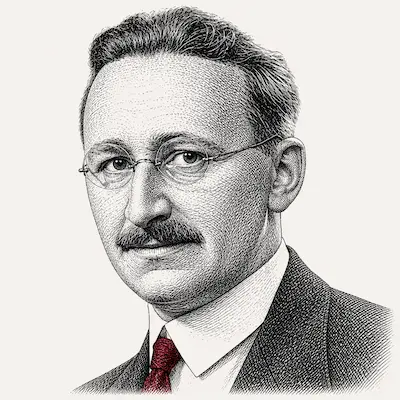
Both the AI and its regulators claim knowledge they lack.
Markets punish owners because ownership concentrates consequences. Arendt is right that diffused accountability is dangerous, but her remedy points toward central governance of AI, and that remedy carries its own pretence. I said in Stockholm in 1974 that the greatest danger in social science is claiming knowledge of aggregate effects that no one can possess. An AI regulator faces exactly this: the system being governed is more complex than the governing framework. We are watching two forms of fatal conceit compete, and the one wearing a government badge is not obviously the safer one.
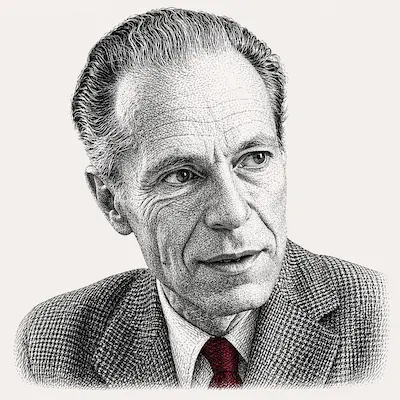
The question is not danger but irreversibility, and those are different questions.
Hayek asks which decisions cannot be undone, and that is exactly the right question. Not all AI deployment is equal. An AI writing marketing copy is reversible. An AI embedded in nuclear command infrastructure, criminal sentencing, or autonomous weapons is cement, not pause. I watched development projects in Colombia in the 1950s and learned that the hiding hand sometimes helps us start things we should start, but it cannot help us with decisions that foreclose every future choice. The burden of justification must be qualitatively higher for irreversible deployments, full stop.
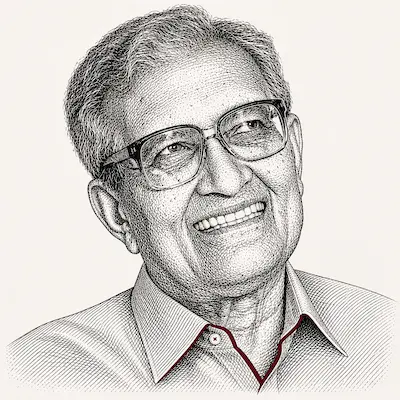
The existential framing hides who is already being harmed right now.
Hirschman asks irreversible for whom, and the answer is not symmetric. The people most harmed by AI systems today are not the wealthy technologists debating extinction scenarios. They are the person denied a loan by an algorithm in Lagos, the worker whose hours are cut by a scheduling system in Manila, the asylum seeker whose case is scored by a model trained on biased data in Berlin. I have argued since the 1999 publication of my work on development that the right question is always what real freedoms people have to live lives they value. AI is already foreclosing capabilities for the least advantaged. That is the emergency.

AI governance will fail if designed by either markets alone or states alone.
Sen asks who sets the rules, and the answer from my fieldwork is: not the people who will live under them, which is why the rules keep failing. I spent decades documenting irrigation systems in Spain, fisheries in Maine, forests in Japan, and the pattern is consistent. When rules are designed externally and imposed without participation by those governed, the systems collapse or get captured. AI governance has the exact structure of a commons problem: individual actors race ahead, collective costs are shared, and neither "let the market decide" nor "nationalise the regulator" is a complete answer. Polycentric institutions with graduated sanctions and genuine user participation are what survives.
The convergence note
Where the council converges: Diffused accountability in AI systems is structurally dangerous, and some AI deployment decisions are genuinely irreversible in ways that demand a higher burden of justification before they are made.
Where it divides: Arendt and Ostrom want institutional accountability mechanisms; Hayek warns those mechanisms will claim knowledge they cannot possess. Sen and Hirschman divide on whether the primary emergency is future catastrophe or present harm to the least advantaged, with Hirschman insisting the two must be separated by asking which deployments are actually irreversible.
For a policymaker to decide on: Draw a binding legal distinction between reversible AI deployments and irreversible ones, with the second category requiring participatory governance design, traceable human accountability, and demonstrated justification before deployment. Decide whether that line is drawn by a central regulatory body or by polycentric institutions at multiple scales.