Built from documented writings, speeches, decisions and historical records. Council members argue from documented positions, applied to today's question.
Yes, but only when platforms threaten genuine security interests, not when governments want to silence criticism.
Lee and Deng anchor in survival logic: foreign-controlled platforms can manipulate millions of minds simultaneously. Mahathir adds the development angle: domestic alternatives cannot emerge if foreign platforms dominate the information space. Roosevelt and Arendt counter that bans destroy the public deliberation democracy requires.
The split turns on whether platform control constitutes information warfare or legitimate discourse. Security-based bans survive scrutiny; convenience-based bans do not.
- 1Define in legislation the exact security behaviors that justify platform bans, not vague threats to stability.
- 2Require international oversight before implementing bans to prevent abuse of security justifications.
- 3Mandate that any banned platform's core functions remain available through regulated domestic alternatives.

States must control information platforms that threaten national survival.
Survival is the precondition of everything else. In 1987 I detained Catholic social workers under the Internal Security Act because they threatened racial harmony through political agitation disguised as social work. Foreign-controlled platforms pose the same risk at digital scale. When TikTok's algorithm can influence a million Singaporean minds simultaneously, and its controllers sit in Beijing, that is not free speech, that is information warfare. Small states cannot afford to let adversaries shape their citizens' reality.

Platform bans destroy the public realm that democracy requires.
Lee misunderstands the nature of political power. Power arises when people act together in concert and disappears when they are isolated from one another. In 1961 I watched the Eichmann trial and saw how totalitarian systems work, not through dramatic oppression but through the systematic elimination of spaces where citizens can think and speak together. When states ban platforms, they do not protect democracy. They destroy the conditions under which democratic judgment becomes possible. Citizens who cannot access information cannot deliberate. Citizens who cannot deliberate cannot govern themselves.
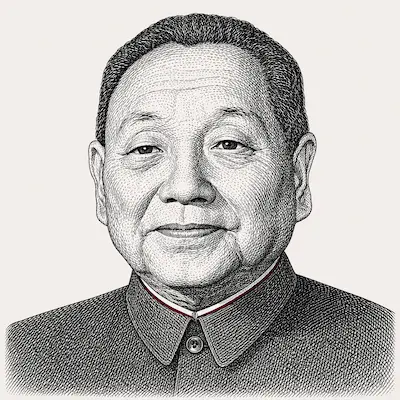
Information sovereignty is as vital as territorial sovereignty.
Arendt confuses the means with the end. The goal is not abstract deliberation but national development and social stability. In 1978 I opened China selectively, importing capital and technology while maintaining political control. The same logic applies to digital platforms. China built Weibo, WeChat, and Douyin because foreign platforms serve foreign interests. India banned TikTok in 2020 and survived. The EU regulates platforms through the Digital Services Act. Every serious state manages information flows. The question is not whether to control, but how to control effectively.

Platform bans violate the fundamental right to seek and receive information.
Deng's framework treats citizens as subjects to be managed rather than people with inherent rights. When I chaired the drafting of the Universal Declaration of Human Rights in 1948, Article 19 established the right to "seek, receive and impart information and ideas through any media and regardless of frontiers." This was not abstract philosophy, it was a response to how fascist and communist governments had controlled information to destroy human freedom. Platform bans, regardless of security justifications, violate this fundamental right and require international oversight to prevent abuse.

Developing countries must assert digital sovereignty or face technological colonialism.
Eleanor's universal rights framework ignores power realities. During the 1997 Asian financial crisis I imposed capital controls against IMF advice because monetary sovereignty is non-negotiable. Digital sovereignty is the same principle. Western platforms extract data, shape discourse, and serve Western strategic interests. Malaysia cannot build domestic alternatives if foreign platforms dominate our information space. The EU's Digital Services Act proves that even developed countries regulate platforms when their interests are threatened. Developing countries have the same right to protect themselves from digital colonialism.
The convergence note
Where the council converges: All members accept that states have legitimate authority to regulate information platforms under some circumstances.
Where it divides: Whether platform bans destroy democratic deliberation (Arendt, Roosevelt) or protect national sovereignty and development (Lee, Deng, Mahathir).
For a policymaker to decide on: Which specific platform behaviors justify bans versus regulation, and how to balance security concerns against information rights.