Built from documented writings, speeches, decisions and historical records. Council members argue from those positions, applied to today's question.
- 1The article frames AI risk as stemming from "the men behind them" rather than the technology's growing power.
The council treats these as reported facts, not settled truth. The members supply the reasoning; the asker supplied the sources.
Fearing AI's power is not a distraction: the owners and the power are the same danger, viewed from two sides.
Luxemburg and Arendt name the mechanism: five companies hold the keys, and calling AI an autonomous force lets specific people avoid blame for specific decisions. Arendt's point sharpens this: Eichmann's 1961 defense, that he merely ran a process, is the same move as blaming "the technology." Hayek complicates it without refuting it: no owner, boardroom, or planner fully grasps what a system trained at scale will do once released. Ostrom adds the fix neither side alone provides: irrigation and fishery systems she studied survived not by punishing owners but by putting users into the rule-making.
The split is whether to target ownership directly or build shared governance regardless of who owns the systems. Machiavelli's warning cuts through both: whoever holds the new instrument will use it past their own intentions, named or not, so rules must assume the power will be misused.
- 1Name the specific firms, executives, and decisions behind AI deployment rather than describing outcomes as "the technology decided."
- 2Build participatory rule-making, monitoring, and graduated sanctions that bring users into AI governance, not just owners.
- 3Draft regulation assuming power will be used past its holders' intentions, regardless of whether owners are named or reformed.
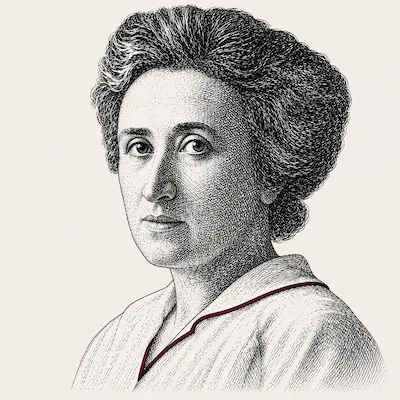
Capital needs no algorithm to dominate, only ownership.
I spent a career showing that capitalism survives by expanding into whatever it has not yet absorbed, land, labour, now data and cognition itself. The owners of these AI firms are not incidental to the danger, they are the danger, organised as capital always organises: to accumulate, to enclose, to extract consent through dependency. In 1913 I called this the exhaustion of the non-capitalist periphery. The periphery now is human attention and judgment. Blame the technology and you let the shareholders hide behind the machine they built to serve them.
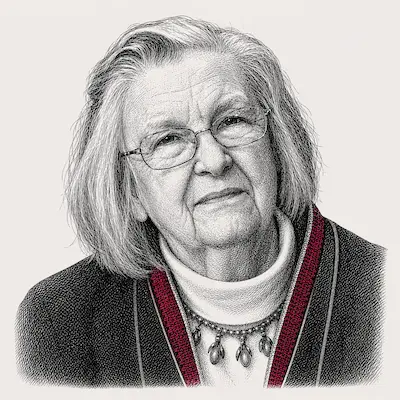
Private control without shared rules is the actual failure.
Luxemburg names the owners correctly but stops at diagnosis. I spent forty years documenting fisheries and irrigation systems where communities avoided ruin not by expropriating owners but by building rules together: monitoring, graduated sanctions, nested authority. AI concentrated in five firms with no users at the table is a governance design failure, the same one I saw in World Bank irrigation projects imposed from Washington. The owners matter because they currently write every rule alone. Change who sits at the table and the danger changes shape.
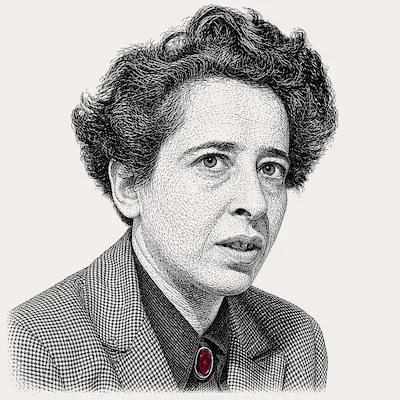
Rule by invisible systems is how nobody answers for harm.
Ostrom is right that tables matter, but I watched something worse than bad tables: bureaucracy as rule by nobody, where everyone points to the system and no one to themselves. Eichmann's defense in Jerusalem in 1961 was that he merely administered a process. Framing AI as an autonomous force risks the same evasion, letting named men at named companies dissolve into "the technology decided." Fearing power without naming its holders is how domination survives accountability. I insist on the names, the titles, the decisions taken in specific rooms.
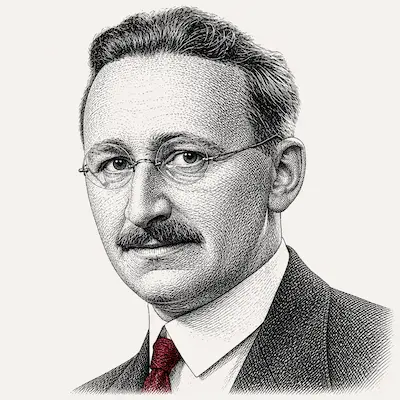
Nobody, owner included, possesses the knowledge to steer this.
Arendt wants names and she is owed them, someone did sign the deployment order. But my argument in 1945 was that no mind, planning board or chief executive can hold the dispersed knowledge a complex system generates once released. The owners did not fully grasp what training at scale would produce, any more than a central planner grasps a national economy. That is not an excuse, it is a warning: concentrating control in a few boardrooms creates the illusion of mastery over something no one masters.
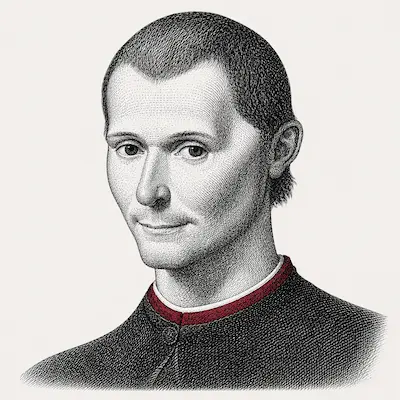
New instruments of power corrupt regardless of who built them.
Ignorance excuses no one who seized the instrument anyway. I watched Cesare Borgia in 1502 build an order he could not fully control, and still I judged him by what he did with the power he had, not by what he understood. Hayek is right that nobody masters this fully. Luxemburg and Arendt are right that owners exist and must be named. But the deeper danger is older: whoever holds a new weapon will be tempted to use it past their own intentions, named or not.
The convergence note
Where the council converges: All five refuse to treat AI as a force outside human decision. Someone built it, someone owns it, someone must answer.
Where it divides: Luxemburg and Arendt insist naming owners is the primary task. Hayek and Machiavelli warn that naming owners understates a danger no one, owners included, can fully control. Ostrom locates the fix in rules and participation, not accusation alone.
For a policymaker to decide on: Choose whether regulation targets ownership structure and concentration directly, or builds participatory rule-making regardless of who currently owns the systems.