The Long Council
Who was selected, and why
Should one private company control infrastructure critical to a nation's war effort?
The central tension
Should a private owner get to flip the switch on war-critical technology, or should states control what their survival depends on?
Where they stand
Private control with strategic flexibility
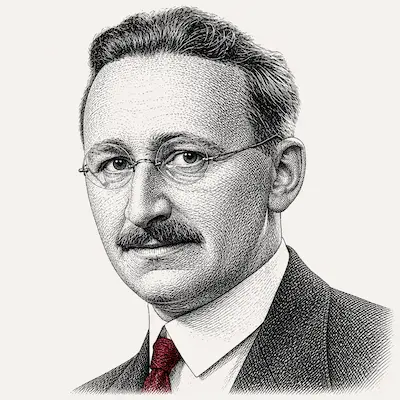 Friedrich Hayek
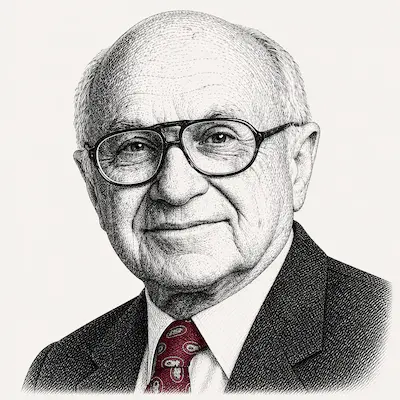 Milton Friedman
State control and sovereign accountability
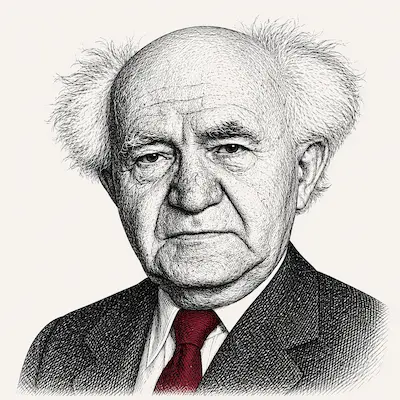 David Ben-Gurion
Structural diagnosis of the dependency itself
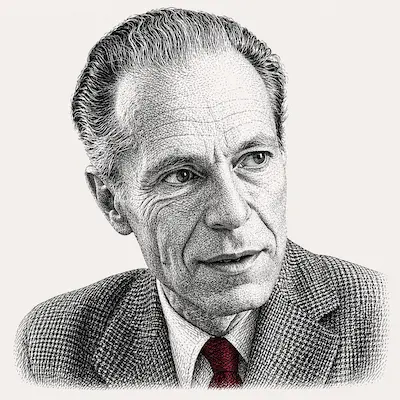 Albert O. Hirschman
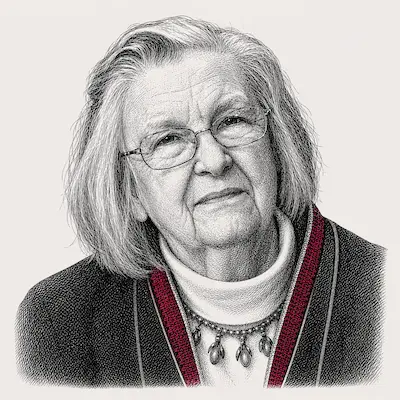 Elinor Ostrom
Selected members
Friedrich Hayek
Will argue: concentrated control is dangerous regardless of who holds it, but government nationalisation would not fix the knowledge problem.
Hayek's knowledge problem and spontaneous order arguments test whether any single actor, private or state, should hold this much concentrated control.
Milton Friedman
Will argue: a private company's leverage is dangerous but government control of critical infrastructure creates its own concentrated power risk.
Friedman's framework on concentrated power and unintended consequences of government intervention directly engages whether the fix is worse than the disease.
David Ben-Gurion
Will argue: a state that cannot control the infrastructure its survival depends on has not actually achieved sovereignty.
Ben-Gurion built Israeli state doctrine on the principle that a state cannot outsource its survival to actors it does not control, documented in the Altalena decision establishing state monopoly on force.
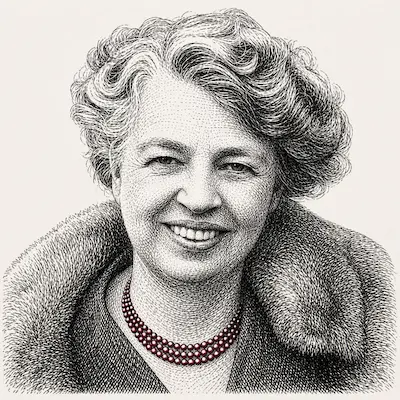
Eleanor Roosevelt
Will argue: a system where a single unaccountable individual holds this power has no legitimate checks and must be restructured toward collective accountability.
Roosevelt's work on international institutions and the limits of moral authority without enforcement power speaks directly to what happens when life-or-death decisions rest on one man's judgment rather than accountable structures.
Albert O. Hirschman
Will argue: Ukraine built an irreversible dependency with no exit option, which is the real failure that predates any single throttling decision.
Hirschman's exit, voice and loyalty framework and his irreversibility threshold principle directly diagnose Ukraine's structural dependency problem and what to do about it.
Elinor Ostrom
Will argue: neither pure private ownership nor nationalisation solves this, the answer is polycentric governance with multiple redundant providers and binding rules.
The question of who governs infrastructure neither purely private nor purely public, with shared life-or-death stakes across multiple users, is a textbook commons governance problem she specialised in diagnosing.
Considered but not selected
Sun Tzu: flagged against selection for cooperative governance problems, but this is adversarial geopolitical strategy; excluded anyway because the issue centres on institutional control and accountability design rather than battlefield strategy, which the other six cover more directly. Helmut Schmidt, his energy security and infrastructure dependency framework is highly relevant in principle, but the roster already has strong coverage of state-sovereignty-over-critical-infrastructure through Ben-Gurion without needing a second voice on the same pole. Hannah Arendt, her bureaucratic accountability and "rule by nobody" framework is tempting, but Roosevelt's institutional-accountability angle covers similar ground with more direct relevance to enforceable international structures.