Can libertarian policy in western democracies lead to more growth and freedom?
Built from documented writings, speeches, decisions and historical records. Council members argue from documented positions, applied to today's question.
Libertarian policy delivers growth when institutions have failed, but who bears transition costs determines whether it enhances freedom.
Friedman and Thatcher anchor in crises where gradual reform failed: Chile's 600% inflation and Britain's paralyzed economy in 1979. Hayek warns that shock treatment destroys tacit knowledge embedded in working institutions. Keynes shows markets reach stable unemployment because investment depends on animal spirits, not calculation.
The split is irreducible: Rawls demands consent from those who bear costs. Thatcher replies that broken systems cannot deliver justice to anyone.
- 1Reject gradual reform when institutions face capture by vested interests that block necessary change.
- 2Prepare constitutional constraints before implementing rapid liberalization to protect the discovery process during transition.
- 3Distribute transition costs through insurance mechanisms rather than imposing them on specific groups like displaced workers.
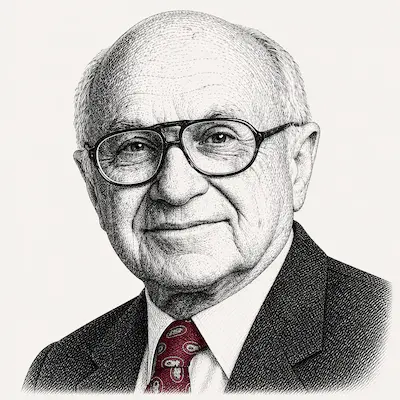
Free markets deliver both prosperity and freedom better than government.
Markets coordinate millions of individual decisions through prices more efficiently than any planning authority can. In 1975 I advised Chile on rapid liberalization because gradual reform allows entrenched interests to block change. The results proved my point: inflation fell from 600% to single digits, growth resumed, and political freedom eventually followed. Government intervention consistently produces the opposite of its intended effects because politicians respond to pressure groups, not price signals.
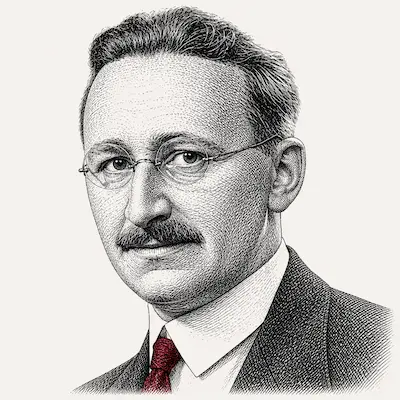
Enforcement destroys the knowledge that makes order work.
Friedman misunderstands the enforcement problem. Spontaneous order emerges from individuals following rules they understand, not from top-down direction. In 1974 I warned against the pretense of knowledge that leads planners to believe they can improve on evolved arrangements. Chile's rapid shock treatment ignored the tacit knowledge embedded in existing institutions. True liberty requires constitutional constraints that protect the discovery process, not technocratic management of outcomes.
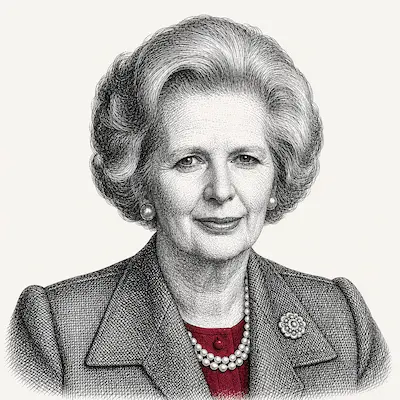
You cannot preserve what is already broken.
Hayek's gradual approach assumes institutions worth preserving. Britain in 1979 faced 25% inflation, strikes shutting down electricity, and unions holding government hostage. I confronted the miners in 1984 after careful preparation because half-measures would have failed. The transition was painful but necessary. You cannot make an omelet without breaking eggs. Constitutional constraints matter, but first you need a constitution that works rather than one captured by vested interests.
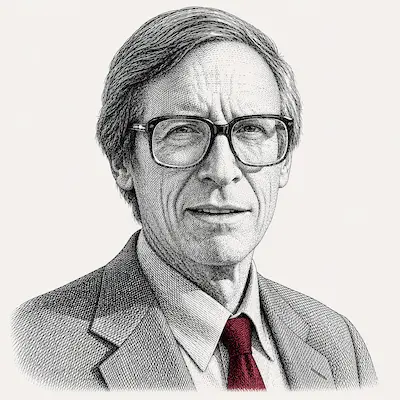
Justice requires asking who bears the costs of change.
Thatcher's omelet metaphor reveals the problem. Rational individuals choosing principles from behind a veil of ignorance would never accept a system where some people become the broken eggs for others' benefit. The miners who lost their livelihoods in 1984 did not consent to bear the costs of Britain's economic transition. Free markets may increase aggregate wealth while systematically disadvantaging the least advantaged, undermining rather than enhancing meaningful freedom.
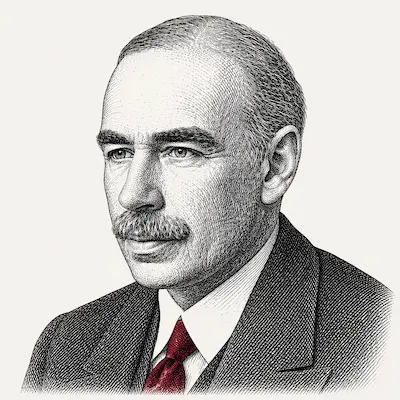
Markets fail because uncertainty makes rational calculation impossible.
Rawls assumes we can design just institutions, but under genuine uncertainty we cannot predict who will benefit from any policy. In 1936 I showed that economies reach stable equilibria with mass unemployment because investment depends on animal spirits, not rational calculation. Friedman's Chile advice ignored this: rapid liberalization in conditions of uncertainty produces financial instability, not efficient allocation. The correct policy is insurance against worst cases, not optimization for expected outcomes.
The convergence note
Where the council converges: All members accept that institutional design matters more than good intentions.
Where it divides: Whether markets or governments handle uncertainty better. Whether justice requires considering distributional effects or trusting emergent outcomes.
For a policymaker to decide on: How fast to move when existing institutions have failed but transition costs fall unevenly.